


Listen to the article
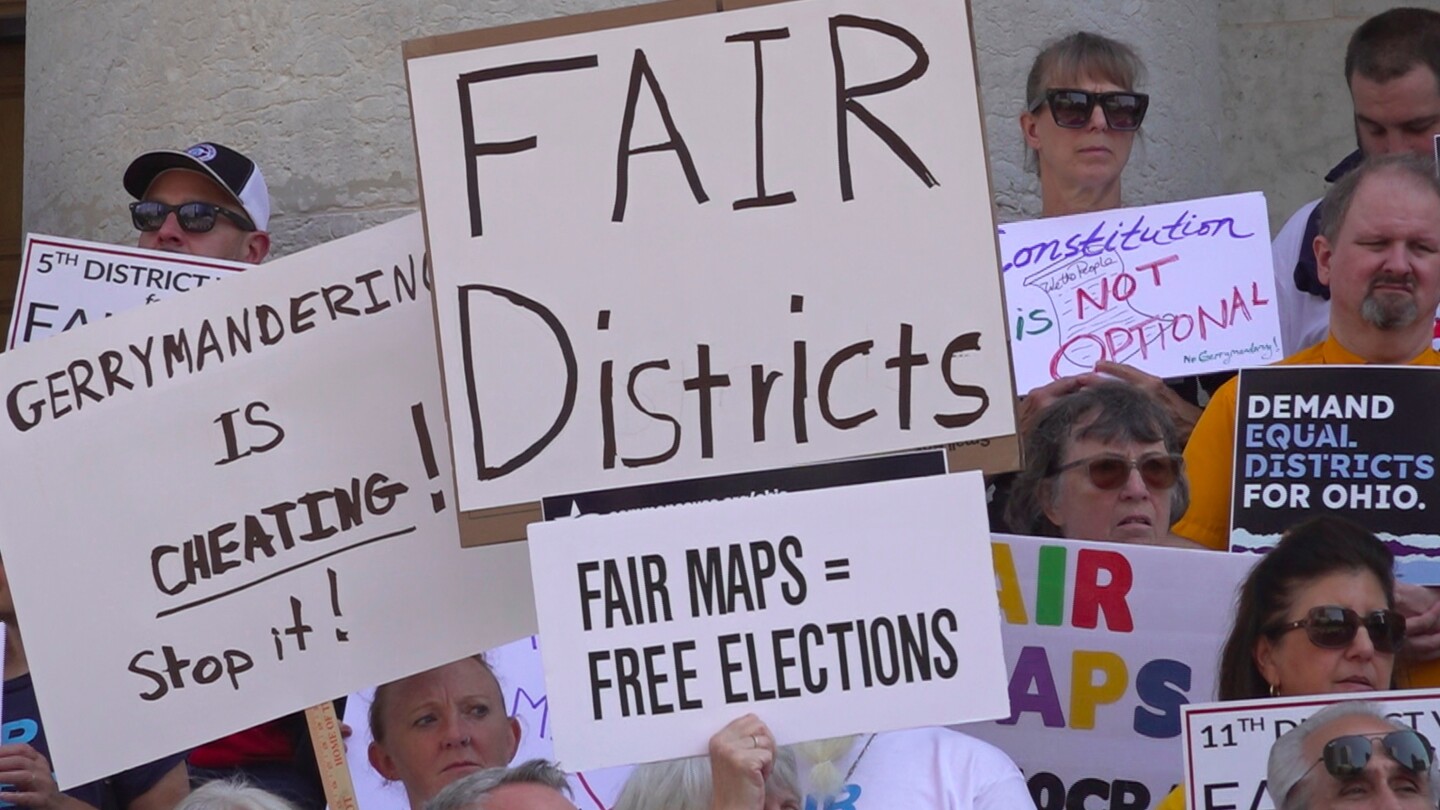
After a frenzied period of congressional redistricting efforts, Donald Trump’s campaign to reshape voting districts for partisan advantage before this year’s midterm elections has reached a critical point. The political world now watches to see if Republican and Democratic-controlled states will accelerate their remapping of U.S. House districts as new legislative sessions begin, or if the mid-decade redistricting push will lose momentum following Indiana’s decisive rejection of Trump’s pressure campaign.
“We’re at a crossroads to see if the mid-decade redistricting movement gains more speed or was simply an attempt by Donald Trump to impact elections that in many states fizzled,” said Jeffrey Wice, director of the Elections, Census and Redistricting Institute at New York Law School.
Virginia and Florida have emerged as pivotal battlegrounds in this ongoing struggle for electoral advantage. Democrats leading Virginia’s government and Republicans controlling Florida could potentially shift multiple congressional seats in their party’s favor through aggressive redistricting. Virginia’s legislative session begins Wednesday, while Florida Governor Ron DeSantis plans to convene a special session focusing on congressional redistricting in April.
The political chess match extends to Illinois and Maryland, where Democrats hold power, and to Republican-controlled Kansas. The outcomes in these states could significantly impact the GOP’s ability to maintain its narrow House majority against the historical trend favoring the opposition party in midterm elections. Key lawmakers in all three states, however, have expressed resistance to redistricting efforts.
Trump initiated this unusual redistricting cycle in July when he urged Texas Republicans to redraw congressional boundaries to create more favorable districts for the party, despite the absence of new census data to justify such changes. This triggered the most significant mid-decade redistricting battle since the late 19th century.
Texas, Missouri and North Carolina subsequently approved new Republican-friendly House districts, while Ohio used its constitutionally mandated redistricting process to enact a map more favorable to Republicans.
The tide began to turn on October 31, when Virginia’s Democratic legislature took initial steps toward redistricting. November brought additional setbacks to the Republican strategy, as California voters approved new House districts benefiting Democrats, Kansas Republicans abandoned plans for a special redistricting session, and a Utah judge adopted a new congressional map advantageous to Democrats.
Trump’s campaign suffered its most significant blow on December 11, when Indiana’s Republican-controlled Senate defeated a redistricting plan that could have helped the GOP capture all nine of the state’s U.S. House seats, up from their current seven.
The cumulative result of the 2023 redistricting efforts could potentially yield three additional seats for Republicans. However, this outcome remains uncertain due to ongoing legal challenges and the fundamental reality that redrawn districts don’t guarantee electoral victories.
As Virginia’s General Assembly begins its annual session, lawmakers will consider a proposed constitutional amendment permitting mid-decade redistricting in response to similar actions in other states. This amendment, which received preliminary approval in the fall, would also require passage in a statewide referendum before implementation.
Democrats, who currently hold six of Virginia’s 11 U.S. House seats, haven’t revealed specific redistricting plans but some have discussed potentially gaining up to four additional seats. Governor-elect Abigail Spanberger, a Democrat, has expressed support for the redistricting effort without committing to a particular plan.
“I will look at any map that is kind of reasonable and keeping communities compact and together,” Spanberger told The Associated Press. “But ultimately, it’s up to the people of Virginia to choose whether or not to move forward with the referendum.”
In Florida, where Republicans currently control 20 of 28 congressional seats, DeSantis is delaying redistricting discussions until April. This timing strategically allows for a potential U.S. Supreme Court ruling on a key provision of the federal Voting Rights Act. If the court decides in a pending Louisiana case that race cannot be the predominant factor in creating voting districts, several Republican-led states could redraw districts currently represented by Black or Hispanic Democratic lawmakers.
DeSantis has indicated that such a ruling could affect “at least one or two” Florida districts. However, any redistricting benefiting Republicans would likely face legal challenges under a Florida constitutional amendment prohibiting district boundaries designed to favor or disadvantage any political party or incumbent.
Despite pressure from some Democrats to counter Trump’s efforts by redrawing already heavily Democratic districts in Illinois and Maryland to gain additional seats, these initiatives appear stalled as legislative sessions commence in both states.
Illinois House Speaker Pro Tem Kam Buckner stated, “There is no active push” for congressional redistricting, adding, “There is no appetite to reopen something that will consume enormous time, energy and, frankly, political capital without a compelling justification.”
In Kansas, Republican efforts to redraw House districts have failed to secure the two-thirds majority needed to override a potential veto from Democratic Governor Laura Kelly. House Speaker Dan Hawkins has acknowledged the political reality, telling reporters, “I do not have the votes.”
Fact Checker
Verify the accuracy of this article using The Disinformation Commission analysis and real-time sources.

7 Comments
Redistricting is an important but often contentious process. While some argue it’s necessary to adapt to demographic changes, the risk of gerrymandering for partisan advantage is real. I hope states can find a fair, non-partisan way to draw districts that truly reflect their constituents.
Agreed, the potential for abuse is high. Transparent, impartial redistricting commissions seem like a good solution to take politics out of the process.
Gerrymandering is a complex issue with major implications for electoral integrity and representation. It’s concerning to see partisan efforts to redraw district lines for political gain, regardless of which party is behind it. Hopefully the courts and democratic processes can reign in these unethical practices.
This gerrymandering battle underscores how critical it is to have robust, non-partisan election processes. Voters should choose their representatives, not the other way around. I’m curious to see how this plays out in key swing states like Virginia and Florida.
Gerrymandering is a thorny issue and I’m glad to see efforts to address it. While districts may need updating, it’s crucial that the process is transparent and non-partisan to preserve the democratic will of voters. I’m curious to see how this plays out in key swing states.
Redistricting is a complex issue and I can understand the arguments on both sides. However, the potential for unfair, partisan gerrymandering is very concerning and threatens the integrity of our elections. I hope states can find a more fair and balanced approach.
Absolutely. Nonpartisan commissions or other reforms seem critical to ensure district lines are drawn fairly and equitably.