


Listen to the article
Secret White House Bunker Revealed in Trump’s $400 Million Ballroom Legal Battle
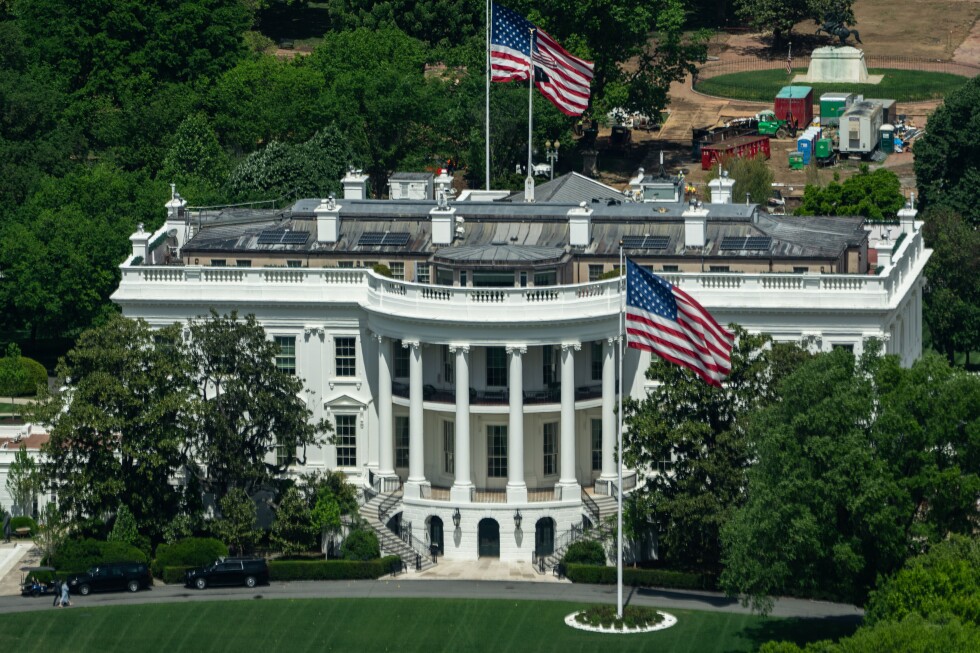
A legal dispute over President Donald Trump’s $400 million White House ballroom project has inadvertently shed light on a closely guarded underground bunker that has played significant roles throughout American history. The battle between the Trump administration and the National Trust for Historic Preservation has revealed rare details about this secretive facility beneath the former East Wing.
Last week, a federal appeals court allowed the president to proceed with construction of the 90,000-square-foot ballroom project, overturning a lower court’s order that had halted aboveground work. The ruling specifically exempted safety and security-related construction from any restrictions.
In court filings supporting their appeal, the administration referenced materials intended for a “heavily fortified” facility, including bomb shelters, military installations, and a medical facility to be built beneath the ballroom. These revelations offer a rare glimpse into security measures typically shrouded in secrecy.
The bunker’s history dates back to Franklin D. Roosevelt’s presidency, when an underground bomb shelter was installed in 1942 after America’s entry into World War II. Known as the Presidential Emergency Operations Center, the facility was designed for short-term use during crises.
“The whole point of the sort of presidential evacuation and continuity of the presidency is you want to get the president out of the place where everyone knows that he is and get him into a place where people don’t know where he is,” explained Garrett Graff, a historian and national security author.
One of the most notable uses of the White House’s underground protective facilities occurred during the September 11, 2001 attacks, when Vice President Dick Cheney was hastily escorted below ground. Cheney later recounted to NBC News how a Secret Service agent “grabbed” him by the belt and shoulder, leading him to a bunker beneath the White House without asking permission.
More recently, in 2020, Trump himself was rushed to a White House bunker during protests following George Floyd’s death. Demonstrators in nearby Lafayette Park could be heard from inside the building as security personnel worked to control the crowds.
The current legal dispute centers on whether Trump overstepped his authority by proceeding with the ballroom project without proper approvals from federal agencies and Congress. Matthew Quinn, deputy director of the Secret Service, has emphasized in court documents that completing the project is crucial for White House security.
“An above-ground slab and topping structure is needed to ensure that key underground structures with a security purpose are properly protected and strengthened,” Quinn wrote. “Leaving the project site unfinished imperils the ability of the Secret Service to meet its statutory mission to protect the President.”
Trump has been vocal about the security enhancements incorporated into the ballroom design. “The roof is droneproof. We have secure air-handling systems. You know, bad things happen in the air if you have bad people,” the president stated. “We have biodefense all over. We have secure telecommunications and communications all over. We have bomb shelters that we’re building. We have a hospital and very major medical facilities that we’re building.”
The National Trust for Historic Preservation argues that the administration failed to obtain necessary approvals for the project. U.S. District Judge Richard Leon initially ruled in favor of the nonprofit group in March, though he temporarily allowed underground work to continue while halting aboveground construction.
The administration appealed this decision, with Trump arguing on social media that “the underground portion is wedded to, and serves, the upper portion,” suggesting the security elements cannot function properly without the complete structure. The U.S. Court of Appeals for the District of Columbia Circuit has scheduled a hearing for June 5 to review the case.
While taxpayer funds will cover the security aspects of the project, Trump has stated that the ballroom itself will be financed through donations from wealthy individuals and corporations. He maintains that the facility represents a long-overdue addition to the White House complex.
The outcome of this legal battle will determine not only the fate of Trump’s ambitious ballroom project but potentially also affect how the public understands these historically significant but rarely discussed security installations beneath one of America’s most iconic buildings.
Fact Checker
Verify the accuracy of this article using The Disinformation Commission analysis and real-time sources.

8 Comments
This is a fascinating story about the hidden aspects of the White House. The underground bunker has clearly been an important part of presidential security for decades. I’m curious to learn more about how it has been used and adapted over time to meet evolving threats.
The details about the White House’s secret bunker are quite intriguing. While the security and safety of the president is paramount, the $400 million ballroom project does seem extravagant. I hope the administration can find a way to maintain critical infrastructure while being fiscally responsible.
Absolutely, maintaining the integrity of the bunker is crucial, but the price tag for the ballroom raises eyebrows. Careful oversight and transparency around these types of large-scale projects is important for public trust.
The revelation of the secret White House bunker is certainly eye-opening. It’s interesting to see how this normally highly guarded facility has been brought to light through the legal battle over the $400 million ballroom project. I wonder what other classified details about the bunker might emerge in the future.
The White House bunker has played a significant role throughout American history, so it’s important that its security and safety features are maintained. However, the $400 million ballroom project seems excessive and potentially wasteful. I hope the administration is prioritizing practical measures over lavish construction.
I agree, the $400 million price tag for the ballroom is concerning, especially given the focus on the bunker’s critical security functions. Balancing necessary infrastructure upgrades with responsible spending will be important.
Fascinating to learn more about the secret bunker under the White House. It’s interesting to see the legal battle over the $400 million ballroom project shed light on this normally secretive facility. I wonder what other hidden features and security measures are in place there.
Yes, the details revealed in the court filings provide a rare glimpse into the extensive security infrastructure under the White House. It’s a critical part of presidential protection that usually remains out of public view.