


Listen to the article
Chernobyl’s Legacy: Nuclear Disaster, Soviet Secrecy and the Price of Misinformation
On April 26, 1986, a routine safety test at the Chernobyl nuclear power plant in northern Ukraine spiraled into what would become the world’s worst nuclear disaster. As Soviet engineers attempted to shut down reactor 4, a fatal design flaw combined with human error triggered an explosion that released radioactive material hundreds of times more potent than the atomic bomb dropped on Hiroshima.
Though the accident occurred near the Belarus border, radioactive fallout soon blanketed northern and central Europe. The Soviet government’s immediate response, however, focused less on public safety and more on containing information about the true magnitude of the catastrophe.
For nearly four decades, researchers, political leaders and advocacy groups have worked tirelessly to uncover the full story of what happened at Chernobyl. While science has provided understanding of the technical aspects of the explosion itself, the layers of mismanagement, negligence and deliberate misinformation have proven far more difficult to expose.
Much of the official Soviet documentation remains locked away in Moscow, accessible only to select Russian government agencies. However, a unique window into the disaster’s aftermath has emerged through an unexpected source: the files of East Germany’s secret police, the Stasi.
After German reunification in 1991, the government passed legislation allowing for the declassification of certain Stasi documents. These files, maintained by East Germany as a Soviet satellite state rather than a full Soviet member, provide crucial insights into how the disaster was handled behind closed doors.
Three years of research examining these formerly top secret communications between the KGB and Stasi reveals a stark contrast between public messaging and private knowledge. While both intelligence agencies publicly insisted everything was under control, internal documents show they were acutely aware of the explosion’s devastating impact. They meticulously tracked hospitalizations, casualties, contaminated crops, tainted livestock and radiation levels throughout affected regions.
Access to this critical information was tightly restricted to the highest officials in both governments. The primary concern was not the radiation’s impact on affected populations but rather the potential damage to their countries’ international reputations.
Managing media coverage was paramount in the Soviet strategy. High-ranking officials, including Soviet leader Mikhail Gorbachev, carefully crafted misleading narratives for public consumption. During one Politburo meeting documented in classified papers later published by a whistleblower, Gorbachev explicitly directed that communications should claim the power plant was “being renovated at the time, so it doesn’t reflect badly on our reactor equipment.”
Another senior Soviet official, Nikolai Ryzhkov, proposed creating three distinct press releases: one for Soviet citizens, another for satellite states, and a third for Western nations including Europe, the United States and Canada.
The Stasi followed this playbook precisely in East Germany. Although top officials received detailed briefings about radioactive contamination, classified documents show they instructed state-controlled media to tell the public there was “absolutely no danger.”
This strategy faced a significant challenge in East Germany, where many citizens could access Western television and radio broadcasts. The result was widespread public skepticism—people recognized their government wasn’t being truthful but couldn’t determine exactly what the truth was. Much of the propaganda didn’t aim for complete persuasion but rather sought to create confusion and doubt through conflicting information, wearing down public resistance through uncertainty.
The economic implications of the disaster prompted particularly cynical responses from both governments. As East Germans grew fearful of potentially contaminated food, consumption of domestic produce and dairy products dropped sharply. Children refused milk at school, and shoppers questioned vendors about growing conditions.
Facing an excess of unsold goods, East German officials devised a plan to export potentially contaminated products to West Germany. Internal Stasi documents justified this by claiming that distributing radioactive products would prevent any individual from consuming unsafe levels—a dubious public health rationale at best.
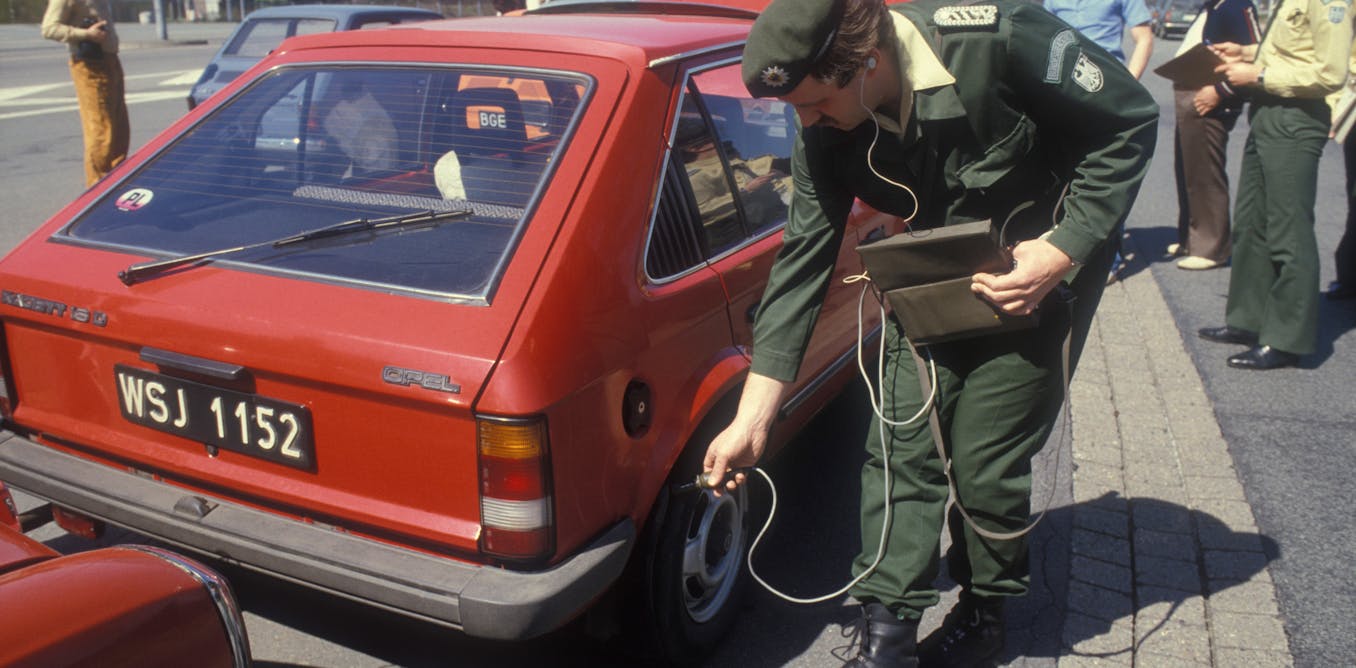
West Germany quickly countered by implementing radiation screening at border crossings, rejecting vehicles with elevated radiation levels. The East German response was to order low-ranking Stasi workers to personally clean contaminated vehicles, knowingly exposing their own officials to radiation hazards.
The Soviet government developed a similar strategy, but rather than exporting contaminated goods abroad, they distributed tainted meat products throughout “the majority of regions” within the Soviet Union—with the notable exception of Moscow, where the political elite resided.
This callous handling of the disaster contributed significantly to growing disillusionment within the Eastern Bloc. When the Stasi was established in 1950, many employees genuinely believed in East Germany’s socialist vision, particularly those who had witnessed the horrors of Nazi Germany. By the 1980s, however, ideological commitment had largely eroded, with many Stasi workers viewing their positions merely as pathways to better incomes and government privileges.
This internal disenchantment helps explain why the Stasi offered little resistance when protesters stormed their headquarters in 1990, months after the Berlin Wall fell. The collapse of communist governments across Eastern Europe stemmed from numerous factors, but the handling of Chernobyl played a significant role in fueling popular discontent.
In East Germany specifically, the government’s Chernobyl disinformation campaign reinforced the growing perception that the state prioritized maintaining appearances over protecting its citizens—a realization that would ultimately contribute to the system’s downfall.
Fact Checker
Verify the accuracy of this article using The Disinformation Commission analysis and real-time sources.

15 Comments
The Chernobyl disaster was a wake-up call about the dangers of nuclear power and the importance of proper safety protocols. While the technology has advanced, the need for transparency and accountability remains just as crucial.
Absolutely. Lessons from Chernobyl must be heeded to ensure nuclear disasters of this magnitude never happen again.
Chernobyl was a watershed moment in the history of nuclear power, and the Soviet government’s attempts to conceal the truth only serve to undermine public confidence in the technology. Uncovering the full story is crucial for ensuring such disasters never happen again.
Absolutely. Transparency and accountability must be the top priorities when it comes to the use of nuclear power, no matter the political or economic stakes involved.
The declassified Stasi files provide an eye-opening look into the Soviet cover-up of the Chernobyl disaster. It’s a stark reminder of the power of misinformation and the need for transparency, especially when it comes to nuclear accidents.
Chernobyl was a monumental disaster, and the Soviet government’s efforts to conceal the truth only compounded the tragedy. Transparency and accountability must be at the forefront of any discussion about nuclear power.
It’s disturbing to see how the Soviet government prioritized saving face over protecting its citizens. This disaster had global implications, and the public deserves to know the full extent of the cover-up.
The declassified Stasi files on Chernobyl highlight the devastating consequences of government misinformation. This disaster should serve as a cautionary tale about the importance of prioritizing public safety over political interests.
The Chernobyl disaster had far-reaching consequences, both in terms of environmental damage and the erosion of public trust. Uncovering the full extent of the Soviet cover-up is crucial for understanding the past and shaping a safer future.
The declassified Stasi files shed light on the level of Soviet misinformation surrounding Chernobyl. It’s a sobering reminder that even with modern technology, the public can still be kept in the dark about critical events.
Chernobyl was a tragic event, but the real tragedy was the Soviet government’s efforts to conceal the full extent of the disaster from the public. Transparency and accountability are critical when it comes to nuclear safety.
I agree. The public deserves to know the truth, and hiding critical information only erodes trust in institutions and puts lives at risk.
It’s alarming to see the lengths the Soviet government went to hide the truth about Chernobyl. This disaster serves as a stark warning about the dangers of prioritizing secrecy over public safety.
Agreed. Transparency and accountability must be the guiding principles when it comes to the use of nuclear technology, no matter the political or economic implications.
The Chernobyl disaster was a tragedy, but the subsequent cover-up by the Soviet government was a betrayal of the public trust. Declassifying these files is an important step in understanding the true scale of the disaster and its lasting impact.