


Listen to the article
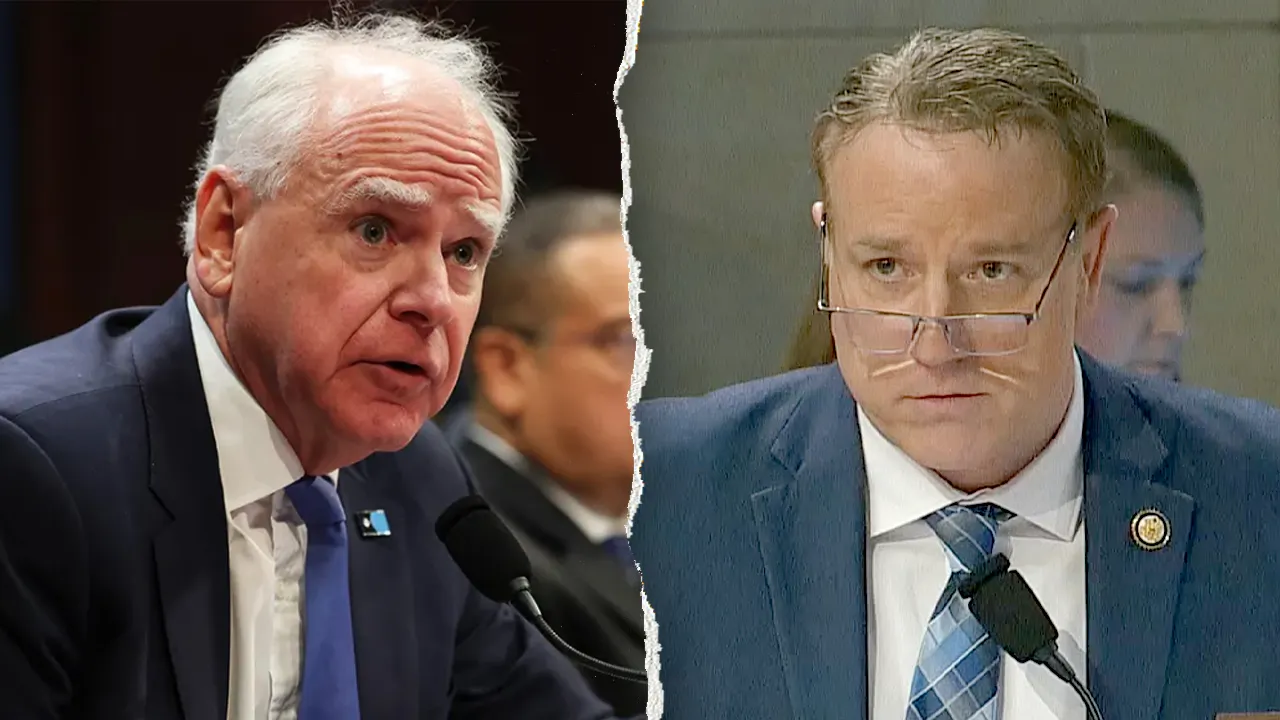
Republican Representative Pat Fallon delivered a scathing critique of Minnesota Governor Tim Walz during a House Oversight Committee fraud hearing on Wednesday, in an exchange that quickly gained traction among conservative circles online.
During his questioning, Fallon drew parallels between previous vice presidential selections and Harris’s choice of Walz as her running mate, suggesting a pattern of deliberately choosing less capable individuals.
“It’s been widely reported that in 2008, when Barack Obama was choosing his vice presidential candidate, he had three criteria. He wanted to make sure he picked someone that wasn’t as smart as him and had less talent and charisma and couldn’t possibly outshine him, so he picked Joe Biden,” Fallon stated during the committee hearing.
He continued the comparison, adding: “And then Joe Biden in 2020 used the exact same criteria. He wanted to make sure he picked somebody that wasn’t as smart as him, had less talent and charisma, and wouldn’t outshine him, and he picked Kamala Harris.”
Fallon then directed his critique at Walz, stating, “I think it’s very evident why Kamala Harris picked you,” before concluding with the remark, “The talent pool isn’t just shallow, brother, we have hit the shore.”
Governor Walz appeared to take the criticism in stride, laughing and responding simply with, “I wouldn’t know, Congressman.”
The exchange immediately resonated across social media platforms, particularly among conservative commentators and influencers. Conservative commentator Nick Sortor posted on X (formerly Twitter) that “Tim Walz just got SCORCHED,” while the account Libs of TikTok characterized it as “one of the most INCREDIBLE OWNS in American politics.”
Brandon Straka, founder of the #walkaway campaign, similarly described the exchange as Fallon “torching” Walz.
The heated exchange comes amid ongoing scrutiny of Harris’s selection of Walz as her running mate during the 2024 presidential campaign. Political analysts have debated Harris’s decision to choose Walz over other candidates, particularly Pennsylvania Governor Josh Shapiro, who was also considered a strong contender for the position.
According to the book “2024: How Trump Retook the White House and the Democrats Lost America,” Harris ultimately “went with her gut” in selecting Walz, believing he was the “better fit” for her campaign. The book also claims her staff was “unanimously behind” the decision.
The confrontation occurred during a larger House Oversight Committee hearing focused on fraud investigations, where Walz was testifying. The hearing itself examined issues related to government oversight and accountability, though Fallon’s personal attack on Walz’s capabilities shifted attention away from the substantive policy matters at hand.
This exchange represents the continuing partisan tension in congressional hearings, where political confrontations often overshadow policy discussions. Such moments frequently gain traction on social media, where brief clips can be shared without the full context of the hearings.
The incident also highlights the ongoing scrutiny of vice presidential selections and the political calculations that go into these decisions. Vice presidential picks are strategically chosen to complement presidential candidates and appeal to specific demographic or geographic constituencies, while also being evaluated for their potential effectiveness in office.
As political discourse increasingly moves to social media platforms, moments like these that contain provocative soundbites tend to receive amplified attention, potentially overshadowing substantive policy discussions that occur during congressional hearings.
Fact Checker
Verify the accuracy of this article using The Disinformation Commission analysis and real-time sources.

5 Comments
The remark about Governor Walz’s selection seems rather unfair and dismissive. While reasonable people can disagree on political matters, attacking someone’s character or abilities in this way is unproductive. A more constructive approach would be to engage substantively on the issues.
While political criticism is fair game, these comments come across as overly personal and mean-spirited. Elected officials should be able to debate policy differences without resorting to such attacks on character or competence. A more civil and constructive dialogue would better serve the public interest.
Interesting theory, though it seems a bit of a stretch to draw a direct parallel between VP selections over the years. Voters likely have more nuanced criteria in mind when choosing running mates. It would be better to focus on the candidates’ actual qualifications and policy platforms.
This seems like a rather partisan and ad hominem critique that doesn’t shed much light on the actual merits or qualifications of the individuals involved. I’d be more interested in an objective analysis of the vice presidential selection process and how it has evolved over time.
I’m curious to hear more about the specific criteria that Congressman Fallon believes were used in these VP selections. What evidence supports his claims? It’s important to examine such assertions carefully and avoid perpetuating unfounded rumors or partisan rhetoric.