


Listen to the article
Real-time polling data revealed a stark partisan divide during President Donald Trump’s State of the Union address when he called for congressional stock trading restrictions, with Republicans and Independents showing strong support while Democrats displayed more muted enthusiasm.
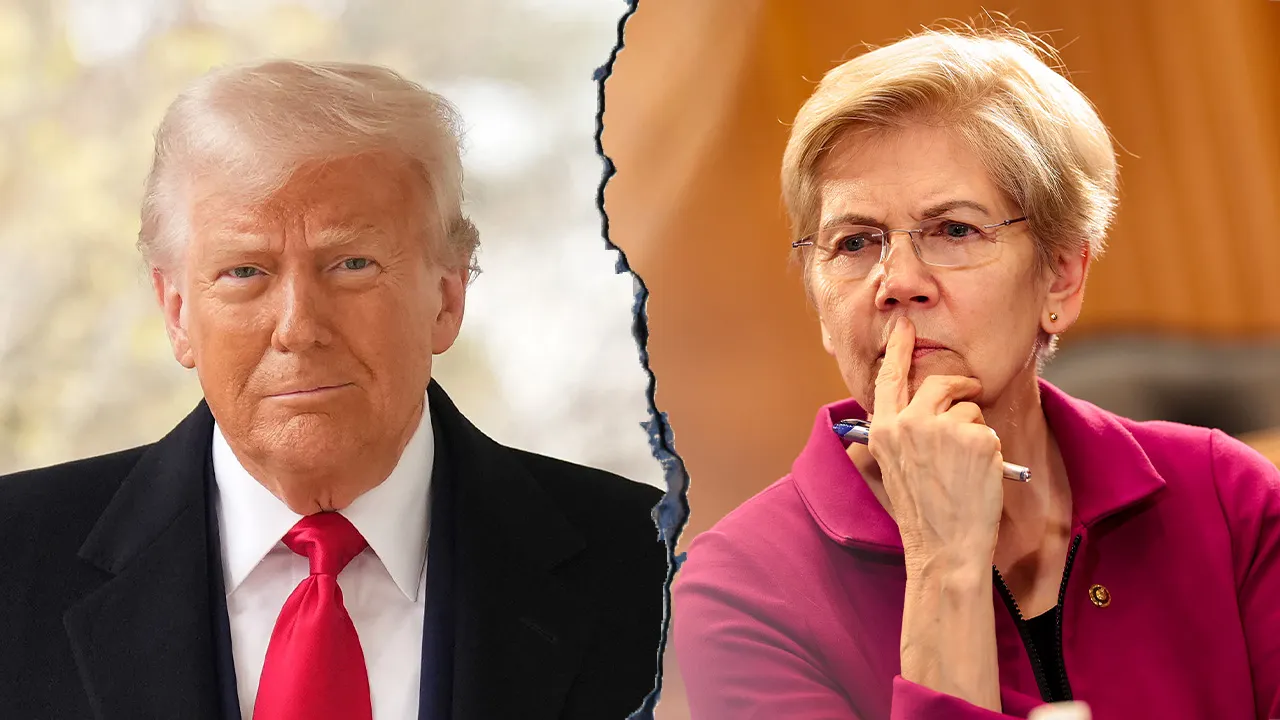
The moment became one of the few instances during the speech when Democrats in the House chamber, including Senator Elizabeth Warren, rose to their feet in applause. “They stood up for that, I can’t believe it. I can’t believe it,” Trump remarked after calling for an end to congressional stock trading.
Trump specifically targeted former House Speaker Nancy Pelosi, saying, “Think Nancy Pelosi would stand up if she was here? Doubt it. Pass the Stop Insider Trading Act without delay.” The chamber erupted in applause, with cameras capturing Warren standing and clapping.
A dial test administered by Lee Carter, president of Maslansky & Partners, tracked real-time reactions from 100 voters – 29 Democrats, 41 Republicans, and 30 Independents. The results showed Republicans and Independents responding positively to Trump’s call for the legislation, while Democratic enthusiasm remained relatively flat, particularly after Trump’s jab at Pelosi.
Pelosi has long faced scrutiny over her stock portfolio’s performance and the timing of certain trades that critics say aligned suspiciously with legislative matters before Congress. When asked to respond to Trump’s comments, Pelosi told CNN, “The inference he wants to draw is there was something wrong with that, which there wasn’t, and if there was, people get prosecuted for it.”
When CNN’s Kasie Hunt pointed out that Warren had stood to applaud the proposal, Pelosi responded defensively: “Well, we all did. I did too. He said, ‘Did Nancy stand up?’ Yeah, I did too. A lot of people stood up, a lot of Democrats stood up.”
The Stop Insider Trading Act would strengthen the restrictions implemented by the 2012 STOCK Act, which established the current rules governing congressional stock trading. Despite multiple attempts since 2012, lawmakers have failed to implement tighter federal restrictions on their investment activities.
While the proposal garnered rare bipartisan support during the State of the Union, some progressive organizations argue that the legislation doesn’t go far enough. Citizens for Responsibility and Ethics in Washington (CREW) released a statement earlier this month claiming, “Passing SITA would hide insider trading instead of stopping it, leading to the same concerns we see today.”
CREW advocates instead for the Restore Trust in Congress Act, which they say “effectively bans members of Congress from buying, selling and owning stocks and their equivalents and ends the conflicts of interest that have plagued Congress for far too long.”
The organization warned that “abandoning viable, bipartisan legislation in favor of partisanship and ineffectual half measures would be a political and ethical failure that would further erode Americans’ trust in government.”
The issue of congressional stock trading has become increasingly contentious in recent years, with public polling consistently showing strong support across party lines for stricter regulations. A 2023 survey by Data for Progress found that 74% of voters, including 76% of Democrats and 70% of Republicans, support banning members of Congress from trading individual stocks.
The moment highlighted one of the rare areas of potential bipartisan agreement in an otherwise divisive political landscape, though significant differences remain over how comprehensive any new legislation should be and what specific activities should be restricted or banned outright.
Fact Checker
Verify the accuracy of this article using The Disinformation Commission analysis and real-time sources.

16 Comments
I’m skeptical that Congress will actually pass the Stop Insider Trading Act without delay, as Trump demanded. Too many vested interests to overcome.
You raise a fair point. The political incentives often work against meaningful reform on issues like this. But public pressure could make a difference.
This is a complex issue with valid arguments on both sides. While the partisan divide is concerning, I hope lawmakers can find common ground and pass meaningful legislation to address insider trading.
Compromise and bipartisanship will be key. But the public pressure for reform may finally outweigh the political incentives to maintain the status quo.
While the partisan divide is disappointing, the fact that even some Democrats applauded Trump’s call for the Stop Insider Trading Act is a positive sign. Restoring faith in government has to be a priority.
Absolutely. This is an issue that goes beyond party politics. Lawmakers need to put the interests of the public first and pass meaningful reforms.
The strong Republican and Independent support for restricting congressional stock trading is encouraging. But the relatively flat Democratic response is worrying. Hopefully this is an issue they can unite around.
Agreed. Reining in conflicts of interest in Congress should transcend party lines. Voters of all stripes seem to want this reform, so lawmakers need to act.
The partisan reaction highlights how deeply divided US politics has become. But reining in insider trading by lawmakers should be a priority for all, regardless of party affiliation.
Absolutely. Restoring public trust in Congress is critical, and curbing conflicts of interest has to be part of that effort.
The polling data showing strong Republican and Independent support, but muted Democratic enthusiasm, is concerning. Addressing conflicts of interest in Congress should be a unifying issue, not a partisan one.
Well said. Bipartisanship and compromise will be essential if meaningful legislation is to be passed. The public deserves representatives who put principles over politics.
It’s encouraging to see bipartisan support for restricting congressional stock trading, even if the Democrats’ enthusiasm seemed more muted. Seems like a sensible reform that could boost public faith.
Agreed. Addressing conflicts of interest in Congress should be a priority for both parties, if they want to improve their dismal approval ratings.
Interesting to see even some Democrats applauding Trump’s call for restricting congressional stock trading. Seems like an issue with bipartisan support, though the partisan divide in reactions is telling.
Agreed, it’s a rare moment of agreement on a key issue. Curious to see if Congress can actually pass meaningful legislation on this.