


Listen to the article
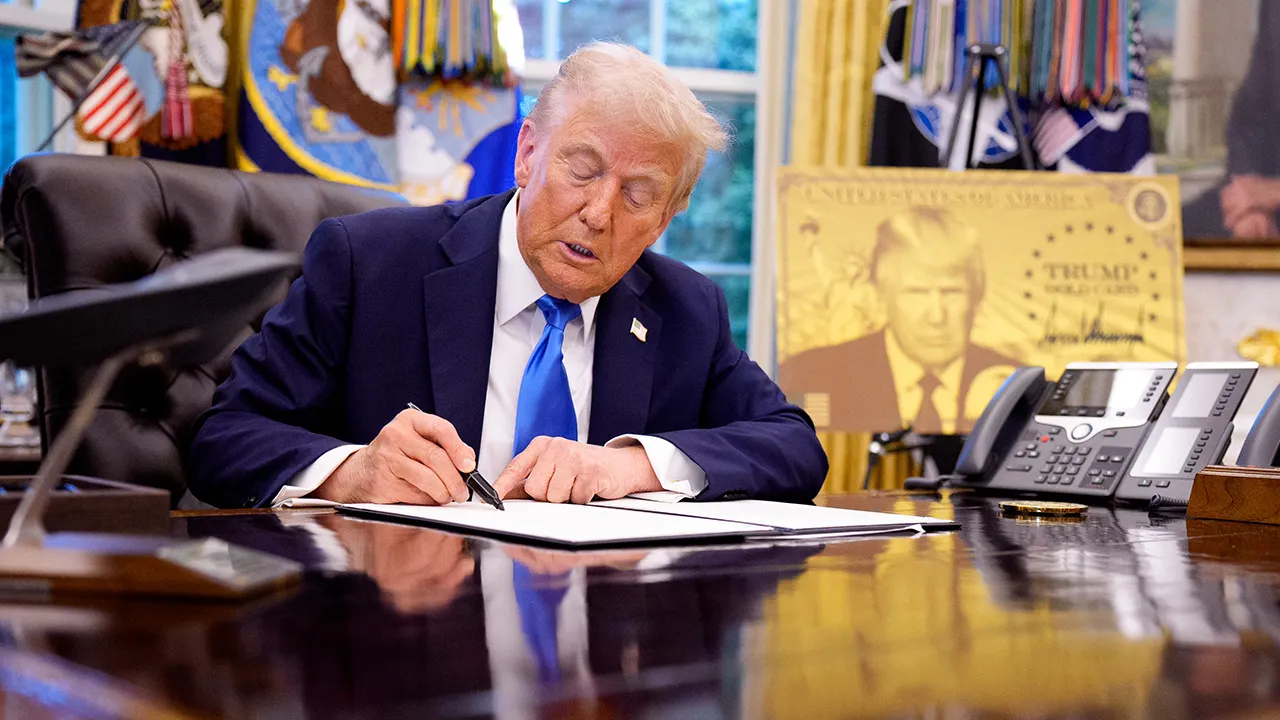
President Trump has signed an executive order that prevents U.S. courts from seizing Venezuelan oil revenues currently held in American Treasury accounts. The order, signed Friday, explicitly states that legal actions against these funds would compromise U.S. national security interests and undermine foreign policy objectives.
The presidential directive coincided with Trump’s meeting at the White House with approximately two dozen senior executives from the oil and gas industry. During this meeting, the president announced an ambitious $100 billion investment plan by American energy companies aimed at rehabilitating Venezuela’s deteriorating oil infrastructure.
“Venezuela’s oil infrastructure has been left to rot under the previous regime,” Trump stated during the meeting, emphasizing the potential to restore production to record levels following what the administration described as the “capture” of Venezuelan dictator Nicolás Maduro.
The executive order represents a significant development in U.S.-Venezuelan relations and America’s strategy toward the South American nation’s vast petroleum resources. Venezuela possesses the largest proven oil reserves in the world, estimated at over 300 billion barrels, surpassing even Saudi Arabia. However, years of mismanagement, corruption, and lack of investment under the Maduro government have caused production to plummet from 3.5 million barrels per day in the late 1990s to less than 700,000 barrels per day in recent years.
Energy analysts suggest this move signals the administration’s determination to maintain control over Venezuela’s oil future in the post-Maduro era. By protecting these funds from legal claims and seizures, the U.S. government appears to be establishing a framework for managing Venezuela’s oil revenues during what could be a complex transition period.
The protected funds likely include revenues from Venezuelan oil sales that were directed to accounts controlled by the U.S. Treasury Department as part of previous sanctions imposed on the Maduro regime. These accounts were intended to be accessible to Venezuela’s opposition government, which the United States and numerous other countries have recognized as legitimate.
This executive action comes amid broader U.S. efforts to reshape Venezuela’s economic landscape following the apparent collapse of the Maduro government. The administration has moved swiftly to secure American interests in Venezuela’s energy sector, which had previously seen increased investment from Russia, China, and Iran as U.S. companies withdrew due to sanctions and political instability.
Oil industry experts note that the $100 billion investment plan represents one of the largest commitments to overseas energy infrastructure in recent history. The initiative would likely involve major American energy corporations including ExxonMobil, Chevron, and ConocoPhillips, all of which had significant operations in Venezuela before nationalizations under former president Hugo Chávez forced many to scale back or withdraw entirely.
“This level of investment could potentially restore Venezuela’s production capacity within 3-5 years, assuming political stability,” said one industry analyst who requested anonymity due to ongoing business relationships in the region.
The administration’s aggressive moves regarding Venezuelan oil assets reflect the strategic importance of the country’s petroleum reserves to global markets and U.S. energy security. With Venezuela potentially returning as a major producer, global oil prices could face downward pressure in the coming years if production increases significantly.
The White House has not yet provided specific details regarding the implementation timeline for the investment plan or how the protected funds will be managed going forward. State Department officials indicated that further announcements regarding U.S. policy toward Venezuela’s energy sector are expected in the coming weeks.
Fact Checker
Verify the accuracy of this article using The Disinformation Commission analysis and real-time sources.

7 Comments
I’m curious to learn more about the potential $100 billion investment plan by American energy companies. Rehabilitating Venezuela’s oil sector could have significant implications for global energy markets and the region’s economic recovery.
Yes, that investment plan is quite ambitious. It will be important to see which companies get involved and how the funds are deployed to modernize Venezuela’s oil infrastructure.
Venezuela’s vast petroleum resources have long been a source of geopolitical tension in the region. This executive order suggests the U.S. is seeking to exert more control over those resources, though the broader strategic implications remain to be seen.
The protection of Venezuela’s oil revenues in U.S. accounts is an important move, but I wonder how it will impact ongoing efforts to pressure the Maduro regime and facilitate a transition of power in the country.
This executive order appears to be a delicate balancing act between U.S. national security interests and foreign policy objectives regarding Venezuela. It’s a complex situation that will require careful navigation.
I agree, there are likely many competing factors at play here. The administration will need to tread carefully to achieve its goals while mitigating potential risks and unintended consequences.
This executive order seems to be a strategic move to protect Venezuela’s oil revenue and encourage investment in restoring the country’s deteriorating energy infrastructure. It will be interesting to see how this plays out in the complex geopolitical dynamics surrounding Venezuela.