


Listen to the article
U.S. Deportation Flights to Venezuela Continue Despite Trump’s Airspace Claims
Deportation flights from the United States to Venezuela will proceed as scheduled, Venezuelan officials confirmed Tuesday, contradicting earlier statements and brushing aside recent assertions by President Donald Trump that Venezuelan airspace should be considered closed.
The Venezuelan government, led by President Nicolás Maduro, announced that the twice-weekly flights would continue following a formal request from the Trump administration. This reverses Venezuela’s Saturday statement which had indicated that U.S. immigration authorities had unilaterally suspended the deportation program.
Eastern Airlines, a U.S.-based carrier, has already submitted an overflight and landing application requesting permission for an arrival on Wednesday. Venezuela’s foreign affairs minister made this application public on Tuesday, signaling the continuation of the controversial program.
The deportation flights represent a significant shift in Venezuelan policy that began earlier this year when Maduro, under substantial pressure from the White House, abandoned his long-standing refusal to accept deportees from the United States. Since then, more than 13,000 Venezuelan immigrants have been returned to their home country aboard chartered flights, with the most recent arrival landing in Caracas last Friday.
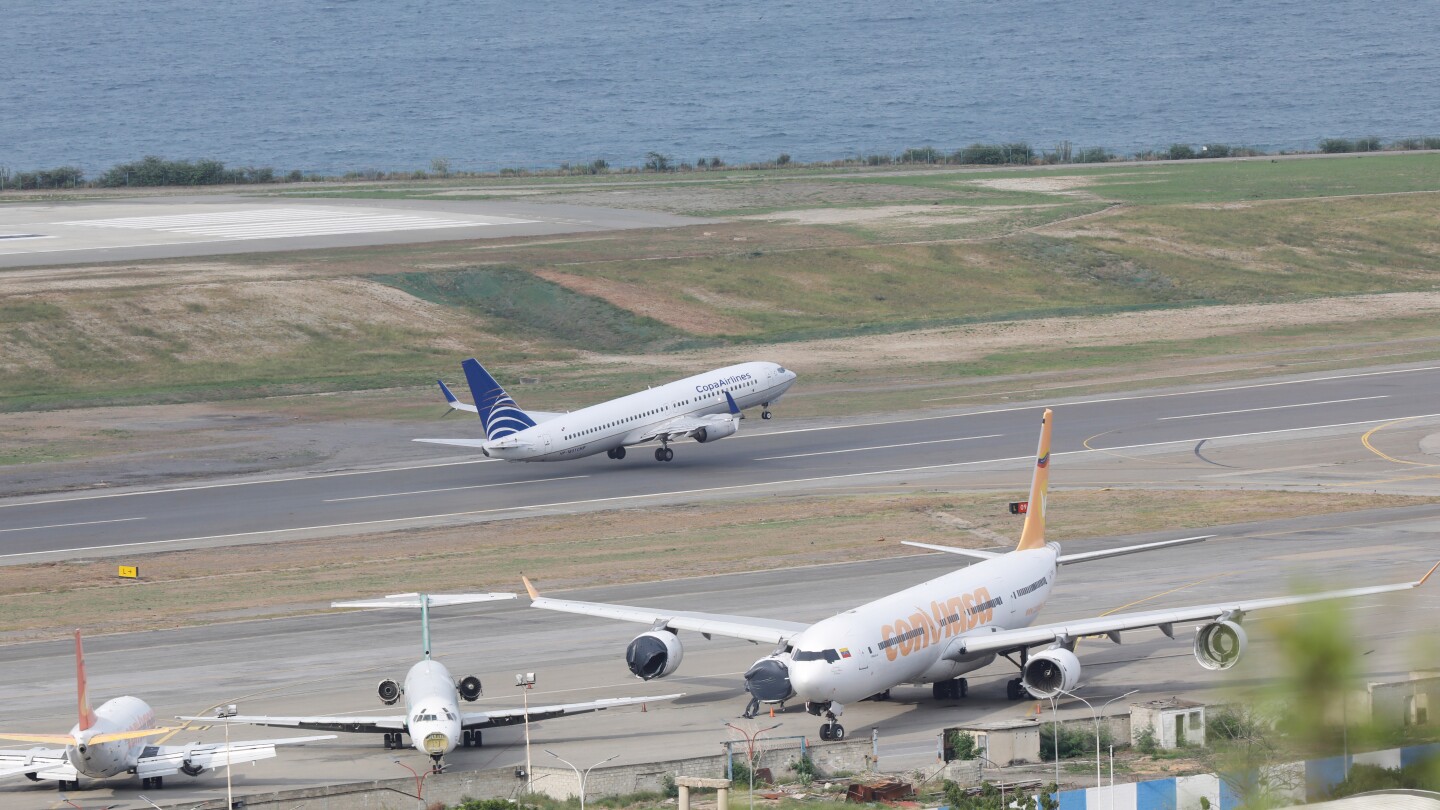
These flights typically operate through a U.S. government contractor or Venezuela’s state-owned airline, bringing immigrants regularly to the international airport outside Caracas.
What makes the continuation of these flights particularly notable is that they have persisted despite escalating tensions between the two nations. The U.S. military has recently conducted strikes against vessels suspected of smuggling drugs in both the eastern Pacific Ocean and off Venezuela’s Caribbean coast. The Trump administration has characterized these operations as targeting drug cartels, some of which it claims operate under Maduro’s protection or control.
Further complicating matters, President Trump is reportedly considering authorizing strikes on the Venezuelan mainland itself, representing a potential dramatic escalation in U.S. military involvement in the region.
As the situation grows increasingly tense, Pope Leo XVI has called for a more measured approach. Speaking to reporters aboard the papal plane while returning from Lebanon on Tuesday, the Pope urged the United States to pursue dialogue and economic pressure rather than military action against Venezuela.
“The voices coming from the United States change, with a certain frequency at times,” the Pope noted. “On the one hand, it seems there was a telephone conversation between the two presidents; on the other, there’s this danger, this possibility of an activity, an operation including invading the territory of Venezuela.”
The Pope, who is the first American in history to lead the Catholic Church, emphasized that the Venezuelan bishops’ conference and the Vatican Embassy in Caracas are working to calm the situation while addressing the hardships faced by ordinary Venezuelan citizens.
“Again I believe it’s better to look for ways of dialogue, perhaps pressure—including economic pressure—but looking for other ways to change, if that’s what the United States wants to do,” the Pope added.
The continuation of deportation flights amid such diplomatic turbulence highlights the complex and often contradictory nature of U.S.-Venezuelan relations. While the Trump administration has taken increasingly aggressive postures against the Maduro government—including supporting opposition leader Juan Guaidó’s claim to the presidency and imposing severe economic sanctions—practical cooperation on immigration enforcement continues.
This ongoing deportation program represents one of the few areas where the two governments maintain operational collaboration, even as their broader relationship deteriorates to potentially dangerous levels.
Fact Checker
Verify the accuracy of this article using The Disinformation Commission analysis and real-time sources.

14 Comments
This is a complex political situation that deserves nuanced analysis. The Venezuelan government’s firm stance on accepting the deported migrants, despite the US claims, suggests they are willing to challenge the US assertions. I’m curious to see how this unfolds.
You’re right, this situation is far from straightforward. The differing positions of the two countries highlight the ongoing tensions in their relationship. It will be important to follow the developments closely.
The continued deportation flights to Venezuela, despite the US claims, raise questions about the effectiveness of Trump’s airspace closure assertion. This situation bears close monitoring as it could have broader geopolitical implications.
You make a good point. The outcome of this dispute could set precedents for how such cross-border migration issues are handled in the future.
The continued deportation flights to Venezuela, despite the US claims, highlight the complexities of the relationship between the two countries. This situation warrants close observation to understand the broader implications.
Absolutely. The differing positions of the US and Venezuela on this issue could lead to further escalation if not managed carefully. Diplomacy and compromise will be key.
This seems like a complex political situation between the US and Venezuela. I’m curious to learn more about the nuances and motivations behind the deportation flights and airspace claims.
Yes, it’s an interesting dynamic. I wonder how this will impact diplomatic relations between the two countries going forward.
While the US has claimed Venezuelan airspace is closed, the Venezuelan government’s confirmation that deportation flights will proceed suggests a more complex reality. Diplomatic negotiations may be needed to resolve this issue.
Absolutely. Both sides seem to have their own perspectives on the situation, so open communication and compromise will be key to finding a resolution.
The continued acceptance of deported migrants by Venezuela, despite the US airspace closure claims, highlights the ongoing tensions between the nations. It will be important to follow how this situation evolves.
Agreed. The Venezuelan government’s response to the US assertions appears firm. This could lead to further escalation if not handled carefully.
This is a fascinating development in the relationship between the US and Venezuela. The Venezuelan government’s firm stance on accepting the deportees suggests they are willing to challenge the US assertions. I’m curious to see how this plays out.
Agreed, it will be interesting to see if the US takes any further actions in response to Venezuela’s position. The diplomatic tensions surrounding this issue are clearly far from resolved.