


Listen to the article
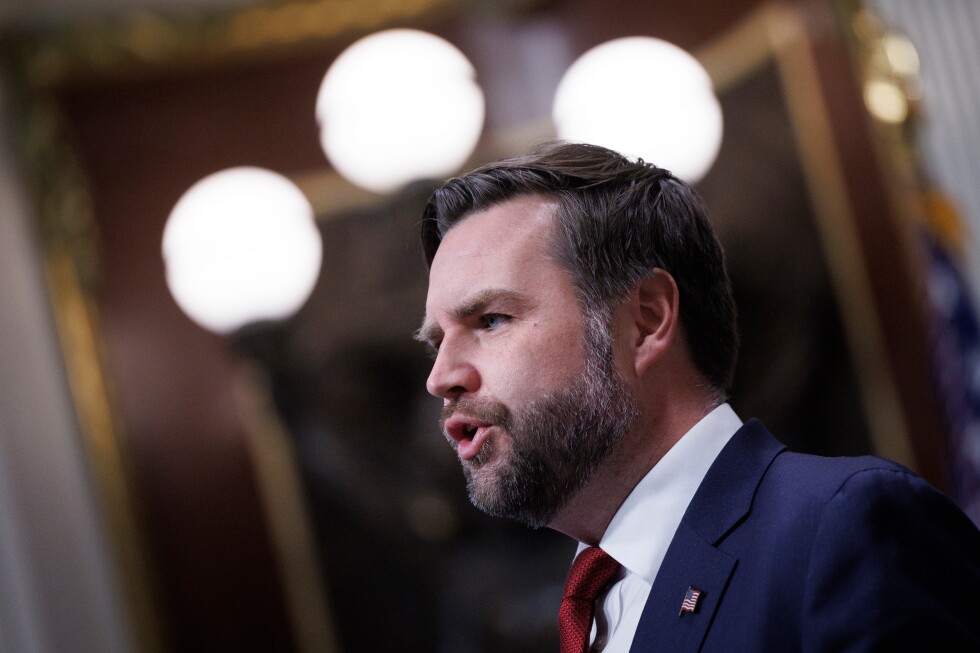
Vice President JD Vance announced Wednesday that the Trump administration would “temporarily halt” $259.5 million in Medicaid funding to Minnesota over fraud concerns, marking a significant escalation in the administration’s campaign against alleged misuse of public funds.
Vance, joined by Centers for Medicare and Medicaid Services (CMS) Administrator Dr. Mehmet Oz, described the action as necessary “to ensure that the state of Minnesota takes its obligations seriously to be good stewards of the American people’s tax money.”
“This is not a problem with the people of Minnesota, it’s a problem with the leadership of Minnesota and other states who do not take Medicaid preservation seriously,” Oz stated, referring to those committing fraud as “self-serving scoundrels.”
The funding pause represents part of President Donald Trump’s broader anti-fraud initiative announced in his State of the Union address Tuesday, where he declared Vance would lead a national “war on fraud.” This effort follows recent immigration enforcement actions in Minneapolis targeting alleged fraud involving day care centers operated by Somali residents, which sparked widespread protests.
According to CMS, the withheld funding includes approximately $244 million in “unsupported or potentially fraudulent” Medicaid claims and about $15 million in claims involving “individuals lacking a satisfactory immigration status.” Federal law prohibits undocumented immigrants and certain lawfully present immigrants from enrolling in Medicaid.
Oz emphasized that the administration would release the funds only after Minnesota proposes and implements “a comprehensive corrective action plan.” The state has 60 days to respond. If Minnesota fails to satisfy federal requirements, CMS warned it could defer up to $1 billion in federal funds over the next year.
Minnesota’s Democratic leadership swiftly condemned the action. Governor Tim Walz, who was Vice Presidential candidate Kamala Harris’s running mate in the 2024 election, characterized the move as political retribution.
“This is a campaign of retribution. Trump is weaponizing the entirety of the federal government to punish blue states like Minnesota,” Walz stated on social media. “These cuts will be devastating for veterans, families with young kids, folks with disabilities, and working people across our state.”
Minnesota Attorney General Keith Ellison highlighted the state’s existing fraud-fighting efforts, noting his office has secured over 300 Medicaid fraud convictions since 2019. Earlier Wednesday, he had called on the state legislature to provide additional staff and legal tools to combat such fraud.
“Courts have repeatedly found that their pattern of cutting first and asking questions later is illegal, and if the federal government is unlawfully withholding money meant for the 1.2 million low-income Minnesotans on Medicaid, we will see them in court,” Ellison stated.
The Minnesota action is one of several fraud-related measures announced by the administration. Oz also revealed a six-month moratorium on new Medicare enrollments for suppliers of durable medical equipment, prosthetics, orthotics, and related supplies. This follows a 2023 report by HHS’s Office of Inspector General that identified nearly $23 million in improper payments to such suppliers between 2018 and 2024, though most occurred before system changes implemented in 2020.
Healthcare policy experts expressed concern about the unusual nature of the funding deferral. Akeiisa Coleman, senior program officer for Medicaid at the Commonwealth Fund, warned that insufficient funding could force Minnesota to halt provider payments, potentially disrupting care for vulnerable populations.
The Minnesota action follows a pattern of the Trump administration threatening to withhold funding from Democratic-led states over fraud allegations. Federal judges have already blocked similar attempts targeting California, Colorado, Illinois, and New York for various social service programs, as well as an effort to cut administrative funding for 22 states that refused to share information about food aid recipients.
Minnesota’s Medicaid controversy is partly linked to a major fraud case involving a nonprofit called Feeding Our Future, which allegedly stole $300 million in pandemic aid intended for school meals. In the wake of this case, Trump has repeatedly criticized Minnesota’s Somali community, referring to “pirates” who have “ransacked Minnesota” during his State of the Union address.
The action represents a significant test of federal-state relations and highlights the growing political tensions surrounding social welfare programs and immigration policy in America.
Fact Checker
Verify the accuracy of this article using The Disinformation Commission analysis and real-time sources.

8 Comments
I can see both sides of this issue. The administration is right to be concerned about misuse of public funds, but suspending Medicaid payments seems like a drastic step that could significantly impact low-income Minnesotans. Perhaps there are other ways to address the fraud concerns.
Medicaid fraud is certainly a serious problem that deserves attention, but I’m not convinced this funding pause is the best solution. It could have unintended consequences for vulnerable populations who depend on these services. I hope the administration and state can find a more constructive path forward.
This is a concerning situation. Medicaid fraud is a serious issue that needs to be addressed, but halting funding seems like a heavy-handed approach. I hope the administration works closely with Minnesota officials to find a fair and effective solution.
Hmm, this is a complex situation. On one hand, the administration has an obligation to ensure taxpayer money is being used responsibly. But on the other, cutting off Medicaid funding could seriously harm Minnesota’s most vulnerable citizens. I’ll be curious to see how this plays out.
While I understand the administration’s desire to crack down on misuse of public funds, I worry that suspending Medicaid payments could unfairly punish vulnerable Minnesotans who rely on these essential services. A more nuanced approach may be warranted here.
Medicaid fraud is certainly an important issue, but I’m not sure this funding pause is the right solution. It could have unintended consequences for low-income residents who desperately need access to healthcare. I hope the administration and state can find a better way forward.
While rooting out Medicaid fraud is a worthy goal, I worry this funding pause may do more harm than good. Minnesotans who rely on these critical health services should not be penalized for the actions of a few bad actors. I hope a more surgical approach can be found.
This is a delicate situation. On the one hand, the administration has an obligation to ensure taxpayer money is being used appropriately. But on the other, cutting off Medicaid funding could negatively impact countless Minnesotans who rely on these essential healthcare services. It’s a complex issue without easy answers.