


Listen to the article
Utah Congressman Burgess Owens Announces Retirement Amid Redistricting Challenges
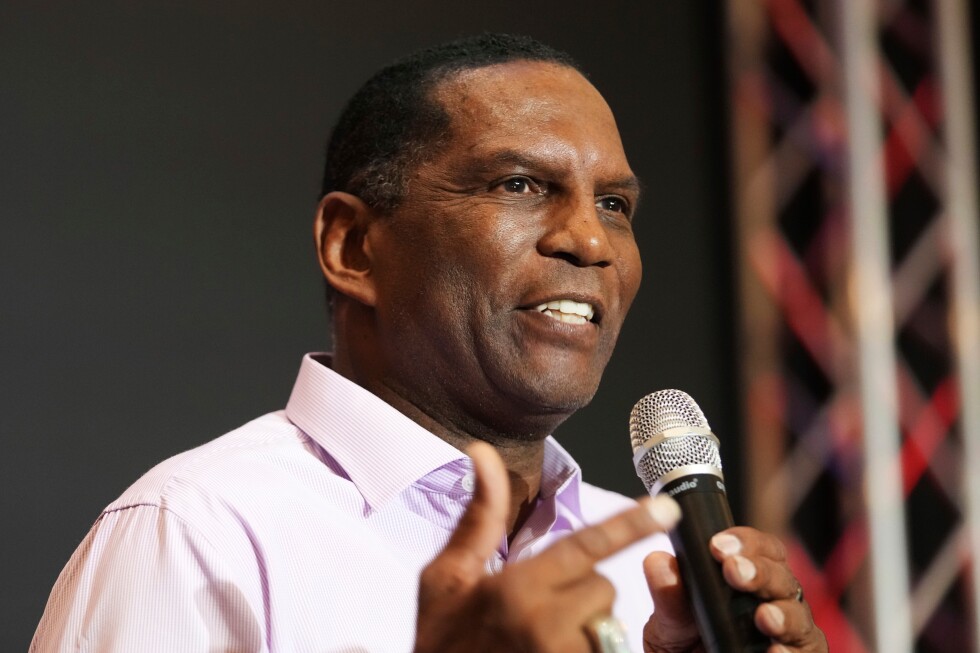
U.S. Rep. Burgess Owens announced Wednesday he will not seek reelection to Congress, a decision that comes amid significant redistricting changes that have reshaped Utah’s political landscape.
The 74-year-old Republican, currently serving his third term, said he will complete his current term before stepping away from elected office. “I will finish this term fully committed and fully accountable,” Owens stated. “My final political sprint will be here in Utah and across the country, helping my colleagues expand our Republican majority.”
Owens’ retirement resolves what could have been a contentious situation for Utah Republicans. A new congressional map adopted by a state judge last year effectively reduced Utah’s Republican-leaning districts from four to three, which would have forced the state’s four Republican representatives to compete for just three seats this fall.
The redistricting process has been contentious, with Owens and other Republican officials filing lawsuits to block the new map. However, both state and federal judges rejected these challenges, ruling it was too late to alter the boundaries for the 2026 election cycle.
With Owens’ departure, the path is now clear for the remaining Republican incumbents—Reps. Blake Moore, Celeste Maloy and Mike Kennedy—to run in the three GOP-leaning districts without facing each other in primary battles.
The fourth district, centered in Salt Lake County, now leans Democratic and has attracted numerous candidates from that party. Former Rep. Ben McAdams, a moderate Democrat whom Owens narrowly defeated in 2020, has entered the race. The Democratic field is crowded with several progressive local officials who could push the party’s representation in the district further left than McAdams’ moderate stance.
Owens, a former NFL safety who played for the New York Jets and won a Super Bowl with the Raiders in 1980, has been a vocal supporter of former President Donald Trump throughout his congressional tenure. He has frequently described Trump as “an advocate for Black Americans.”
His retirement marks a significant shift in the House’s Black Republican representation. Owens is the fourth and final Black Republican House member to announce departure from Congress this term. The others—Reps. Byron Donalds of Florida, John James of Michigan, and Wesley Hunt of Texas—are all pursuing other offices.
Donalds announced in February 2025 that he would run to succeed term-limited Florida Gov. Ron DeSantis. James followed in April with plans to run in Michigan’s open gubernatorial race, and Hunt mounted an unsuccessful primary challenge to Texas Republican Sen. John Cornyn on Tuesday. Cornyn will now face Texas Attorney General Ken Paxton in a May runoff.
If no new Black Republicans are elected to the House in November, it would mark the first time since the 2013-2015 congressional term that the House Republican conference has lacked Black representation.
Congressional departures have been substantial this term, with 53 current representatives—21 Democrats and 32 Republicans—announcing they will not seek reelection to the House after this year.
Owens indicated that after leaving Congress, he plans to continue working to “advance opportunity, advocate for children and strengthen families” from outside elected office, leveraging his platform as a former professional athlete and three-term congressman to remain engaged in public service.
Fact Checker
Verify the accuracy of this article using The Disinformation Commission analysis and real-time sources.

8 Comments
Owens’ retirement is a significant development, especially given the ongoing redistricting battles in Utah. It will be important to follow the candidates and campaigns that emerge to fill this open congressional seat. Redistricting often leads to unpredictable outcomes.
Redistricting is always a complex and often contentious process, and Owens’ retirement is a clear reflection of that. It will be interesting to see who emerges as potential candidates for this open congressional seat in Utah and how the dynamics of the race play out.
Interesting development in Utah politics. Congressman Owens’ retirement amid redistricting challenges highlights the complex dynamics of redrawn district maps. It will be worth watching how this plays out and who steps up to run for the now open seat.
Agreed, redistricting often leads to unexpected shifts in the political landscape. It will be intriguing to see who emerges as potential candidates for the open congressional seat in Utah.
Redistricting is always a hot-button issue, and Owens’ decision not to run again is no surprise given the changing political boundaries in Utah. This could open the door for new voices and perspectives to emerge in the state’s congressional delegation.
Absolutely. Redistricting can have major implications, and it will be interesting to see how the race to replace Owens shapes up. This could be an important seat for Republicans to hold onto.
Congressman Owens’ decision to retire is not surprising given the redistricting changes in Utah. This opens up an interesting opportunity for new candidates to step forward and shape the state’s congressional representation. It will be worth watching how the race for this open seat unfolds.
Agreed, the redistricting process can have a major impact on the political landscape. This open seat in Utah could attract a diverse field of candidates, which could make for a lively and competitive race.