


Listen to the article
The visual politics of detention have a long history in America, from the early photographs of prisoners at Parchman Farm to contemporary images of immigrants in custody. Today, these images remain a powerful tool in political messaging, particularly around immigration enforcement under the Trump administration.
In recent months, detention imagery has become a centerpiece of the administration’s communication strategy. Immigration and Customs Enforcement recruiting advertisements feature such visuals prominently, while similar images populate White House and federal agency social media feeds.
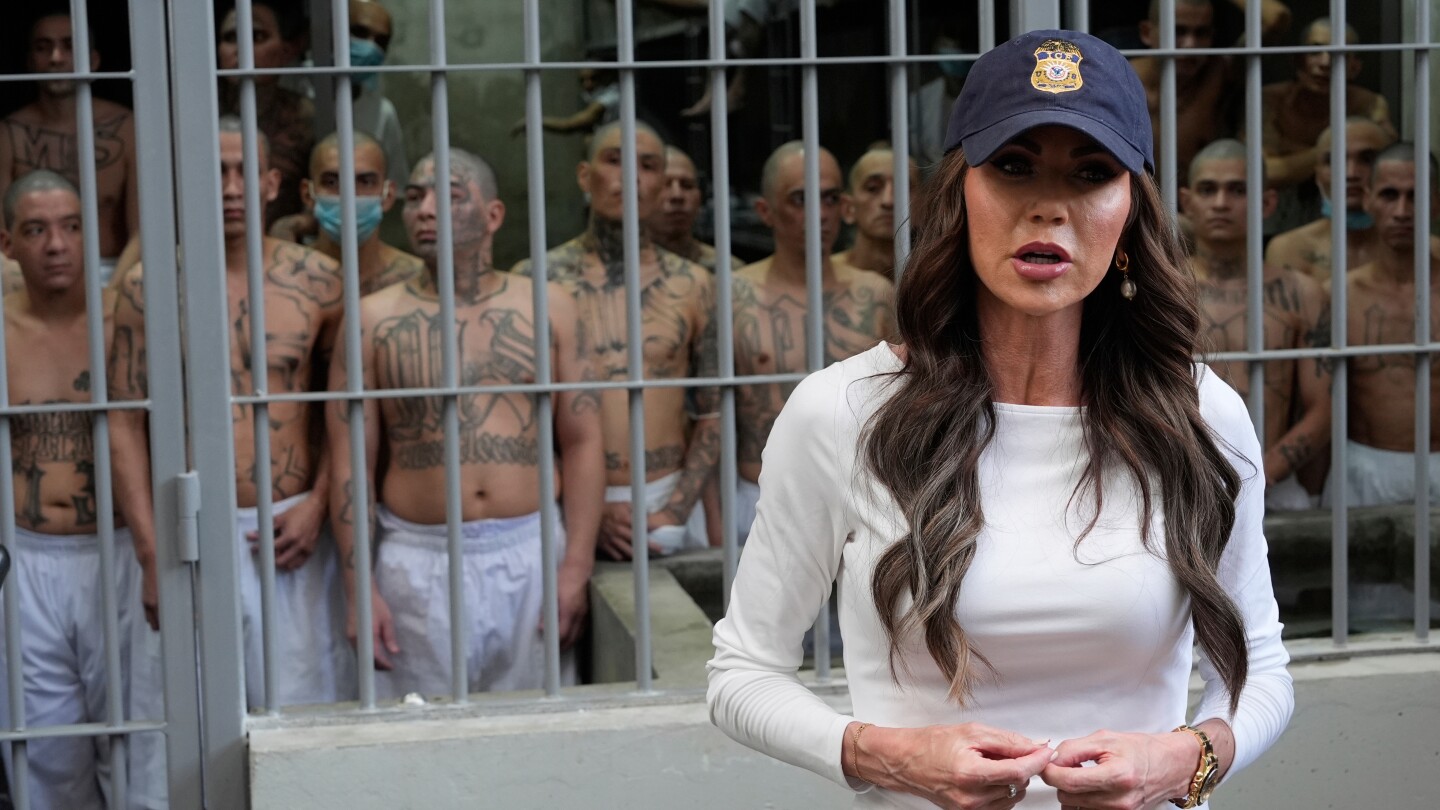
A striking example emerged earlier this year when Homeland Security Secretary Kristi Noem visited a high-security prison in El Salvador where the Trump administration had sent Venezuelan immigrants. The resulting photos and videos showed dozens of shirtless, tattooed men with shaved heads, lined up against cell bars in sweltering conditions as officials documented the scene. Standing before them, Noem issued a warning to other immigrants in the United States that they could face similar consequences.
The men were later released and returned to Venezuela after spending several months in the facility, but the images had already served their purpose—drawing both support from immigration hardliners and condemnation from critics who viewed them as dehumanizing propaganda.
This approach to visual messaging has deep historical roots in American political and social culture. Since photography’s early days, images of incarcerated people have been deployed to demonstrate state power and control.
Historical examples abound: mid-20th century photographs showing convicted men in Alcatraz’s sewing room; early 1900s images of Black men working under armed guards at Mississippi’s Parchman Farm; and perhaps most infamously, the 1988 presidential campaign ad featuring Willie Horton that George H.W. Bush supporters used against Michael Dukakis to portray him as weak on crime.
“Historically we’ve used images of various kinds, whether it’s actual photographs or paintings, wood types, sketches and that sort of thing, to indicate either the functioning of power or the functioning of a well-ordered state,” explains Ashley Rubin, associate professor of sociology at the University of Hawai’i at Mānoa.
The effectiveness of these visuals lies in their immediate emotional impact. Renita Coleman, a journalism professor at the University of Texas at Austin who studies visual ethics, notes that “Photographs, we know they work. They get into our brains a different route than words do. And they get processed faster. They have an emotional component. You see a picture, you feel something before you think about it, and that colors everything.”
Political ideology heavily influences how viewers interpret these images. Some see representations of necessary law enforcement, while others perceive vulnerable people being exploited for political messaging.
A critical ethical concern surrounds consent. When detainees appear in these photographs, they generally have no agency in the matter. According to Tara Pixley, assistant professor of journalism at Temple University, “consent and permission, permission from a person in power and consent from the person being photographed, are two completely different things.”
The intersection of politics and prejudice amplifies the potency of detention imagery. Ed Chung, vice president of initiatives at the Vera Institute, a criminal justice reform organization, points out that “Historically, this type of political propaganda has worked to win elections,” referencing the infamous Willie Horton ad that helped derail Dukakis’s presidential campaign.
Joseph Baker, professor at East Tennessee State University, emphasizes how race and class dynamics influence public perception of detention imagery: “There’s a heavy class dimension, but there’s also a racial ethnic dimension to it. That is a big part of why people feel it’s OK. Because we’re punishing these people who don’t look like me or don’t sound like me… and that sort of allows them to think, ‘oh, you know, good, get those bad people out of here.'”
Despite these entrenched patterns, Chung sees signs of progress. His organization works to educate officials and the public about the prison system while advocating for the dignity of incarcerated people. These efforts appear to be gaining traction in areas like prisoner reentry support and shifting the rhetoric around crime and public safety.
“When you’re able to step back from the political rhetoric,” Chung says, “that creates change.”
Fact Checker
Verify the accuracy of this article using The Disinformation Commission analysis and real-time sources.

9 Comments
This is a thought-provoking piece that highlights the long history of using detention imagery for political messaging in the US. It’s a complex issue without easy answers, but one that deserves careful consideration.
This is a complex issue with valid concerns on both sides. While the visuals may be powerful, we must be cautious about the ethical implications of using detainees and prisoners in this way. Balanced and nuanced discussions are important.
The article raises important questions about the ethics of using detention imagery for political gain. I’m curious to hear more perspectives on how we can address security concerns while upholding human rights and dignity.
The use of detainees and prisoners as props is a concerning practice that deserves scrutiny. While security is important, we must ensure that policies and enforcement are implemented with respect for human rights and dignity.
Agreed. The ethical implications of these practices are troubling and warrant deeper examination. Maintaining public safety and national security should not come at the expense of human rights.
This article provides a valuable historical perspective on the use of detention imagery in American politics. It’s a complex issue that requires nuanced discussion to balance legitimate security concerns with the preservation of human dignity.
Interesting perspective on how detention imagery has been used for political messaging, especially around immigration. It’s a powerful visual tool, but raises ethical concerns about dehumanizing and sensationalizing vulnerable populations.
The article highlights a concerning trend of using detainees and prisoners as props for political gain. While security and enforcement are important, we must be vigilant about preserving human dignity and avoiding the exploitation of vulnerable people.
I agree, the use of these images for political messaging is troubling. We need to ensure that policies and enforcement are implemented humanely and with respect for the rights and dignity of all individuals.