


Listen to the article
U.S. Pledges $45 Million Aid Package to Thailand and Cambodia Following Border Conflict
The United States announced Friday it will provide $45 million in aid to Thailand and Cambodia, aimed at stabilizing their shared border region following clashes that ended last year. The announcement was made in Bangkok by U.S. Assistant Secretary of State for East Asian and Pacific Affairs Michael DeSombre during meetings with Thai officials.
“The restoration of peace at the Thai-Cambodian border opens new opportunities for the United States to deepen our work with both countries to promote regional stability and advance our interests in a safer, stronger and more prosperous Indo-Pacific,” DeSombre said.
The aid package includes $15 million for border stabilization to support recovery efforts and assist displaced persons, $10 million for demining and unexploded ordnance clearance, and $20 million to combat scam operations and drug trafficking. DeSombre indicated that specific details of the aid packages remain under discussion.
The U.S. diplomat is scheduled to meet with Cambodian officials in Phnom Penh on Saturday to further discuss implementation of the Kuala Lumpur Peace Accord, signed last October to end the border conflict.
The fighting, which erupted in July and December last year, stemmed from longstanding territorial disputes along the Thai-Cambodian border. The conflict resulted in approximately 100 military and civilian casualties and displaced hundreds of thousands of people from both countries.
Land mines pose a significant ongoing threat in the region. Cambodia still deals with mines left from decades of civil war, while Thailand has reported about a dozen incidents of its soldiers being wounded by newly laid mines during border patrols last year.
China has also extended aid to the region, providing approximately $2.8 million in emergency humanitarian assistance to displaced Cambodians. Thai Prime Minister Anutin Charnvirakul said Beijing had made a similar offer to Thailand, which his government is still considering.
The U.S. aid announcement comes amid ongoing competition between Washington and Beijing for influence in Southeast Asia. Cambodia has developed close ties with China, while Thailand’s traditionally strong relationship with the United States has reportedly weakened in recent years.
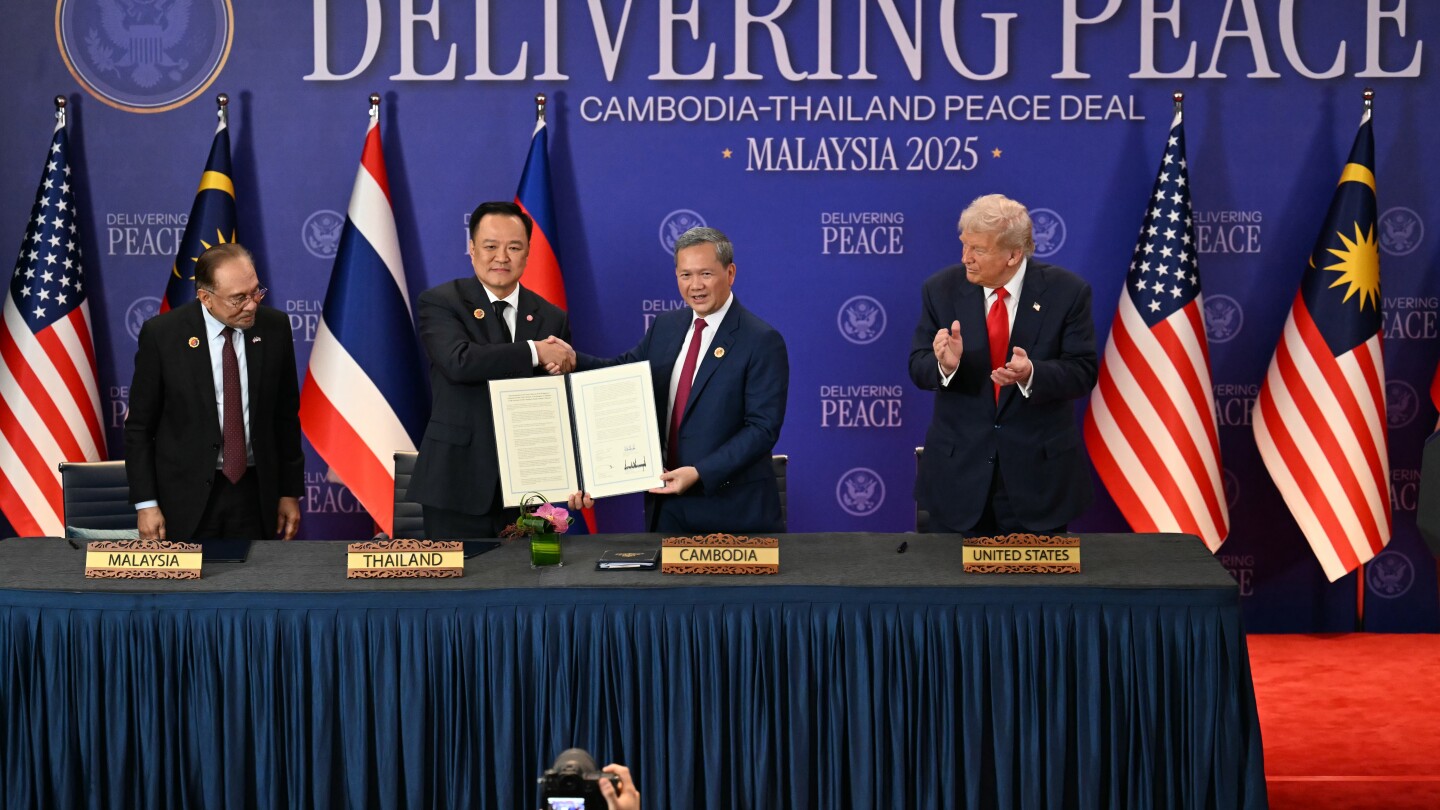
The conflict initially broke out in late July, with five days of fighting before a preliminary ceasefire was agreed upon. Malaysian Prime Minister Anwar Ibrahim attempted to broker peace, but significant progress only came after U.S. President Donald Trump personally intervened. Trump reportedly warned both countries that Washington would not proceed with trade agreements if hostilities continued.
The ceasefire was formalized in October during a regional meeting in Malaysia attended by Trump. However, renewed fighting in early December led to defense ministers from both countries signing a new pact on December 27, reinforcing their commitment to the October agreement.
The U.S. assistance comes at a critical time, as American aid to Southeast Asia and other regions was significantly reduced last year following the closure of the U.S. Agency for International Development (USAID) under the Trump administration.
The aid will also target transnational crime problems, particularly online scams originating from Cambodia and Myanmar, which have defrauded victims worldwide of billions of dollars.
“We are very focused on pursuing peace in and around the world,” DeSombre told journalists. “President Trump is a president of peace, and really believes that peace is critical to economic growth and prosperity.”
Fact Checker
Verify the accuracy of this article using The Disinformation Commission analysis and real-time sources.

10 Comments
The US aid package for Thailand and Cambodia is a positive step, but the details on implementation and coordination with local authorities will be crucial. Addressing border conflicts and tackling transnational crimes like drug trafficking are complex challenges that require sustained engagement.
The US aid to Thailand and Cambodia is a welcome development, as it aims to tackle important regional security challenges. Addressing border conflicts, clearing unexploded ordnance, and combating illicit activities like scams and drug trafficking are all crucial for promoting long-term stability in the Indo-Pacific.
Interesting to see the US taking a more active role in supporting Thailand and Cambodia’s efforts to maintain regional stability. The aid for border stabilization and combating illicit activities seems well-targeted. I wonder how this fits into the broader US strategy for the Indo-Pacific.
The US aid to Thailand and Cambodia is a strategic move to enhance regional security and cooperation. Addressing border issues and tackling transnational crimes like scams and drug trafficking will have a positive impact on the overall stability of the Indo-Pacific region.
The US aid to Thailand and Cambodia is a timely intervention to address longstanding regional challenges. Demining, combating scams and drug trafficking, and supporting displaced persons are all important components. It will be interesting to see how this aid contributes to the overall stability of the region.
This aid package is a welcome development, as it aims to address longstanding border disputes and security challenges in the region. Demining efforts and support for displaced persons are especially important humanitarian components. I’m curious to see how the aid will be implemented on the ground.
Providing $45 million in aid to Thailand and Cambodia is a significant investment by the US to promote stability in the region. Strengthening border security and combating illegal activities like drug trafficking are crucial for the economic and social development of these countries.
This aid package demonstrates the US’s commitment to promoting stability and security in the Indo-Pacific region. Strengthening border management, combating transnational crimes, and supporting humanitarian efforts are all crucial elements. I hope the aid is deployed effectively to achieve tangible results.
This aid package seems like a positive step towards regional stability in Southeast Asia. Addressing border conflicts, demining efforts, and combating scams and drug trafficking are all important priorities. It will be interesting to see the specific details as they are worked out with Thailand and Cambodia.
This aid package seems to be a well-rounded approach to addressing the complex security and humanitarian issues in the Thailand-Cambodia border region. Providing support for border stabilization, demining, and combating transnational crimes is a positive step. I’m curious to see how the implementation unfolds.