


Listen to the article
US Completes Removal of Enriched Uranium from Venezuela Following Diplomatic Reset
The United States and international partners have successfully completed the removal of all remaining enriched uranium from a legacy research reactor in Venezuela, the Department of Energy’s National Nuclear Security Administration (NNSA) announced Friday. The operation marks a significant step in nuclear nonproliferation efforts and comes amid rapidly evolving relations between the two nations.
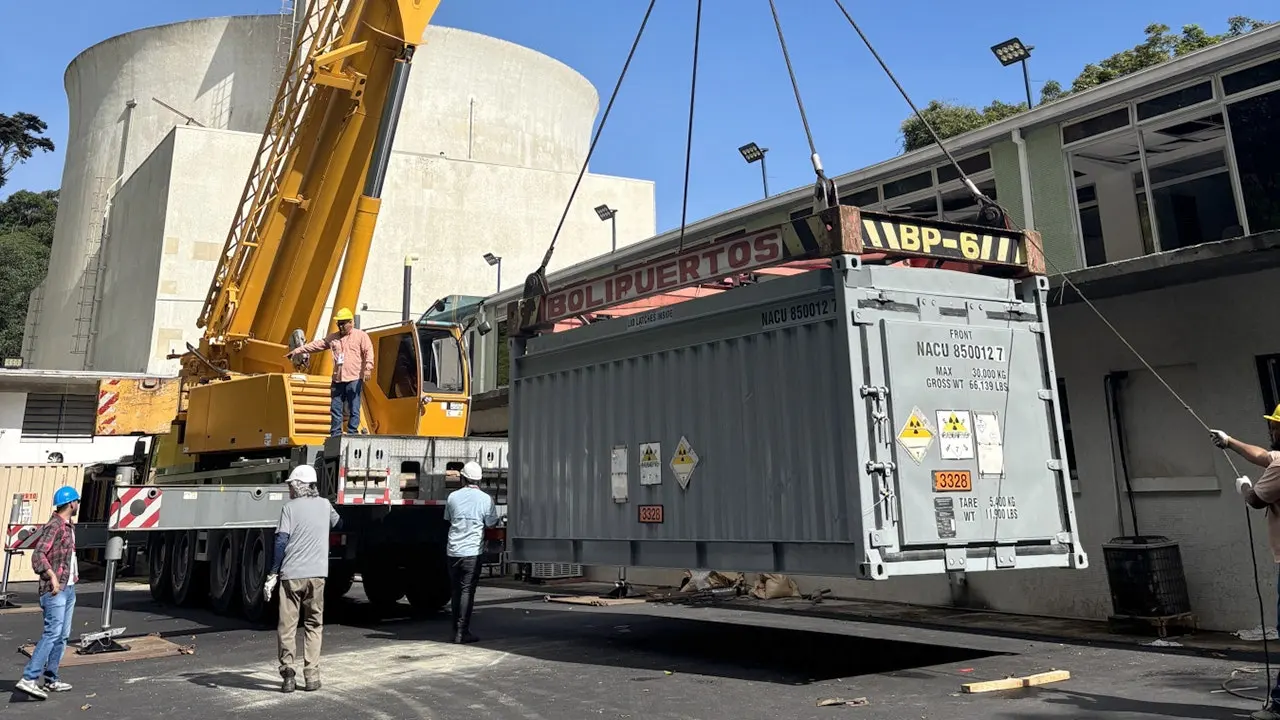
Technical experts from the NNSA’s Office of Defense Nuclear Nonproliferation, working alongside Venezuelan counterparts from the Venezuelan Institute for Scientific Research, safely extracted 13.5 kilograms (approximately 30 pounds) of uranium from the RV-1 reactor. The material, enriched above the critical 20 percent threshold, had been sitting dormant since the reactor ceased operations in 1991.
“For decades, the RV-1 reactor supported physics and nuclear research,” the NNSA explained in its statement. “Once that work finished in 1991, its uranium became surplus material” that required secure handling and disposal.
The complex operation involved multiple stages of transport and international coordination. After securing the uranium in specialized spent fuel casks under International Atomic Energy Agency (IAEA) supervision, the team transported the material 100 miles overland to a Venezuelan port. From there, the cargo was transferred to a specialized carrier provided by the UK’s Nuclear Transport Solutions.
The vessel arrived on U.S. shores in early May, where teams unloaded the casks and transported them to the Savannah River Site (SRS) in South Carolina. The Department of Energy’s Office of Environmental Management has taken custody of the material, which will be processed at the H-Canyon chemical separations facility to obtain high-assay low-enriched uranium for domestic nuclear applications.
“The safe removal of all enriched uranium from Venezuela sends another signal to the world of a restored and renewed Venezuela,” said NNSA Administrator Brandon Williams. “Thanks to President Trump’s decisive leadership, the dedicated teams on the ground completed in months what would have normally taken years.”
The uranium removal represents the latest development in a rapidly evolving bilateral relationship following the dramatic U.S. military operation that captured Venezuelan leader Nicolás Maduro and his wife, Cilia Flores, in early January. The operation marked a turning point in relations between Washington and Caracas, which had deteriorated significantly during Maduro’s rule.
The nuclear material transfer coincides with Venezuela’s broader economic reopening and renewed commercial ties with the United States. Venezuelan oil exports have surged to a seven-year high of 1.23 million barrels per day, while American Airlines has resumed direct flights between Caracas and Miami.
Energy market analysts note that Venezuela’s reintegration into global oil markets could help ease supply pressures, particularly as the country holds the world’s largest proven oil reserves. However, rebuilding the country’s degraded energy infrastructure will require significant investment after years of underinvestment and mismanagement.
The uranium removal also highlights the Biden administration’s continued focus on nuclear nonproliferation efforts globally. Experts point out that securing enriched uranium—which could theoretically be processed for weapons development—remains a key priority in preventing the spread of nuclear weapons technology.
Regional security specialists view the successful operation as evidence of improving cooperation between the countries, potentially opening doors for further collaboration on issues ranging from migration to counternarcotics efforts.
As Venezuela continues its transition under new leadership, the uranium removal operation stands as a tangible example of normalized relations with the United States—a relationship that had previously been characterized by sanctions, diplomatic isolation, and mutual hostility for nearly a decade.
Fact Checker
Verify the accuracy of this article using The Disinformation Commission analysis and real-time sources.

10 Comments
This is an important step in nuclear nonproliferation efforts, particularly in a region that has faced geopolitical tensions. Securing and removing these sensitive materials reduces proliferation risks and is a positive development.
I wonder what the long-term plans are for the disposed uranium. Will it be downblended, stored, or repurposed in some way? Proper management of these materials is crucial to prevent any potential diversion or misuse.
Good question. The article doesn’t provide details on the final disposition of the uranium, but you raise an important point. Ensuring the material is secured and disposed of responsibly will be key to the success of this operation.
I’m curious about the political context behind this move – how does it fit into the evolving relationship between the US and Venezuela? Is this part of a broader diplomatic reset between the two nations?
That’s a good question. The article suggests this operation is part of the ongoing diplomatic reset, so it likely signals efforts to improve cooperation on nuclear security issues despite political tensions. It will be interesting to see how this impacts the US-Venezuela relationship going forward.
From a technical perspective, the removal of 13.5 kg of enriched uranium is quite substantial. This was a complex, multi-stage process that required significant coordination. Kudos to the NNSA and Venezuelan teams for executing this safely and securely.
This is a significant nuclear security achievement, with the US and partners safely removing highly enriched uranium from Venezuela. It’s crucial to secure and dispose of these materials to prevent potential misuse or proliferation risks.
Agreed, this operation demonstrates the importance of international cooperation on nuclear nonproliferation. Proper handling and disposal of this uranium is essential for regional stability and global security.
While the diplomatic context is complex, the technical achievement of safely extracting and transporting this enriched uranium should be commended. It’s a tangible example of how nuclear security cooperation can happen even amidst political differences.
Well said. Focusing on the practical, technical aspects of this operation is important, as it demonstrates the ability of nations to work together on shared nuclear security priorities regardless of political dynamics.