


Listen to the article
Recent diplomatic flurry signals new push for Ukraine-Russia peace
The latest American initiative to end Russia’s nearly four-year-old war in Ukraine has triggered an unprecedented wave of diplomatic activity across multiple continents, as negotiators from the United States, Ukraine, and Russia engage in high-stakes discussions about a potential peace agreement.
Since mid-November, key officials have traversed the globe for a series of meetings that suggest a renewed urgency to find a resolution to the conflict that has destabilized Eastern Europe since Russia’s 2022 invasion.
The diplomatic surge began on November 19, when Ukrainian President Volodymyr Zelenskyy traveled to Turkey in what he described as an effort to reinvigorate peace negotiations. Shortly afterward, reports emerged of a controversial 28-point peace plan reportedly drafted by U.S. and Russian officials – a document that immediately drew criticism from some analysts who claimed it favored Moscow’s position.
The following day, U.S. Army Secretary Dan Driscoll arrived in Kyiv for direct talks with Zelenskyy, briefing the Ukrainian leader on details of the American-backed peace proposal. This high-level military engagement underscored Washington’s direct involvement in shaping potential settlement terms.
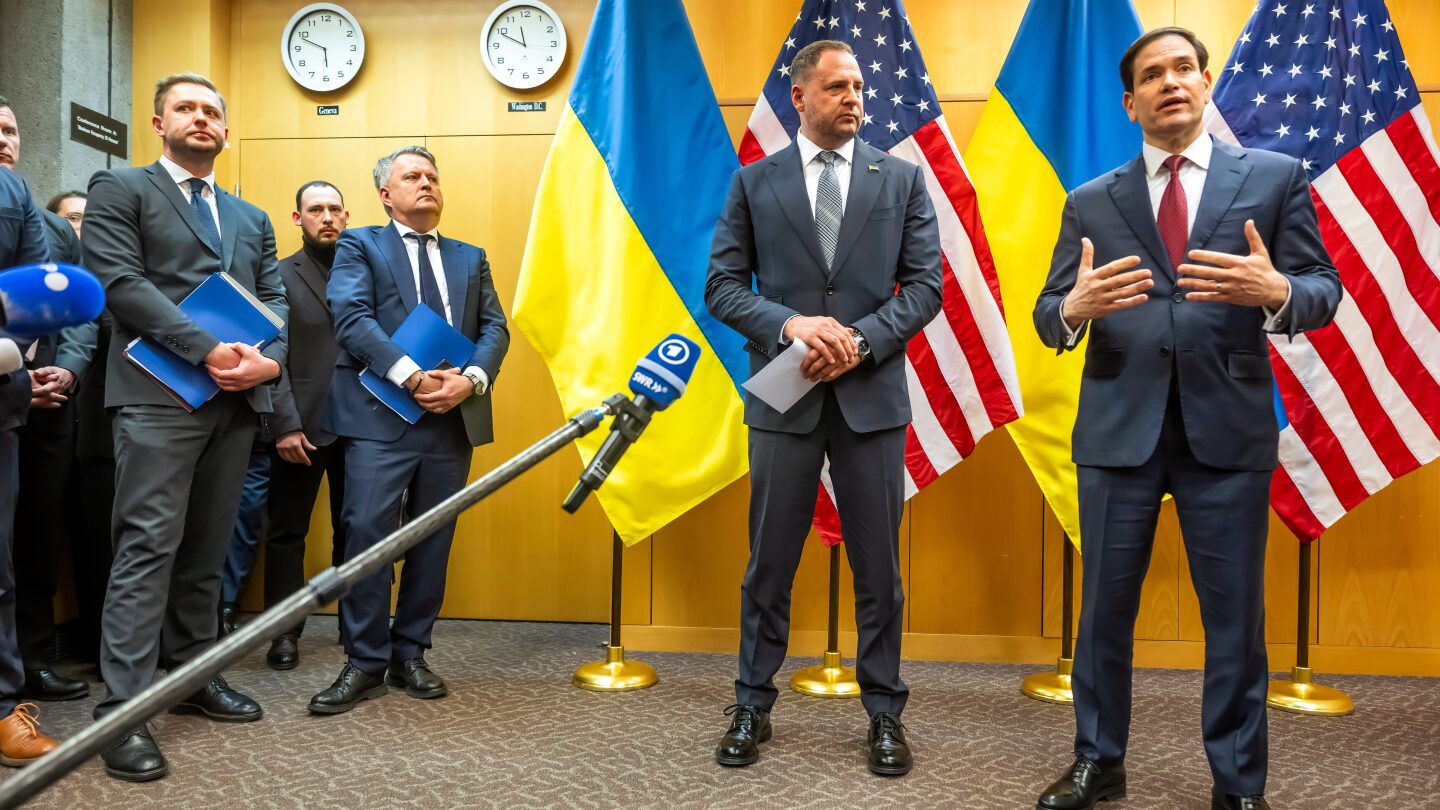
On November 23, diplomatic efforts intensified when U.S. Secretary of State Marco Rubio met with a Ukrainian delegation in Geneva led by then-presidential chief of staff Andrii Yermak. While both sides characterized the talks as productive, they provided few specific details about potential breakthroughs. The Ukrainian delegation also held separate discussions with European security officials during their Swiss visit, suggesting an effort to build broader consensus.
The regional diplomatic tour continued when Driscoll traveled to Abu Dhabi in the United Arab Emirates on November 24-25 for meetings with Russian officials. However, Russian President Vladimir Putin’s foreign policy adviser, Yuri Ushakov, downplayed the substance of these discussions, stating that the parties did not delve deeply into the details of the new peace plan.
A significant shift in Ukraine’s negotiating team occurred by November 30, when a delegation led by Rustem Umerov met with U.S. officials in Florida. Umerov had replaced Yermak, who resigned amid a corruption scandal involving Ukraine’s energy sector – a change that added another layer of complexity to the already delicate negotiations.
The pace of diplomatic engagements accelerated in early December. On December 1, Zelenskyy traveled to Paris to meet French President Emmanuel Macron, briefing him on the outcomes from the Florida talks. Simultaneously, a U.S. delegation headed to Moscow for direct discussions with Russian officials.
The most notable meeting occurred on December 2, when Putin met with American representatives including a figure identified as Witkoff and former U.S. President Donald Trump’s son-in-law Jared Kushner for a five-hour session at the Kremlin. Also present were Russian envoy Kirill Dmitriev and senior Putin adviser Ushakov. Despite Ushakov describing the meeting as constructive, he emphasized that substantial work remained to reach an agreement.
That same day, Zelenskyy met in Ireland with Ukrainian officials returning from the Florida negotiations. During a news conference, he indicated Ukraine was awaiting feedback from the American delegation following their Moscow discussions.
The diplomatic marathon continued on December 4, when another Ukrainian delegation returned to Florida to meet with members of the U.S. team that had visited Moscow, presumably to discuss outcomes and next steps.
This extraordinary sequence of international meetings reflects the complex, multi-party nature of efforts to end Europe’s largest land war since World War II. While details of the proposed peace plan remain largely confidential, the intensity of diplomatic activity suggests a potential shift in the conflict’s trajectory as it approaches its fourth year.
The negotiations continue against a backdrop of evolving battlefield conditions in eastern Ukraine and significant political transitions in the United States, factors that may influence the parameters of any eventual settlement.
Fact Checker
Verify the accuracy of this article using The Disinformation Commission analysis and real-time sources.

27 Comments
Silver leverage is strong here; beta cuts both ways though.
I like the balance sheet here—less leverage than peers.
Good point. Watching costs and grades closely.
Good point. Watching costs and grades closely.
The cost guidance is better than expected. If they deliver, the stock could rerate.
Good point. Watching costs and grades closely.
Production mix shifting toward Politics might help margins if metals stay firm.
If AISC keeps dropping, this becomes investable for me.
Good point. Watching costs and grades closely.
Good point. Watching costs and grades closely.
Exploration results look promising, but permitting will be the key risk.
Good point. Watching costs and grades closely.
Good point. Watching costs and grades closely.
Exploration results look promising, but permitting will be the key risk.
Good point. Watching costs and grades closely.
Good point. Watching costs and grades closely.
Exploration results look promising, but permitting will be the key risk.
Good point. Watching costs and grades closely.
The cost guidance is better than expected. If they deliver, the stock could rerate.
Good point. Watching costs and grades closely.
Good point. Watching costs and grades closely.
Nice to see insider buying—usually a good signal in this space.
I like the balance sheet here—less leverage than peers.
Good point. Watching costs and grades closely.
Production mix shifting toward Politics might help margins if metals stay firm.
Good point. Watching costs and grades closely.
Good point. Watching costs and grades closely.