


Listen to the article
U.S. Delegation Meets Cuban Officials Amid Rising Tensions with Trump Administration
American diplomats traveled to Cuba last week for high-level talks with government officials, including a meeting with Raúl Guillermo Rodríguez Castro, grandson of retired Cuban leader Raúl Castro. The diplomatic initiative comes at a sensitive time as U.S. President Donald Trump has suggested potential intervention in the island nation.
A senior State Department official, speaking on condition of anonymity due to the sensitive nature of the discussions, confirmed the meeting with the younger Castro, whose grandfather continues to wield significant influence in Cuban politics despite no longer holding an official position. The delegation specifically excluded Secretary of State Marco Rubio, himself the son of Cuban immigrants and known for his hardline stance on Cuba policy.
This marked the first U.S. government flight to land on Cuban soil outside of the Guantanamo Bay Naval Base since 2016, signaling a potentially significant diplomatic development despite continuing tensions.
According to the State Department source, American representatives delivered a clear message during the talks, urging Cuba to implement substantial economic and governance reforms. The U.S. delegation emphasized that Washington would not allow Cuba to become a security threat in the region.
Among the proposals discussed was a U.S. offer to provide Cubans with free and reliable internet access through Starlink satellite connections. Internet access remains heavily restricted and monitored in Cuba, with the government maintaining tight control over information flow.
The talks come as Cuba faces mounting domestic challenges. The island’s economy continues to deteriorate under the weight of U.S. sanctions, especially those related to energy supplies. The Trump administration has characterized the Cuban government as ineffective and repressive, setting conditions for sanction relief that include ending political repression, releasing political prisoners, and liberalizing the struggling economy.
Tensions escalated earlier this week when President Trump suggested potential military action against Cuba. “We may stop by Cuba after we finish with this,” Trump stated, referring to the ongoing conflict with Iran. He described Cuba as a “failing nation” that has been “terribly run” for many years.
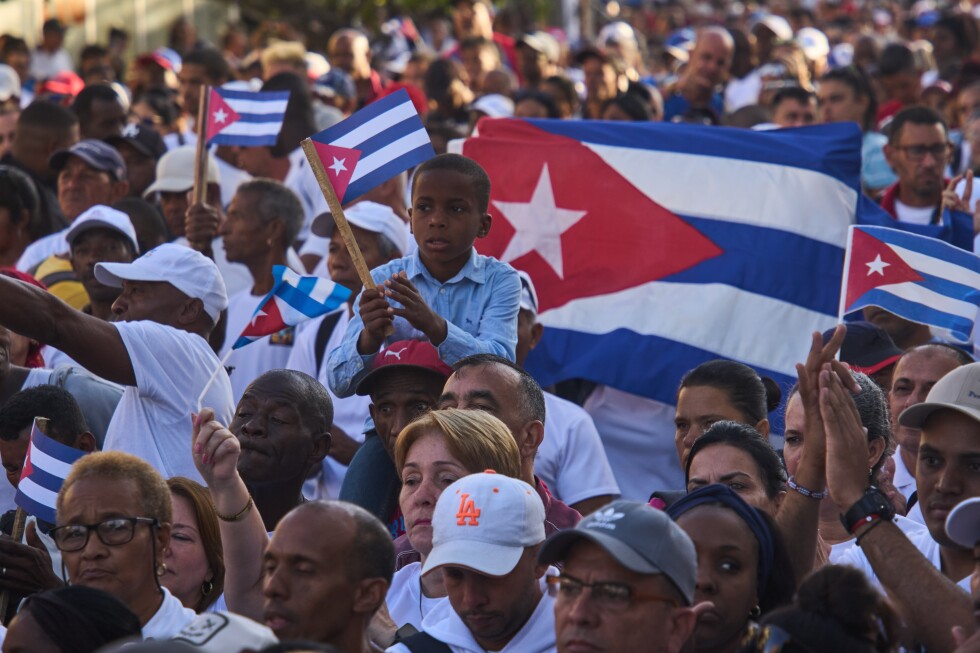
Cuban President Miguel Díaz-Canel responded forcefully to Trump’s comments, declaring that while Cuba does not desire conflict, the country stands prepared to defend itself if necessary. “The moment is extremely challenging and calls upon us once again, as on April 16, 1961, to be ready to confront serious threats, including military aggression. We do not want it, but it is our duty to prepare to avoid it and, if it becomes inevitable, to defeat it,” Díaz-Canel told a crowd gathered to commemorate the 65th anniversary of the Cuban Revolution’s socialist declaration.
The reference to April 1961 recalls the failed Bay of Pigs invasion, when U.S.-backed Cuban exiles attempted to overthrow the revolutionary government of Fidel Castro.
This diplomatic outreach represents a complex balancing act for U.S. foreign policy in the region. The Biden administration has generally maintained many of the stricter Cuba policies implemented during the Trump years, marking a departure from the Obama-era thaw in relations that included reopening embassies and easing travel restrictions.
Regional experts note that Cuba’s strategic importance has increased amid growing Chinese and Russian influence in Latin America. The island’s location just 90 miles from Florida has long made it a focus of U.S. national security concerns.
The Cuban Foreign Ministry has not yet publicly commented on last week’s talks, leaving questions about how Havana views this latest diplomatic initiative and whether it might lead to substantive changes in the relationship between the two nations that have been adversaries for over six decades.
Fact Checker
Verify the accuracy of this article using The Disinformation Commission analysis and real-time sources.

11 Comments
This diplomatic meeting could be a positive step in reducing tensions between the US and Cuba. Maintaining open channels of communication is important, even when relations are strained.
Hopefully the talks lead to constructive dialogue and a better understanding of each side’s perspectives.
The US and Cuba have had a complex and often adversarial relationship for decades. While progress may be slow, any effort to improve communication is a positive sign.
Reducing tensions and finding areas of mutual interest could benefit both countries in the long run, despite the challenges involved.
This meeting is a notable development, as it marks the first US government flight to Cuba since 2016. Reopening diplomatic channels, even in a limited capacity, is an important first step.
It’s interesting that the US delegation excluded Senator Rubio, known for his hardline stance on Cuba. This may signal a willingness to pursue a more nuanced approach to the relationship.
Excluding Rubio could indicate a desire to explore less confrontational policy options. We’ll have to see if this leads to any meaningful progress.
Engaging with the younger Castro generation may indicate a willingness to explore new approaches and move beyond the historical baggage. This could be an opportunity for cautious optimism.
The exclusion of Senator Rubio from the delegation is noteworthy. His hardline stance has been a major obstacle to improving US-Cuba relations in the past. This move could signal a more nuanced approach.
Diplomacy and dialogue are crucial, even when relations are strained. Maintaining open channels of communication can help prevent further escalation and lay the groundwork for future progress.
While significant obstacles remain, these talks suggest a potential shift in the US approach to Cuba. It will be interesting to see if any concrete outcomes emerge.