


Listen to the article
In a swift response to unfolding global crises, the U.S. Agency for Global Media (USAGM) has mobilized its resources to deliver critical information to populations living under restrictive regimes in Venezuela and Iran, according to agency head Kari Lake.
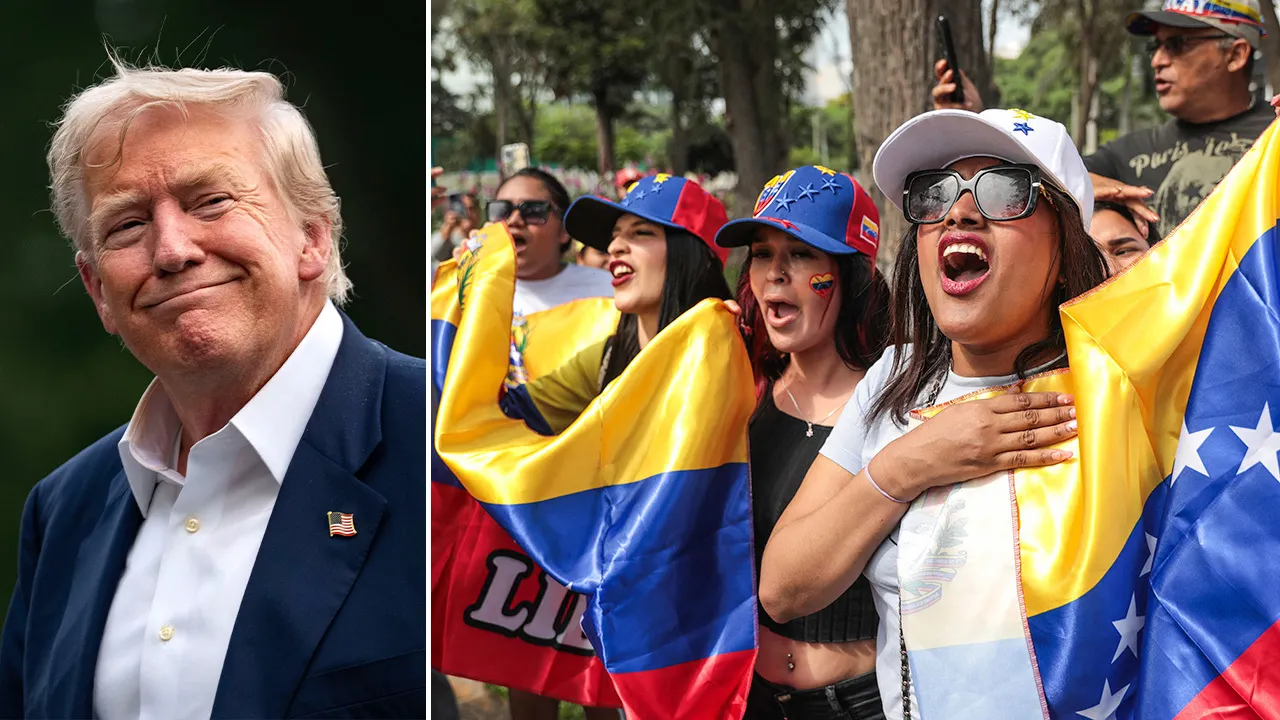
When news emerged on January 3 about a U.S. military operation to extract Venezuelan dictator Nicolás Maduro, USAGM immediately activated its communication networks targeting Latin America.
“The minute I heard about it, I had the team down in Miami that operates our office of Cuba broadcasting on the phone,” Lake said in an interview. “They were immediately deployed into the newsroom and they started coverage right away.”
The agency rapidly expanded its broadcasting through Radio Martí and Martí Noticias, transmitting Spanish-language coverage directly into Cuba, Venezuela, and across the Caribbean region. The effort aimed to not only inform residents about the dramatic developments but also to inspire hope in populations living under similar authoritarian conditions.
“When people in Cuba hear that Maduro has been taken down, it gives them hope that they too can one day have that freedom,” Lake explained. The agency’s Voice of America carried President Trump’s addresses on Venezuela live and provided comprehensive coverage of congressional reactions and responses within Venezuela, reaching more than 6.6 million global audience impressions.
The operation in Venezuela came shortly after another major crisis emerged when protests erupted in Iran against the Khomeini regime. USAGM responded by significantly expanding its Persian-language programming to reach Iranians living under some of the world’s strictest media restrictions.
“Iranian people have been subjected to such horrible conditions with a dictator and a regime that has been just cruel for 47 years. They don’t get fair media,” Lake said. “We’ve been able to provide them with honest coverage.”
Over the first 12 days of unrest in Iran, USAGM’s Voice of America Persian service added seven additional hours of live broadcasts, including extended primetime breaking newscasts. The agency also ramped up its digital presence, publishing 52 web stories and pushing more than 1,700 pieces of content across six social media platforms, including over 170 user-generated videos sent from inside Iran documenting both the demonstrations and the regime’s response.
These efforts yielded significant results, with VOA’s Persian website recording a record 1.69 million daily visits on December 28. During the first 12 days of protests, video views jumped more than 160 percent while article views rose nearly 80 percent, driving approximately 13 million total visits to the site—a 15 percent increase over normal traffic.
Lake emphasized that the agency has created informational synergy between regions by sharing developments across their broadcasting networks. “People in Iran are very interested in what happened in Venezuela,” she noted. “We’re combining forces and making sure that everyone living under these regimes realizes that the people are rising up all over the world right now.”
The USAGM’s rapid response comes amid Lake’s broader efforts to restructure the agency, which she described as previously “bloated” and inefficient. Following a presidential executive order to reduce the agency to its “statutory minimum,” Lake has focused on streamlining operations while maintaining the ability to respond to breaking news.
“I worked in the media for 30 years,” Lake said, addressing critics who questioned the agency’s ability to function with reduced staffing. “I know that when a big story breaks, you ramp up coverage and that’s exactly what we’ve done.”
The agency’s work represents a significant component of American soft power, providing access to information in regions where independent media is heavily restricted or nonexistent. By delivering news about developments in Venezuela to Iranian audiences and vice versa, USAGM appears to be pursuing a strategy of cross-pollinating information about protest movements and regime changes across different authoritarian contexts.
“We’re at the precipice, I believe, of not only just a peaceful world, but one where the people are free in places where they haven’t experienced that lovely feeling of freedom for a long time,” Lake said of the agency’s mission during these historic global developments.
Fact Checker
Verify the accuracy of this article using The Disinformation Commission analysis and real-time sources.

10 Comments
This is a complex geopolitical issue without easy solutions. I hope the USAGM’s media efforts can genuinely empower the people in Venezuela and Iran, but they’ll need to navigate the situation very carefully.
The US is clearly trying to leverage its media channels to counter the authoritarian regimes in Venezuela and Iran. It will be important to monitor whether these broadcasts have the intended impact of informing and empowering the local populations.
You raise a good point. Bypassing censorship is a noble goal, but the effectiveness will depend on how well the content resonates and avoids being seen as foreign propaganda.
Interesting move by the US to try and bypass media censorship in Venezuela and Iran. Curious to see how effective these communication efforts will be in reaching the local populations and inspiring hope for freedom.
It’s good to see the US trying to find ways to get uncensored information to the people of Venezuela and Iran. Countering authoritarian propaganda is important, but the execution will be critical to avoid backfiring.
Agreed. The USAGM will need to strike a delicate balance between providing valuable information and not appearing too heavy-handed or like they’re trying to impose a foreign agenda.
Kudos to the USAGM for moving quickly to expand their media coverage in response to the situation in Venezuela. Providing uncensored information is important, but they’ll need to be careful not to come across as heavy-handed.
This seems like an aggressive move by the Trump administration to try and undermine the governments in Venezuela and Iran. I’m curious to see if it leads to any tangible changes on the ground or just amounts to political posturing.
Bypassing media censorship is a noble goal, but I worry this could further inflame tensions and potentially put innocent civilians at risk. The USAGM will need to tread carefully and focus on empowering local voices, not just broadcasting American narratives.
While I understand the rationale behind these efforts, I have concerns about the potential for unintended consequences. Authoritarian regimes often crack down hard on perceived foreign interference, which could make life even worse for the citizens.