


Listen to the article
Republicans Downplay Election Losses, Maintain Unity Behind Trump Despite Economic Concerns
Nearly two weeks after suffering significant electoral defeats in Georgia, New Jersey, Pennsylvania and Virginia, Republican leadership is projecting confidence in the party’s direction, dismissing suggestions that policy adjustments or messaging changes are needed in the wake of these losses.
President Donald Trump and Republican officials are instead emphasizing party unity and attributing voter concerns about affordability to misleading narratives from Democrats and the media. The message from GOP strategists is clear: candidates should fully embrace the president and highlight his accomplishments as they prepare for the 2026 midterm elections.
“Republicans are entering next year more unified behind President Trump than ever before,” Republican National Committee spokesperson Kiersten Pels said. “The party is fully aligned behind his America First agenda and the results he’s delivering for the American people. President Trump’s policies are popular, he drives turnout, and standing with him is the strongest path to victory.”
This assessment underscores how deeply the Republican Party’s fortunes are linked to Trump, who remains steadfast in his economic messaging despite voter concerns. While the president has begun speaking more about affordability since Election Day, including cutting tariffs on beef and other commodities last Friday, his primary message remains that the economy is stronger and prices are lower than media reports suggest.
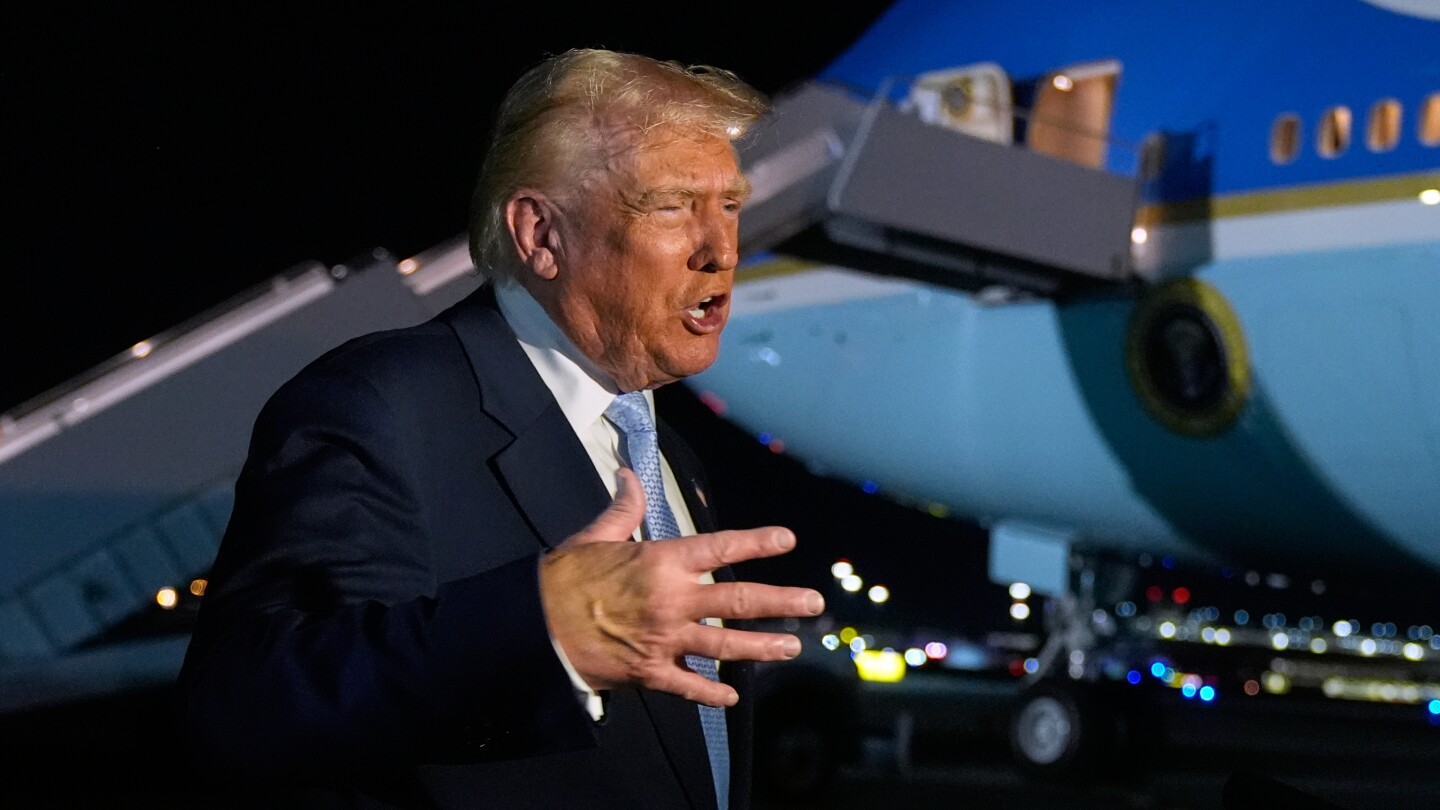
“We have a great economy and the prices are coming down,” Trump told reporters Sunday night while returning to the White House from his Florida resort. He blamed Democrats for creating “the highest inflation in the history of our country,” claiming, “I have it down now to a normal level and it’s going down further.”
In a social media post Friday, Trump declared: “We are the Party of Affordability!” He has also claimed that Thanksgiving dinner costs will be down 25% this year, though official data contradicts this assertion. Government statistics show grocery prices are actually 2.7% higher than they were in 2024.
The AP Voter Poll identified economic concerns as the dominant issue for voters in this month’s elections, presenting a challenge for Republicans who historically face difficulties in midterm elections when their party controls the White House.
Doug Heye, a Republican strategist, warned that Trump’s approach might not help Republican candidates navigating an already difficult political environment in 2026. “Republicans need to relay to voters that they understand what they’re going through and that they’re trying to fix it,” Heye said. “That can be hard to do when the president takes a nonmetaphorical wrecking ball to portions of the White House, which distract so much of Washington and the media.”
“Candidates cannot afford to be distracted,” Heye added. “As we saw in the recent elections, especially in Virginia, if you’re not talking about what voters are talking about, they will tune you out.”
Some Republican candidates appear to recognize this reality. New York Rep. Elise Stefanik, who recently launched a campaign for governor, acknowledged that affordability is unquestionably the top issue for her constituents. While supporting the president, she has emphasized her focus on “the high taxes and spending, the unaffordability” affecting New Yorkers, rather than the cultural issues that dominated Republican messaging in Virginia’s recent gubernatorial race.
Meanwhile, the Republican National Committee has issued talking points that minimize the recent election losses as merely reflecting Democratic voter advantage in the states where the races occurred. The talking points, obtained by The Associated Press, notably ignore Republican losses in Georgia and Pennsylvania while overstating Trump’s political strength.
The RNC claims that Trump is more popular than former Presidents Barack Obama and George W. Bush were at similar points in their presidencies. However, AP polling analysis contradicts this assertion. Trump’s approval rating stands at 36% in a November AP-NORC poll, while both Obama and Bush had approval ratings in the low 40s at comparable points in their second terms, according to Gallup polling.
Despite these challenges, the GOP’s official messaging doubles down on supporting Trump and his policies. The RNC talking points explicitly state that the recent elections “were not a referendum on President Trump, Republicans in Congress, or the MAGA Agenda.” Their strategy for 2026 relies on mobilizing “Make America Great Again” voters, asserting that “President Trump and Republicans are going to make that happen.”
As the party looks toward the midterms, the disconnect between the official message of unwavering confidence and the electoral reality on the ground presents a significant strategic challenge for Republican candidates who must navigate voter concerns about economic affordability while maintaining loyalty to the president.
Fact Checker
Verify the accuracy of this article using The Disinformation Commission analysis and real-time sources.

12 Comments
I’m curious to see if the GOP’s unwavering support for Trump’s agenda will pay off, or if they’ll need to adapt their messaging and policy priorities to address voters’ real-world challenges around inflation, costs, and the economy.
That’s a great question. Maintaining strict party loyalty may energize the base, but could alienate independent and swing voters who are more focused on their personal financial situation.
The Republican party seems determined to maintain unity behind Trump, even as voters express concerns about affordability and the economy. This could be a risky political gamble ahead of the 2024 elections.
You make a good point. Voters typically care most about pocketbook issues, so dismissing those concerns could cost the GOP dearly.
Interesting to see the GOP doubling down on Trump’s agenda despite some recent election losses. I wonder how sustainable this strategy will be going forward, especially with concerns about affordability and the economy.
It’s a bold move, but may backfire if they don’t address voters’ real concerns around cost of living and economic challenges.
The Republican strategy of doubling down on Trump’s populist platform, even in the face of electoral setbacks, is certainly a bold move. It will be interesting to see if it resonates with voters concerned about affordability and the economy, or if it backfires.
Agreed. Dismissing these voter concerns could be risky, especially if the economic situation doesn’t improve. The GOP may need to find a way to balance party unity with addressing real-world issues.
It’s an intriguing political gambit by the GOP to double down on Trump’s agenda despite recent losses. However, I wonder if this unwavering loyalty to the former president’s populist platform will truly resonate with voters grappling with economic challenges.
That’s a good point. Voters tend to be pragmatic and focused on their own financial well-being. Refusing to acknowledge these concerns could be a miscalculation by Republican leadership.
The Republican party’s insistence on maintaining unity behind Trump’s agenda, even in the face of voter concerns about affordability and the economy, is a bold but potentially risky strategy. It will be fascinating to see how this plays out leading up to the 2024 elections.
Absolutely. Dismissing issues like cost of living and inflation could backfire if the GOP doesn’t find a way to address these very real concerns that are top-of-mind for many Americans.