


Listen to the article
In a dramatic policy shift, the Trump administration on Thursday revoked a critical scientific finding that has underpinned U.S. climate policy for over a decade. The Environmental Protection Agency rescinded the 2009 “endangerment finding” that classified carbon dioxide and other greenhouse gases as threats to public health and welfare.
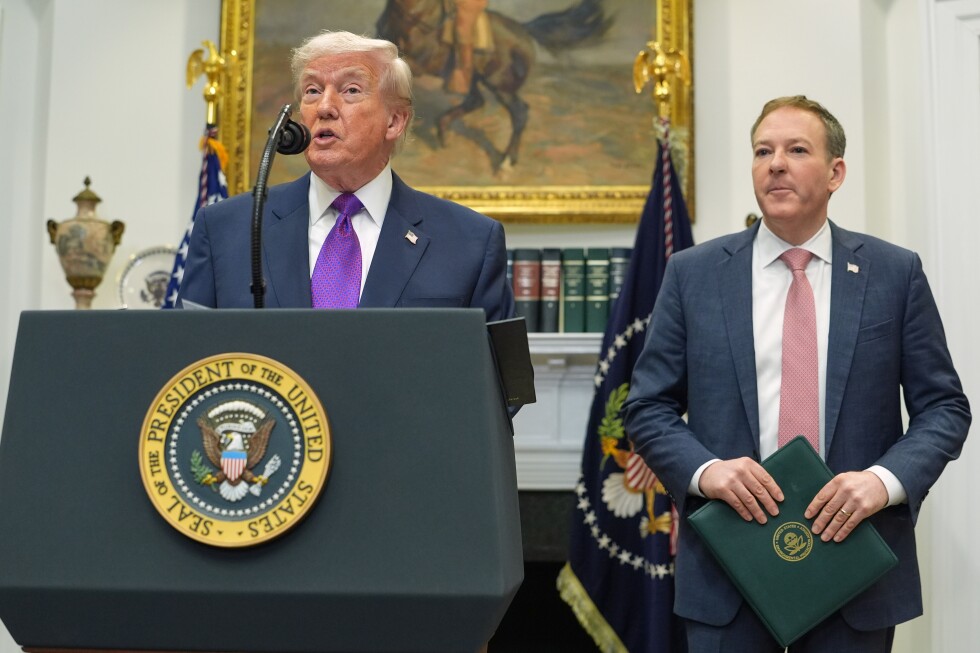
EPA Administrator Lee Zeldin called the finding “the Holy Grail of federal regulatory overreach,” while President Trump described it as “the single largest deregulatory action in American history” and “one of the greatest scams in history.”
The move eliminates the legal foundation for nearly all climate regulations under the Clean Air Act, including emissions standards for vehicles, power plants, and oil and gas facilities. Without this scientific determination, the federal government loses its primary legal justification for limiting greenhouse gas emissions across multiple industries.
Environmental groups immediately condemned the action as the most significant attack on climate policy in U.S. history. Fred Krupp, president of Environmental Defense Fund, warned, “This action will only lead to more climate pollution, and that will lead to higher costs and real harms for American families,” citing impacts on health, property values, and water supply.
The EPA also announced it will propose a two-year delay to Biden-era vehicle emissions standards and end incentives for automakers who install automatic start-stop ignition systems intended to reduce emissions.
Zeldin, a former Republican congressman appointed by Trump last year, has criticized Democratic administrations for climate policies he claims were “willing to bankrupt the country.” He asserted the endangerment finding led to “trillions of dollars in regulations that strangled entire sectors of the United States economy.”
The legal foundation for climate regulation dates back to a landmark 2007 Supreme Court ruling in Massachusetts v. EPA, which determined greenhouse gases qualify as air pollutants under the Clean Air Act. Courts have consistently upheld the endangerment finding against legal challenges, including a 2023 decision by the U.S. Court of Appeals for the District of Columbia Circuit.
Former EPA Administrator Gina McCarthy criticized the action as “reckless” while former President Barack Obama said on X that the repeal will make Americans “less safe, less healthy and less able to fight climate change—all so the fossil fuel industry can make even more money.”
Medical experts expressed concern about health impacts. Dr. Lisa Patel, a pediatrician and executive director of the Medical Society Consortium on Climate and Health, predicted, “As a result of this repeal, I’m going to see more sick kids come into the Emergency Department having asthma attacks and more babies born prematurely.”
David Doniger of the Natural Resources Defense Council described the move as a “kill shot” designed to invalidate nearly all climate regulations. The action follows an executive order from Trump directing the EPA to review “the legality and continuing applicability” of the endangerment finding.
The transportation sector remains the largest source of greenhouse gas emissions in the U.S. In December, the administration proposed weakening vehicle mileage standards for automakers. Environmental groups argue these changes will keep polluting vehicles on U.S. roads for years, threatening public health, particularly for children and the elderly.
Legal challenges to the EPA’s decision are expected imminently as the battle over U.S. climate policy enters a new phase.
Fact Checker
Verify the accuracy of this article using The Disinformation Commission analysis and real-time sources.

16 Comments
This move seems politically motivated rather than grounded in science. Dismissing the EPA’s own endangerment finding is a dangerous precedent that could erode public trust in government institutions.
I share your concern about the potential for political interference in policymaking around climate change. Science should guide these decisions, not ideology.
This decision is deeply troubling and seems to ignore the overwhelming scientific consensus on climate change. Revoking the endangerment finding will make it much harder to address one of the greatest threats facing humanity.
I agree, this is a very concerning development. Climate change is a global issue that requires robust, coordinated policy responses grounded in science. Eroding that foundation is extremely shortsighted.
As someone with a background in mining and energy, I’m deeply troubled by this decision. Undermining the legal foundation for climate regulations will create significant uncertainty for companies operating in these sectors. We need clear, predictable policies to drive long-term investment and innovation.
I appreciate your industry perspective. Regulatory instability is extremely disruptive and can stifle investment and progress. Policymakers should work to establish a stable, science-based framework that provides clarity for businesses while also protecting the environment.
While I understand the desire to reduce federal regulations, climate change is an urgent global issue that requires evidence-based policymaking. Revoking this scientific finding could have severe long-term consequences for the environment and public health.
You raise a fair point. Regulatory reform is important, but it shouldn’t come at the expense of critical environmental protections backed by sound science.
The revocation of the endangerment finding is a setback, but I hope the Biden administration will be able to restore it and reinstate science-based climate regulations. Strong federal leadership is needed to address this global challenge.
Absolutely. Rebuilding the scientific foundation for climate policy should be a top priority for the new administration. Decisive action is required to get the US back on track.
This is a concerning move that could severely undermine the US’s efforts to address climate change. Revoking the endangerment finding removes a key legal basis for regulating greenhouse gas emissions. Without this, progress on reducing emissions could grind to a halt.
Agreed, this seems like a major setback in the fight against climate change. The scientific consensus on the risks is clear, so undoing this finding is deeply troubling.
While I appreciate the desire to reduce federal overreach, climate change is an existential threat that demands a science-driven policy response. Revoking this critical finding could have devastating long-term consequences for the environment and public health.
Well said. Balancing economic priorities with environmental protection is challenging, but ignoring established scientific facts is not the answer. We need pragmatic, evidence-based solutions, not politically-motivated rollbacks of essential safeguards.
As an investor in mining and energy companies, I’m concerned about the potential regulatory uncertainty this could create. While I support reasonable deregulation, rolling back core environmental protections seems short-sighted and could lead to legal challenges.
I share your perspective as an investor. Regulatory unpredictability is problematic for businesses and can undermine confidence in the market. A balanced, evidence-based approach is needed.