


Listen to the article
Federal Immigration Force Reduction in Minnesota Signals Partial Cooperation, Though Tensions Persist
The Trump administration announced Wednesday it will withdraw approximately 700 federal immigration officers from Minnesota, representing roughly a quarter of the total force deployed to the state. The decision comes amid weeks of heightened tensions and deadly confrontations resulting from the administration’s aggressive immigration enforcement operations.
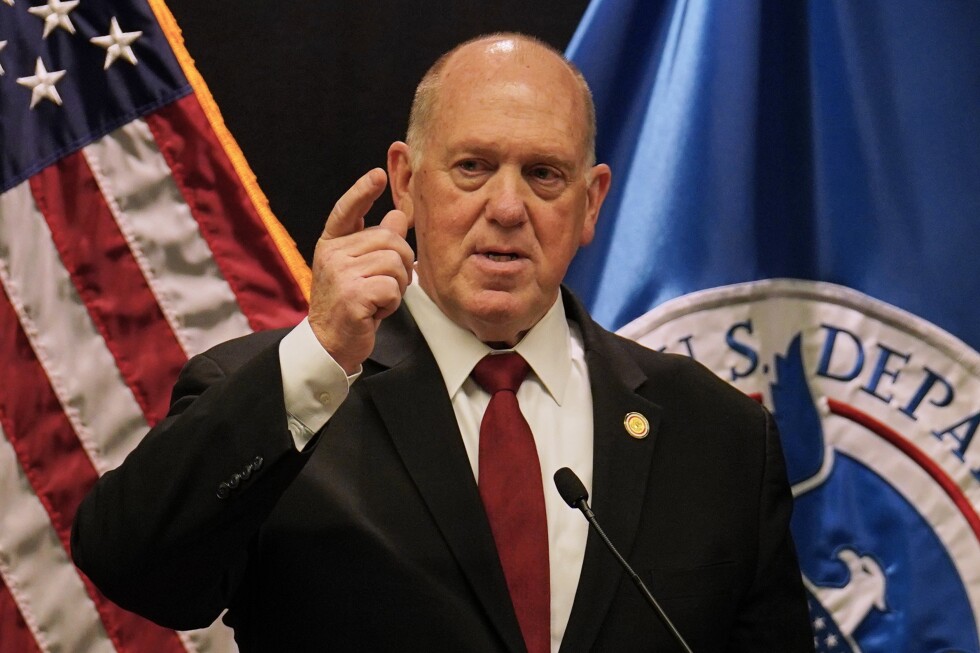
Border czar Tom Homan made the announcement, citing recent agreements with state and local officials to cooperate by transferring arrested immigrants to federal custody. Despite this partial drawdown, about 2,000 officers will remain in Minnesota, maintaining roughly the same force level as when the operation began in early January.
“There has been an increase in unprecedented collaboration resulting in the need for fewer public safety officers in Minnesota,” Homan stated during Wednesday’s news conference. The operation has been described by the Department of Homeland Security as its “largest immigration enforcement operation ever.”
The partial withdrawal follows weeks of community resistance to the heavily armed, masked federal agents conducting operations throughout the state. Tensions escalated dramatically following the fatal shootings of two U.S. citizens, Renee Good and Alex Pretti, in Minneapolis by federal officers, turning the Minnesota operation into a national flashpoint for debates over Trump’s mass deportation efforts.
Minnesota Governor Tim Walz and Minneapolis Mayor Jacob Frey, both Democrats who have been vocal critics of the federal operation, characterized the reduction as insufficient. “We need a faster and larger drawdown of forces, state-led investigations into the killings of Alex Pretti and Renee Good, and an end to this campaign of retribution,” Walz wrote on social media.
Vice President JD Vance clarified in a media interview that the officers being sent home were primarily deployed for protection purposes rather than enforcement. “We’re not drawing down the immigration enforcement,” Vance told “The Megyn Kelly Show.”
Homan, who took control of the Minnesota operation in late January following the second fatal shooting, has consistently maintained that federal officials could reduce their presence, but only with adequate cooperation from state and local authorities. He has specifically pushed for jails to alert Immigration and Customs Enforcement (ICE) about potentially deportable inmates, arguing that direct transfers to ICE custody reduce the need for field operations.
The administration has long criticized what it terms “sanctuary jurisdictions” for limiting cooperation with federal immigration authorities. While Minnesota officials maintain that state prisons and most county sheriffs already cooperate with immigration authorities, the jails serving Minneapolis and St. Paul—the state’s largest metropolitan area—have previously required judicial arrest warrants before transferring inmates to federal custody.
When asked which jurisdictions had increased their cooperation, Homan didn’t provide specifics. The Hennepin County Sheriff’s Office, which serves Minneapolis, confirmed its policies remain unchanged.
Despite the partial withdrawal, Homan made it clear the administration isn’t backing down from its broader deportation efforts. “We are not surrendering the president’s mission on a mass deportation operation,” he said, adding, “You’re not going to stop ICE. You’re not going to stop Border Patrol. The only thing you’re doing is irritating your community.”
The ongoing operation faces additional challenges. On Wednesday, two Minnesota school districts and a teachers union filed a lawsuit seeking to block federal immigration enforcement activities at or near schools. The suit alleges that Operation Metro Surge has disrupted classes, endangered students, and driven families away from schools by removing longstanding limits on enforcement in “sensitive locations.”
Homan defended the operation as effective for public safety, citing the arrest of individuals wanted for violent crimes. However, he acknowledged: “Was it a perfect operation? No.”
The partial drawdown signals a complex negotiation between federal enforcement priorities and local resistance, but does not represent a significant shift in the administration’s broader immigration policy. With 2,000 officers remaining and no clear timeline for a complete withdrawal, Minnesota appears likely to remain at the center of the nation’s immigration enforcement debate for the foreseeable future.
Fact Checker
Verify the accuracy of this article using The Disinformation Commission analysis and real-time sources.

7 Comments
This seems like a prudent move by the administration to scale back the immigration enforcement presence in Minnesota. The increased cooperation with state and local officials likely reduces the need for such a large federal force at this time.
Withdrawing 700 officers while maintaining around 2,000 suggests a balanced approach. Striking the right operational level is important to address immigration issues effectively while respecting state and local authorities.
Withdrawing a quarter of the federal immigration force from Minnesota is an interesting development. The stated increase in cooperation with state and local officials is a promising sign, though the persistent tensions remain a concern.
The decision to reduce the federal immigration force in Minnesota by 700 officers is notable, though a sizable contingent of 2,000 will still be present. I wonder how this will impact immigration operations and local tensions in the state.
I’m curious to learn more about the specific agreements reached with Minnesota officials that led to this drawdown. It will be interesting to see how the ongoing tensions and confrontations are managed going forward.
The administration’s acknowledgement of increased collaboration is a positive sign. Maintaining an open dialogue and finding cooperative solutions is likely the best path to address these complex immigration challenges.
This seems like a pragmatic move, though the high level of 2,000 officers remaining indicates immigration enforcement is still a priority in the region. It will be important to monitor the effects of this partial withdrawal.