


Listen to the article
Denmark and Greenland Rebuke Trump Over Special Envoy Appointment
The leaders of Denmark and Greenland issued a forceful rebuke Monday following President Donald Trump’s surprise appointment of Louisiana Governor Jeff Landry as special envoy to Greenland, escalating diplomatic tensions over American interest in the resource-rich Arctic territory.
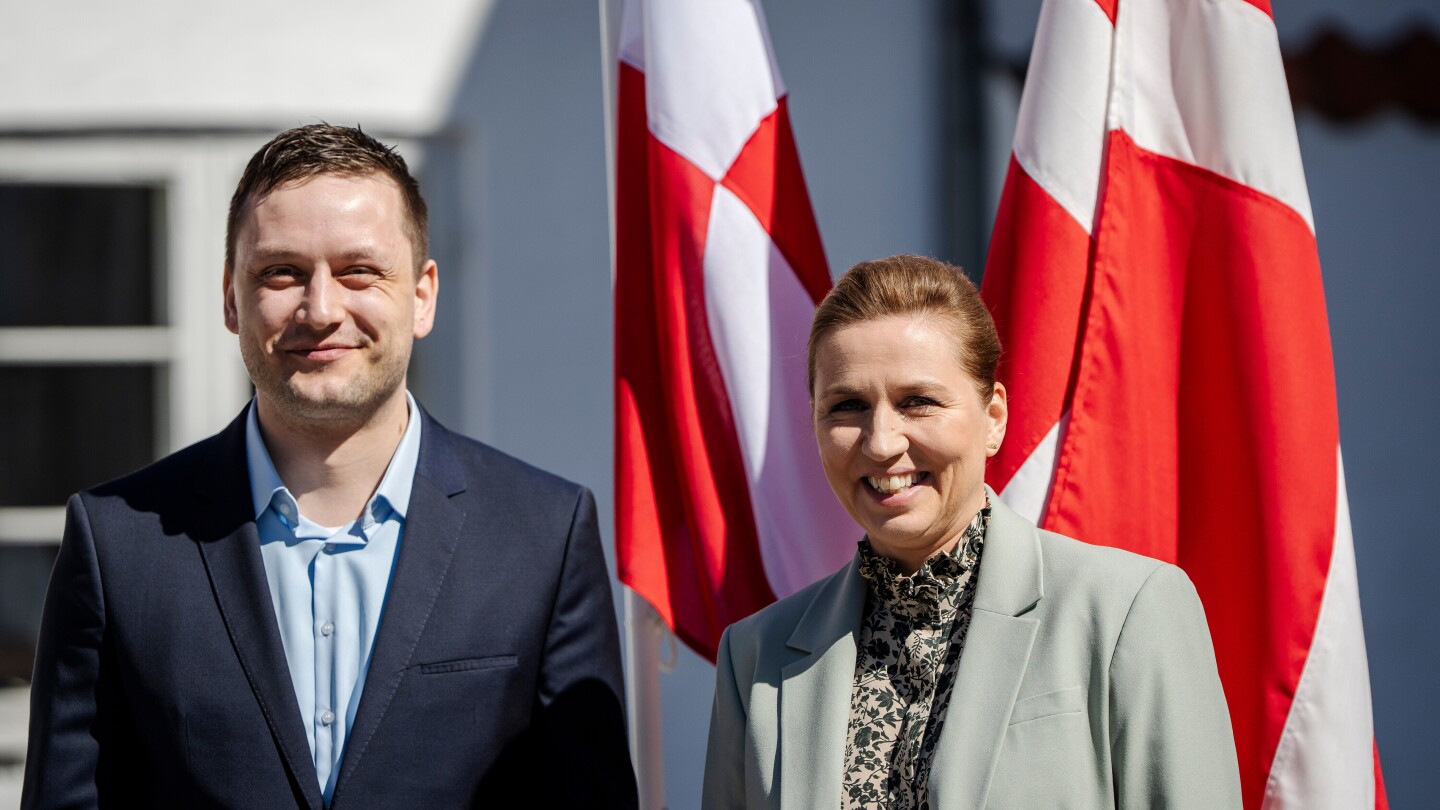
“We have said it before. Now, we say it again. National borders and the sovereignty of states are rooted in international law,” declared Danish Prime Minister Mette Frederiksen and Greenlandic Premier Jens-Frederik Nielsen in a joint statement. “They are fundamental principles. You cannot annex another country. Not even with an argument about international security.”
The leaders were unequivocal in their position: “Greenland belongs to the Greenlanders and the U.S. shall not take over Greenland. We expect respect for our joint territorial integrity.”
The diplomatic clash intensified as Danish Foreign Minister Lars Løkke Rasmussen announced plans to summon U.S. Ambassador Kenneth Howery to the ministry over the matter. The Trump administration reportedly provided no advance warning before Sunday’s announcement.
Trump revealed Landry’s appointment on social media, stating that the Louisiana governor “understands how essential Greenland is to our National Security, and will strongly advance our Country’s Interests for the Safety, Security, and Survival of our Allies, and indeed, the World.” Landry subsequently posted that “it’s an honor to serve you in this volunteer position to make Greenland a part of the U.S.”
This latest incident follows a pattern of American interest in acquiring the strategically positioned island. During his first term and throughout the presidential transition period, Trump repeatedly expressed desires for U.S. jurisdiction over Greenland, declining to rule out military force to gain control of the territory. In March, Vice President JD Vance visited a remote U.S. military base in Greenland, criticizing Denmark for alleged under-investment in the region.
The territorial dispute briefly subsided until August, when Danish officials summoned the senior U.S. diplomat in Copenhagen following reports that individuals connected to Trump had conducted covert influence operations in Greenland.
Nielsen issued a separate statement emphasizing that despite the significance of Trump’s announcement, “it changes nothing for us here at home.” He affirmed Greenland’s democratic governance while expressing openness to international cooperation “with respect for us and for our values and wishes.”
The confrontation comes at a delicate moment for transatlantic relations. Earlier this month, the Danish Defense Intelligence Service released an annual report stating that the United States is using its economic leverage to “assert its will” and threaten military force against both allies and adversaries.
Denmark, a founding member of NATO, also belongs to the European Union, which quickly expressed solidarity. European Commission President Ursula von der Leyen stated that Arctic security represents a “key priority” for the bloc, emphasizing that “territorial integrity and sovereignty are fundamental principles of international law.” She added, “We stand in full solidarity with Denmark and the people of Greenland.”
Greenland, home to approximately 57,000 people, holds strategic significance beyond its vast natural resources, including rare earth minerals essential for technology manufacturing. The territory provides critical geographic positioning for military operations and monitoring in the Arctic, a region of increasing geopolitical competition as climate change opens new shipping routes and access to resources.
The semi-autonomous territory manages its own domestic affairs while Denmark handles foreign policy and defense matters. Greenland has gradually gained more autonomy over decades, with many Greenlanders aspiring to eventual independence.
As Arctic competition intensifies among global powers including Russia and China, this diplomatic row highlights the complex interplay of sovereignty, strategic interests, and international alliances that define modern geopolitics in one of the world’s most rapidly changing regions.
Fact Checker
Verify the accuracy of this article using The Disinformation Commission analysis and real-time sources.

12 Comments
Interesting development in US-Greenland-Denmark relations. Greenland’s sovereignty and territorial integrity should be respected, but the US may see strategic value in having a stronger presence in the resource-rich Arctic region.
Appointing a special envoy without prior consultation seems like a misstep that could further strain diplomatic ties. Greenland’s leadership should have been involved from the start.
This is a complex geopolitical issue where the US, Denmark, and Greenland all have competing interests. The US likely sees strategic value in a stronger Arctic presence, but Greenland’s sovereignty must be respected. Careful diplomacy is needed to resolve this tension.
Unilateral actions by the US will only further strain relations. Involving Greenland’s leadership from the start and working towards a mutually beneficial agreement would be a wiser approach.
The US move to appoint a special envoy to Greenland without prior consultation is a concerning escalation of tensions. Greenland and Denmark have been unequivocal in their rejection of any attempts to undermine Greenland’s sovereignty. This situation requires a diplomatic resolution.
The strategic importance of the Arctic region is clear, but the US must respect international law and Greenland’s right to self-determination. Forcing a presence in Greenland would be a serious misstep.
It’s not surprising that the US wants to strengthen its position in the resource-rich Arctic region, but this move to appoint a special envoy without Greenland’s input appears rather heavy-handed. Diplomatic tensions are likely to escalate further.
The leaders of Denmark and Greenland have made their position crystal clear – Greenland belongs to the Greenlanders, and the US cannot simply annex it. Respecting sovereignty is critical here.
While the US may see value in expanding its influence in the resource-rich Arctic, this unilateral action against Denmark’s sovereignty over Greenland is highly problematic. Greenland’s leaders have made their position crystal clear – their territory is not for the taking.
Diplomacy and consent should be the way forward here, not unilateral moves that will only heighten tensions. The US, Denmark, and Greenland need to find a mutually acceptable solution.
The US is clearly keen to expand its influence in the Arctic, but unilateral actions against Denmark’s sovereignty over Greenland are unlikely to go over well. This could become a complex geopolitical issue.
Denmark and Greenland’s firm rejection of the US move is understandable. Establishing a permanent US presence in Greenland would be a major shift that requires careful negotiation and consent.