


Listen to the article
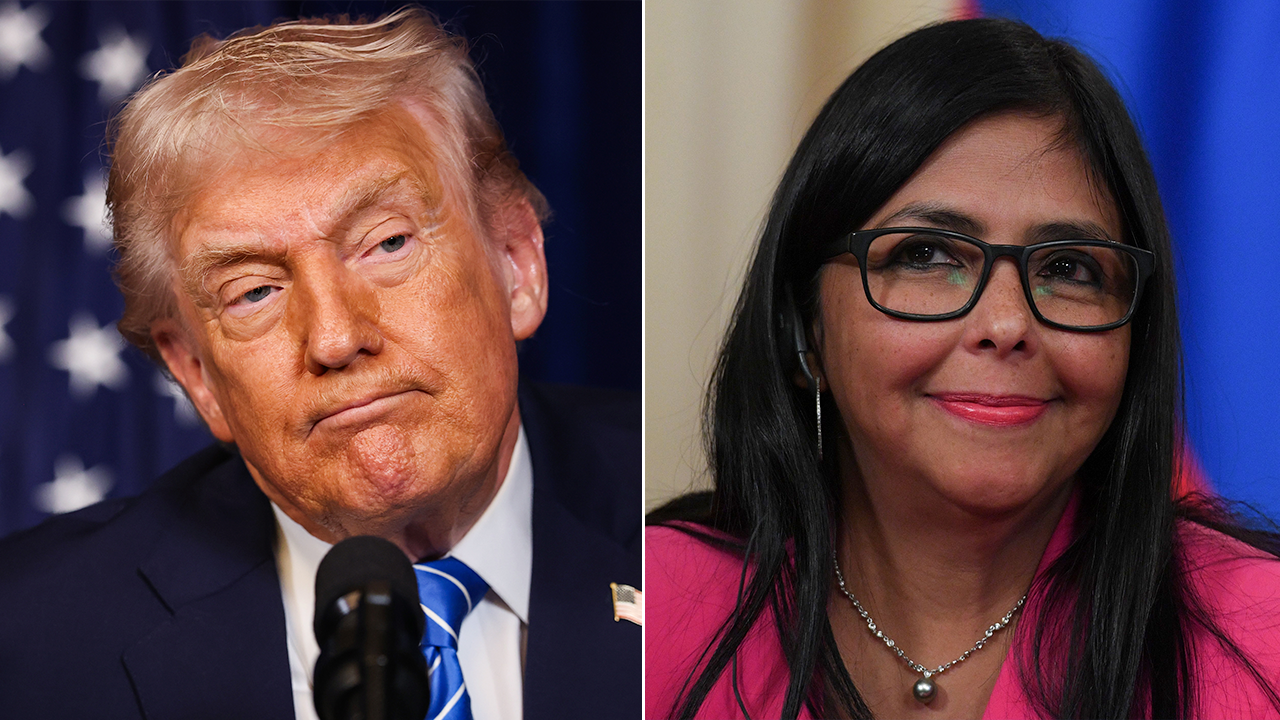
President Trump issued a stark warning to Venezuela’s acting leader Delcy Rodríguez on Sunday, threatening severe consequences if she continues to resist U.S. demands following the American-led capture of Venezuelan President Nicolás Maduro.
In an interview with The Atlantic, Trump stated that Rodríguez would “pay a very big price, probably bigger than Maduro” if she fails to “do what’s right.” The president defended what essentially amounts to regime change in the oil-rich South American nation, asserting that “rebuilding there and regime change, anything you want to call it, is better than what you have right now. Can’t get any worse.”
The statements follow Saturday’s predawn announcement that U.S. operators had successfully conducted a mission to capture Maduro and his wife, dramatically shifting the political landscape in Venezuela. Images released to media showed Maduro in handcuffs being led through the Drug Enforcement Administration’s New York office after his transfer to U.S. custody.
Speaking at a press conference from his Mar-a-Lago estate, Trump outlined plans for a U.S.-appointed team to temporarily “run Venezuela” until the country’s political leadership stabilizes. This unprecedented move represents one of the most direct American interventions in Latin American governance in decades.
The capture of Maduro has significant implications for Venezuela’s vast energy resources. The country sits atop the world’s largest proven oil reserves, estimated at over 300 billion barrels, surpassing even Saudi Arabia. These reserves have long attracted international interest despite being largely underdeveloped during Maduro’s rule amid economic collapse and international sanctions.
Trump emphasized his intention to return U.S. energy investment to Venezuela, potentially reopening access to these resources for American companies. “We built Venezuela’s oil industry,” Trump stated, suggesting that U.S. firms would play a major role in rebuilding the country’s devastated petroleum sector.
The Biden administration had previously eased some sanctions on Venezuela’s energy sector, allowing limited operations by American oil companies like Chevron. Trump’s approach signals a more aggressive stance toward securing access to these resources.
In framing his foreign policy approach, Trump described what he termed the “Donroe Doctrine” – a personal update to the 19th-century Monroe Doctrine that historically opposed European colonial influence in the Western Hemisphere. This new doctrine appears to assert American dominance in regional affairs while expanding its scope globally.
The president hinted that Venezuela might not be the last nation to face U.S. pressure under his administration, suggesting additional interventions could extend beyond Latin America. As an example, he reiterated his longstanding interest in Greenland, a semiautonomous territory of Denmark, citing U.S. national security interests and the territory’s strategic location.
The Venezuelan operation represents a significant escalation in U.S. foreign policy under Trump’s second administration, returning to more direct interventionism after years of relative restraint. It marks a dramatic shift from diplomatic pressure and sanctions that characterized previous approaches to the Maduro regime.
International reaction has been mixed, with some regional allies supporting the move while others have expressed concern about sovereignty violations. Markets have responded cautiously, with oil prices fluctuating as traders assess the implications for Venezuelan production and exports in the coming months.
As Rodríguez faces this ultimatum, the future governance structure of Venezuela remains uncertain, with significant questions about how and when democratic processes might be restored in a country that has faced years of political turmoil and economic hardship.
Fact Checker
Verify the accuracy of this article using The Disinformation Commission analysis and real-time sources.

11 Comments
Capturing Maduro is a significant achievement, but achieving lasting political change in Venezuela will be a complex challenge. I hope the transition process can be managed in a way that prioritizes the wellbeing of the Venezuelan people.
This is a pivotal moment for Venezuela, but the way forward is fraught with challenges. I hope the new leadership can chart an independent course that prioritizes the needs and rights of the Venezuelan people above all else.
Regime change is always a sensitive issue, with potential for unintended consequences. While Maduro’s rule has been disastrous, any U.S. intervention must be carefully considered to avoid exacerbating the crisis. Venezuela’s new leaders will need to chart an independent path forward.
This is a complex and delicate situation. While Maduro’s regime has been disastrous, any U.S. involvement carries risks. Venezuela’s new leaders must chart an independent course that prioritizes the wellbeing of citizens over foreign interests.
Agreed. It will be crucial for Venezuela’s new government to maintain sovereignty and build international partnerships that serve the country’s long-term interests, not just align with U.S. demands.
The capture of Maduro is a significant development, but the path ahead for Venezuela remains uncertain. I hope the new leadership can restore stability and prosperity for the Venezuelan people, guided by principles of democracy and human rights.
Trump’s rhetoric toward Rodríguez raises concerns about the potential for further escalation. Venezuela’s future should be determined by its own people, not external powers. I hope diplomacy and negotiation can prevail over confrontation.
I agree, a diplomatic approach focused on supporting democratic institutions and economic recovery would be preferable to heavy-handed intervention.
This is a major development in the ongoing Venezuela crisis. It will be interesting to see how Rodríguez and the new leadership respond to Trump’s warning. Restoring stability and democracy in Venezuela is crucial, but the path forward remains unclear.
Trump’s warning to Rodríguez raises concerns about potential U.S. interventionism in Venezuela. While Maduro’s rule was disastrous, the path forward must be determined by Venezuelans themselves, not external powers. I hope diplomacy and negotiation can prevail.
The capture of Maduro is a major event, but the future of Venezuela remains highly uncertain. I hope the new leadership can restore stability, prosperity and democratic institutions, while avoiding further conflict and humanitarian crises.