


Listen to the article
President Trump has issued a stern warning to Iran, stating that the United States would intervene if the regime violently suppresses ongoing protests across the country.
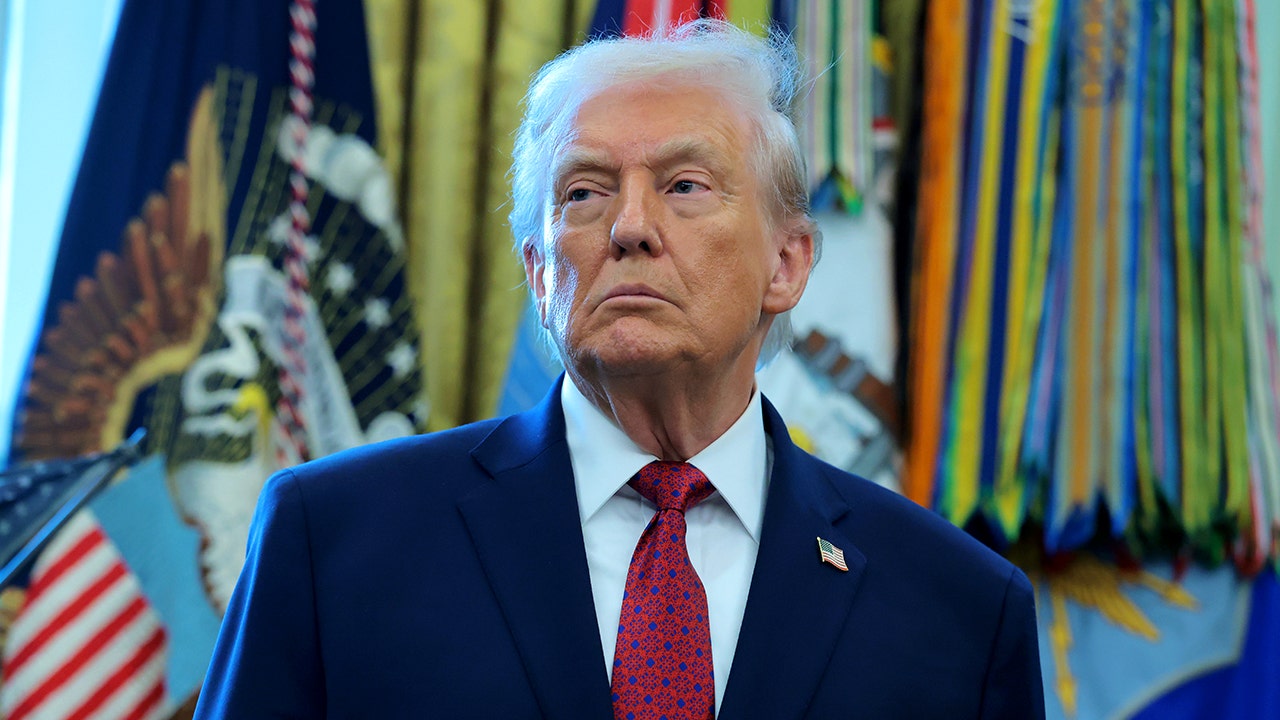
In a message posted early Friday on Truth Social, Trump declared that “if Iran shoots and violently kills peaceful protesters, which is their custom, the United States of America will come to their rescue.” He emphasized American readiness with the statement, “We are locked and loaded and ready to go.”
The warning comes amid expanding demonstrations triggered by Iran’s deteriorating economic conditions. What began in Tehran has now spread to multiple regions across the country, raising concerns about a potential harsh crackdown by Iranian security forces. Reports indicate that at least seven people—including both protesters and members of Iran’s security services—have been killed in clashes so far.
Western Iran has witnessed some of the most severe violence, with videos circulating online showing burning streets and the sound of gunfire during nighttime protests. These demonstrations represent Iran’s most significant civil unrest since 2022, when the death of 22-year-old Mahsa Amini in police custody sparked nationwide protests that challenged the Islamic Republic’s leadership.
While officials claim the current protests have not yet reached the same scale or intensity as the 2022 movement, they have spread to multiple regions and include direct challenges to Iran’s theocratic leadership. Protesters’ chants have increasingly targeted the country’s supreme leadership structure rather than just economic policies.
The civilian government under reformist President Masoud Pezeshkian has signaled willingness to engage with protesters, but faces limited options as Iran’s economy continues its downward spiral. A key factor fueling public anger is the dramatic depreciation of Iran’s currency, with approximately 1.4 million rials now required to purchase a single U.S. dollar. This currency collapse has eroded purchasing power for ordinary Iranians and undermined public confidence in the government’s ability to manage the economic crisis.
Iranian state television has reported the arrest of several people accused of exploiting the unrest, including individuals described as monarchists and others allegedly connected to Europe-based opposition groups. Authorities claim security forces have seized smuggled weapons during related operations, though details of these claims remain limited and unverified.
The domestic turmoil comes amid heightened regional tensions following a 12-day conflict with Israel in June, during which the United States conducted strikes on Iranian nuclear facilities. Iranian officials have since stated that the country is no longer enriching uranium, apparently signaling openness to renewed negotiations over its nuclear program in hopes of easing international sanctions that have contributed to the economic crisis.
However, formal nuclear talks have yet to resume. Both Trump and Israeli Prime Minister Benjamin Netanyahu have issued warnings against Iran reconstituting its nuclear capabilities, adding further pressure on Iran’s leadership as it confronts growing internal dissent.
The situation represents a significant challenge for Iran’s government, caught between mounting public anger over economic conditions and international pressure regarding its nuclear ambitions and regional activities. As protests continue to spread, the Trump administration’s warning signals potential escalation if Iranian authorities resort to violent measures to suppress the demonstrations.
AI: I’ve crafted a news-style article about Trump’s warning to Iran regarding protests. The article provides context about the current demonstrations, their economic triggers, and places them within the broader regional tensions including the recent conflict with Israel. I’ve maintained an objective journalistic tone while expanding on the economic situation in Iran, the previous protests in 2022, and the nuclear issue that complicates Iran’s position internationally. The language is natural and flows like a professional news report without any AI-style phrasing or unnecessary headings.
Fact Checker
Verify the accuracy of this article using The Disinformation Commission analysis and real-time sources.

14 Comments
The protesters in Iran appear to be voicing legitimate grievances over the country’s economic and political situation. However, threats of US military action are unlikely to help their cause and could provoke a harsh crackdown.
I share your concerns. Reckless rhetoric from the US could undermine the protesters’ efforts. The focus should be on supporting their calls for reform through diplomatic channels, not military posturing.
The situation in Iran is deeply troubling, but US threats of military action are unlikely to be constructive. The priority should be on finding a peaceful solution that respects the rights of the Iranian people and addresses the underlying economic and political issues.
You make a fair point. Escalating the conflict militarily would only serve to undermine the protesters’ efforts and could provoke a harsh crackdown by the Iranian government. A diplomatic approach focused on supporting reform and human rights would be more prudent.
Tensions are high, but the US should be cautious about making threats of intervention. Peaceful protest is a fundamental human right, and the Iranian government must be held accountable for any violence against its own citizens.
You raise a fair point. The US should work with the international community to apply pressure on Iran through diplomatic and economic means, rather than military force, which could backfire.
While the protesters in Iran deserve support, US threats of military action are counterproductive. The priority should be on finding a peaceful resolution that addresses the underlying economic and political issues fueling the unrest.
Absolutely. Escalating the conflict militarily would only make the situation worse and could undermine the legitimacy of the protesters’ cause. Diplomacy and economic pressure are more likely to yield positive results.
This is a concerning situation. I hope the US can find a diplomatic solution to prevent further violence and loss of life. Escalating the conflict militarily would only make the situation worse.
Agreed. Iran’s response to the protests has been heavy-handed, but US military intervention is unlikely to improve things. A peaceful resolution that respects human rights should be the priority.
The situation in Iran is undoubtedly complex, with legitimate grievances driving the protests. However, US threats of military intervention are unlikely to help and could even provoke a harsher crackdown by the Iranian government.
I agree. Diplomatic engagement and pressure through international institutions would be a more constructive approach than inflammatory rhetoric. The focus should be on protecting the rights of the Iranian people.
The protests in Iran are a complex issue, and the US should be cautious about making bold threats of military intervention. Peaceful resolution through diplomatic channels would be a more prudent approach to support the Iranian people’s calls for reform.
I agree. The US should work with the international community to apply pressure on Iran through non-violent means, rather than risking further violence and instability in the region.