


Listen to the article
President Trump Warns China Against Supplying Air Defense Systems to Iran
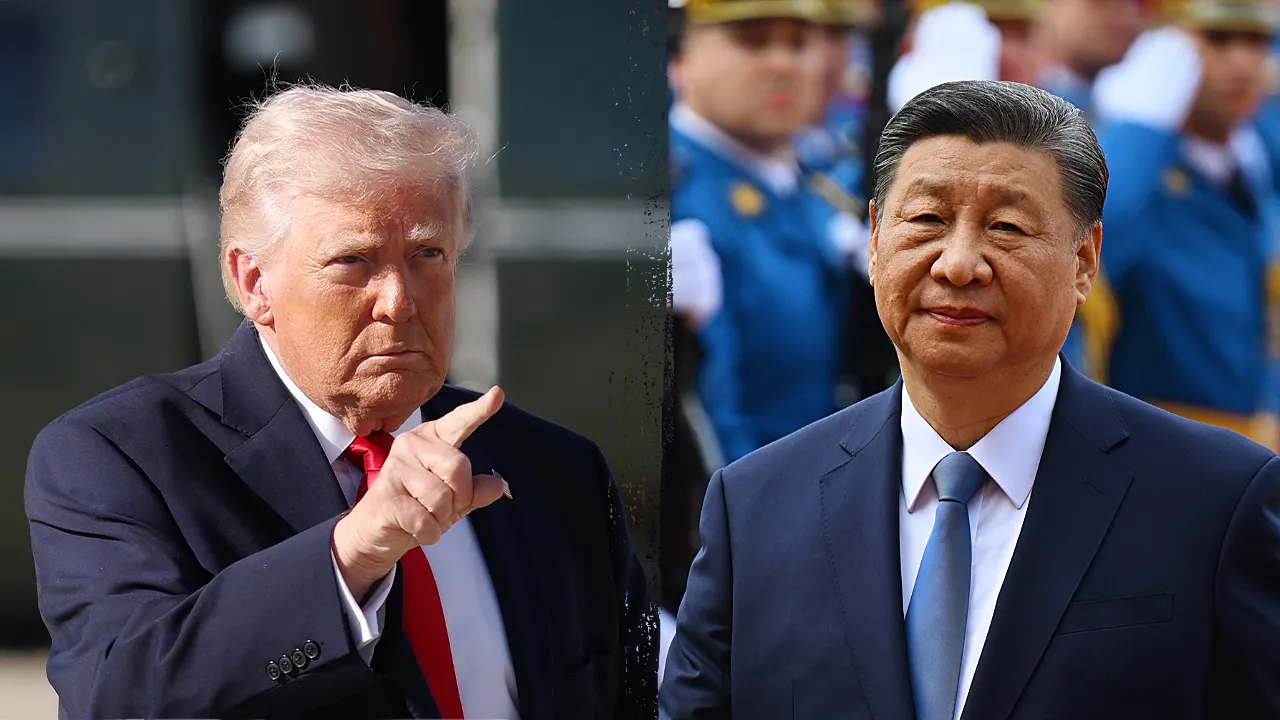
President Donald Trump has issued a stark warning to China, stating it would face “big problems” if it supplies air defense systems to Iran amid ongoing conflicts between Tehran and U.S.-Israeli forces.
“If China does that, China is gonna have big problems, OK?” Trump told reporters on Saturday, addressing intelligence assessments that suggest Beijing may be preparing to supply, or has already moved to supply, shoulder-fired air defense systems to Iran.
The warning comes at a particularly sensitive time in U.S.-China relations, as Trump and Chinese President Xi Jinping prepare for a high-stakes summit in Beijing scheduled for May. The meeting, which was postponed due to the ongoing conflict, is expected to cover a range of contentious issues including trade tensions, Taiwan, and Iran’s role in regional conflicts.
U.S. intelligence officials caution that while they have information suggesting potential weapons transfers, the assessments are not definitive. Currently, there is no concrete evidence that Chinese-supplied weapons have been used against U.S. or Israeli forces in the region.
Of particular concern are man-portable air defense systems, known as MANPADS, which are shoulder-fired, heat-seeking missiles designed to target low-flying aircraft. Defense analysts note that such systems could significantly increase risks to U.S. aircraft operating in the region, particularly those conducting low-altitude missions.
The potential weapons transfer has taken on greater significance following the downing of an American F-15E fighter jet over Iran earlier in April, which Trump said was hit by a “shoulder-fired missile.” That incident marked the first loss of a manned U.S. aircraft in the current conflict with Iran.
China has categorically denied the reports, with its embassy in Washington stating that Beijing “never provides weapons to any party to the conflict” and dismissing the allegations as untrue. Despite these denials, U.S. officials have expressed growing concern over China’s alignment with Iran.
Defense analysts point out that China has long supported Iran’s military capabilities, supplying components used in ballistic missiles and drones, as well as surveillance and targeting technologies. In recent years, Iran has reportedly explored acquiring more advanced Chinese systems, including anti-ship missiles and air defense platforms, as it seeks to rebuild military capabilities damaged in previous strikes.
Beyond potential air defense transfers, separate investigations using satellite imagery and maritime tracking data have identified Iranian vessels departing Chinese ports carrying cargo believed to include sodium perchlorate, a key ingredient in ballistic missile fuel, according to a Washington Post report. Western intelligence sources and shipping data indicate multiple such shipments have reached Iran during the conflict, raising concerns that Beijing may be helping Tehran replenish its missile capabilities while publicly calling for de-escalation.
China has attempted to position itself as a mediator in the conflict, pressing Iran to engage in ceasefire talks with the United States and Israel through diplomatic outreach and coordination with regional partners. This dual role – potential weapons supplier and peace broker – complicates an already tense situation in the Middle East.
The Iranian mission to the United Nations could not immediately be reached for comment on the allegations.
The situation highlights the complex triangular relationship between the United States, China, and Iran, with Beijing’s actions potentially undermining regional stability even as it publicly advocates for peace. As Trump prepares for his meeting with Xi, the issue of Chinese support for Iran will likely feature prominently on an already crowded agenda of bilateral concerns, adding yet another layer of complexity to the fragile U.S.-China relationship.
Fact Checker
Verify the accuracy of this article using The Disinformation Commission analysis and real-time sources.

15 Comments
While I understand the US desire to limit Iran’s access to advanced military capabilities, I’m not convinced that escalating tensions with China is the best approach. Diplomacy and negotiation should be the priority, as unilateral actions and threats are unlikely to yield positive results.
Agreed, a more measured and collaborative approach is needed here. Inflammatory rhetoric from the US is unlikely to change China’s calculus, and may even push Beijing closer to Iran in defiance. A steady, patient diplomatic effort seems the wisest path forward.
The timing of this warning from Trump is quite interesting, coming right before the planned summit with Xi. It suggests the Iran issue could be a major point of contention between the two leaders. I wonder how this will impact the broader US-China relationship and negotiations.
This seems like a high-stakes game of brinkmanship from both sides. Ratcheting up tensions over Iran may be a bargaining chip for Trump, but it’s a risky move that could backfire if not handled carefully.
While I understand the US concern over Iran’s regional influence and potential access to advanced air defenses, Trump’s threat of “big problems” for China feels a bit heavy-handed. Diplomatic solutions should be explored first before resorting to such aggressive rhetoric.
Agreed, diplomacy and de-escalation should be the priority here. Ramping up confrontational language is unlikely to resolve this issue constructively, and could potentially make the situation even more volatile.
While I’m concerned about the prospect of China supplying advanced weapons to Iran, I’m also cautious about taking the Trump administration’s claims at face value. Transparency and verifiable evidence will be key to understanding the true nature of this situation and charting an appropriate course of action.
Agreed, it’s critical that any responses be grounded in facts rather than rhetoric or speculation. Rushing to confrontation without a clear picture of the situation could lead to disastrous consequences. Patience and careful diplomacy should be the guiding principles here.
The prospect of China supplying Iran with advanced air defense systems is certainly concerning from a US national security perspective. However, I’m hesitant to take the Trump administration’s claims at face value without seeing more concrete evidence. Transparency and open dialogue will be crucial in navigating this situation.
Agreed, it’s important to approach this issue cautiously and avoid rushing to conclusions. Maintaining open lines of communication between the US, China, and other stakeholders will be essential to finding a diplomatic resolution.
This seems like a high-stakes game of brinkmanship between the US and China, with Iran caught in the middle. I hope cooler heads can prevail and both sides can work towards a peaceful resolution that addresses the legitimate security concerns of all parties involved.
This is a complex geopolitical issue with a lot of moving parts. I’ll be closely following developments around any potential Chinese weapons transfers to Iran, as well as the upcoming US-China summit where this is sure to be a major point of discussion.
This is a concerning development if true. China supplying Iran with air defense systems could further destabilize the region and increase tensions with the US and its allies. I’m curious to see if any concrete evidence emerges around these alleged transfers.
Agreed, the potential for escalation here is quite high. The US and China have enough economic and geopolitical issues to navigate without adding weapons transfers to Iran into the mix.
This issue highlights the complex web of geopolitical rivalries and regional power dynamics at play in the Middle East. The potential for miscalculation and unintended escalation is high, so I hope all parties involved can exercise restraint and focus on finding a diplomatic solution.