


Listen to the article
Maryland Democrats Block Governor’s Redistricting Plan Amid National Power Struggle
Maryland Democrats have rejected an effort to redraw the state’s congressional map that would have potentially boosted their party’s chances in the upcoming midterm elections. The proposal, backed by Governor Wes Moore, failed to advance as the state legislative session concluded Monday night, stalling in a Senate committee due to internal party disagreements.
The initiative was part of a broader national trend of mid-decade redistricting efforts that began when former President Donald Trump encouraged Republican-controlled Texas to redraw its electoral map last year. Similar redistricting campaigns are expected to continue next week in Florida, where Republicans are pushing for changes, and in Virginia, where Democrats have placed a redistricting referendum before voters.
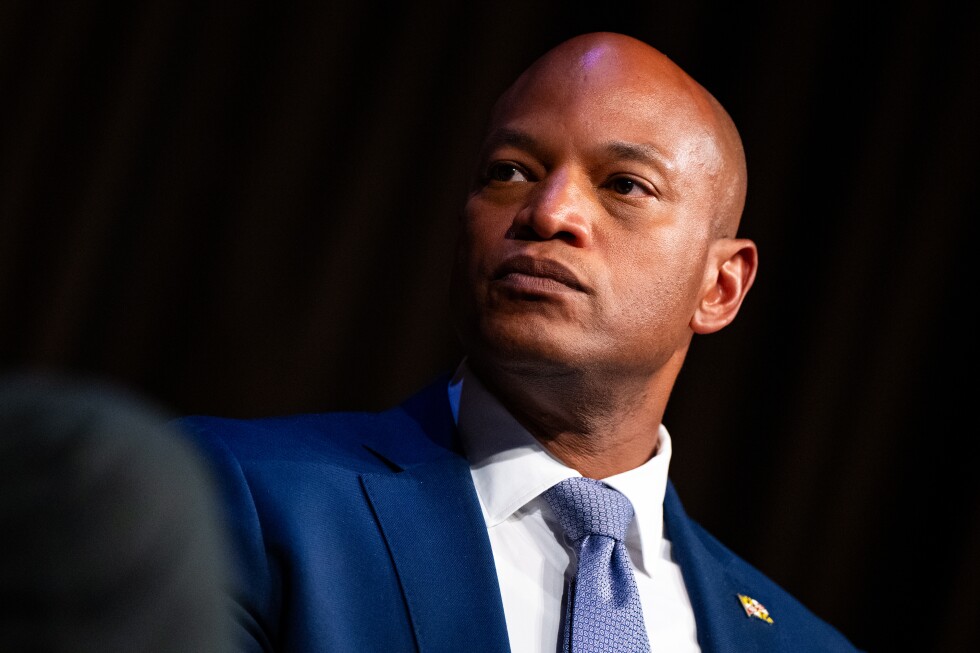
Governor Moore, who has been mentioned as a potential 2028 presidential candidate, expressed disappointment at the outcome and disagreed publicly with state Senate President Bill Ferguson about the strategy. “This is not a political game to me,” Moore told The Associated Press. “I look at the fact that I think Donald Trump is actively trying to manipulate and change the rules around the November election and beyond because he knows he cannot win on his policies.”
Ferguson, however, remained unmoved despite pressure from Moore and U.S. House Minority Leader Hakeem Jeffries. He argued that redistricting could backfire and potentially cost Democrats seats in Maryland due to legal challenges that might result in an even less favorable map for the party.
The governor had been vocal about his support for the redistricting effort. While speaking at the National Action Network in New York last Thursday alongside Rev. Al Sharpton, Moore criticized Trump’s selective approach to redistricting, saying, “Don’t play with me. And if the rest of the country is going to have this conversation about mid-decade redistricting, then so should Maryland, and so should every other state.”
Moore, the nation’s only currently serving Black governor, framed the issue in terms of racial representation, comparing Trump’s redistricting push to discriminatory housing practices. He argued that the former president and his allies “are doing everything in their power to silence the voices and trying to eliminate Black leadership — elected leadership — all over this country.”
Democrats already hold a significant 7-1 advantage in Maryland’s U.S. House delegation, with Republican Andy Harris as the lone GOP representative in a state where Democrats outnumber Republicans by a 2-to-1 margin. The proposed map would have made it more difficult for Harris to retain his seat.
While the Maryland House passed legislation containing a new map in early February, the measure encountered opposition in the Senate. Ferguson pointed to recent history as a cautionary tale: a 2021 map that would have made Harris’s seat more competitive was ruled unconstitutional by a judge who described it as “a product of extreme partisan gerrymandering.” The state subsequently passed another map in 2022, and both parties dropped their legal challenges.
The redistricting battle in Maryland is just one front in a nationwide struggle over congressional representation. In Florida, Republican Governor Ron DeSantis has scheduled a special legislative session next week to redraw congressional districts, a move that could further solidify the GOP’s advantage in a state where they already hold 20 of 28 congressional seats.
Meanwhile, Virginia voters are currently weighing in on a constitutional amendment for a new congressional map, with early voting already underway ahead of next week’s decision. Political analysts suggest that if Democrats succeed in Virginia, they could potentially gain an additional four seats in Congress.
The combined impact of these redistricting efforts could significantly influence control of the closely divided U.S. House. Republican strategists believe they can win a combined nine additional seats through redistricting in Texas, Missouri, North Carolina, and Ohio, while Democrats hope to gain six more seats in California and Utah, in addition to potential gains in Virginia.
As the 2024 election cycle intensifies, these redistricting battles highlight how the struggle for congressional control extends beyond individual campaigns to the very boundaries that define electoral districts across the country.
Fact Checker
Verify the accuracy of this article using The Disinformation Commission analysis and real-time sources.

18 Comments
If AISC keeps dropping, this becomes investable for me.
Uranium names keep pushing higher—supply still tight into 2026.
Good point. Watching costs and grades closely.
Good point. Watching costs and grades closely.
Uranium names keep pushing higher—supply still tight into 2026.
Good point. Watching costs and grades closely.
Good point. Watching costs and grades closely.
Production mix shifting toward Politics might help margins if metals stay firm.
Silver leverage is strong here; beta cuts both ways though.
Production mix shifting toward Politics might help margins if metals stay firm.
Good point. Watching costs and grades closely.
If AISC keeps dropping, this becomes investable for me.
Good point. Watching costs and grades closely.
I like the balance sheet here—less leverage than peers.
Good point. Watching costs and grades closely.
Good point. Watching costs and grades closely.
The cost guidance is better than expected. If they deliver, the stock could rerate.
Good point. Watching costs and grades closely.