


Listen to the article
Nearly one-third of U.S. states have considered redrawing their congressional districts since former President Donald Trump began advocating for mid-decade redistricting to strengthen Republican prospects in this year’s midterm elections.
Six states have already adopted new congressional maps through legislative action, commission decisions, or court orders, with more states deliberating changes during their current legislative sessions.
Trump’s push for redistricting aimed to help House Republicans maintain their narrow majority against the historical trend of the president’s party losing seats in midterm elections. Democrats, however, have mounted their own counter-gerrymandering efforts in several states.
The unusual mid-cycle redistricting battle has yielded mixed results so far. Republicans believe they’ve created nine additional winnable seats, while Democrats have engineered six more favorable districts, giving the GOP a net advantage of three seats. However, ongoing litigation in multiple states means these projected gains remain uncertain.
In Texas, Republican Governor Greg Abbott signed a revised House map in August that could help Republicans secure five additional seats. The U.S. Supreme Court recently cleared the way for these districts to be used in upcoming elections, putting on hold a lower court ruling that had blocked the map due to alleged racial gerrymandering.
California voters approved revised House districts in November drawn by the Democratic-led legislature, potentially adding five Democratic seats. The Justice Department has joined a Republican lawsuit alleging lawmakers illegally used race as a factor to favor Hispanic voters in the new map.
Missouri’s Republican Governor Mike Kehoe approved a revised map in September that could help Republicans gain an additional seat, though opponents have submitted petition signatures for a statewide referendum challenging the new districts.
North Carolina’s Republican-led General Assembly finalized revised districts in October that could net Republicans another seat. A federal court panel recently denied a request to block these districts from being used in upcoming elections.
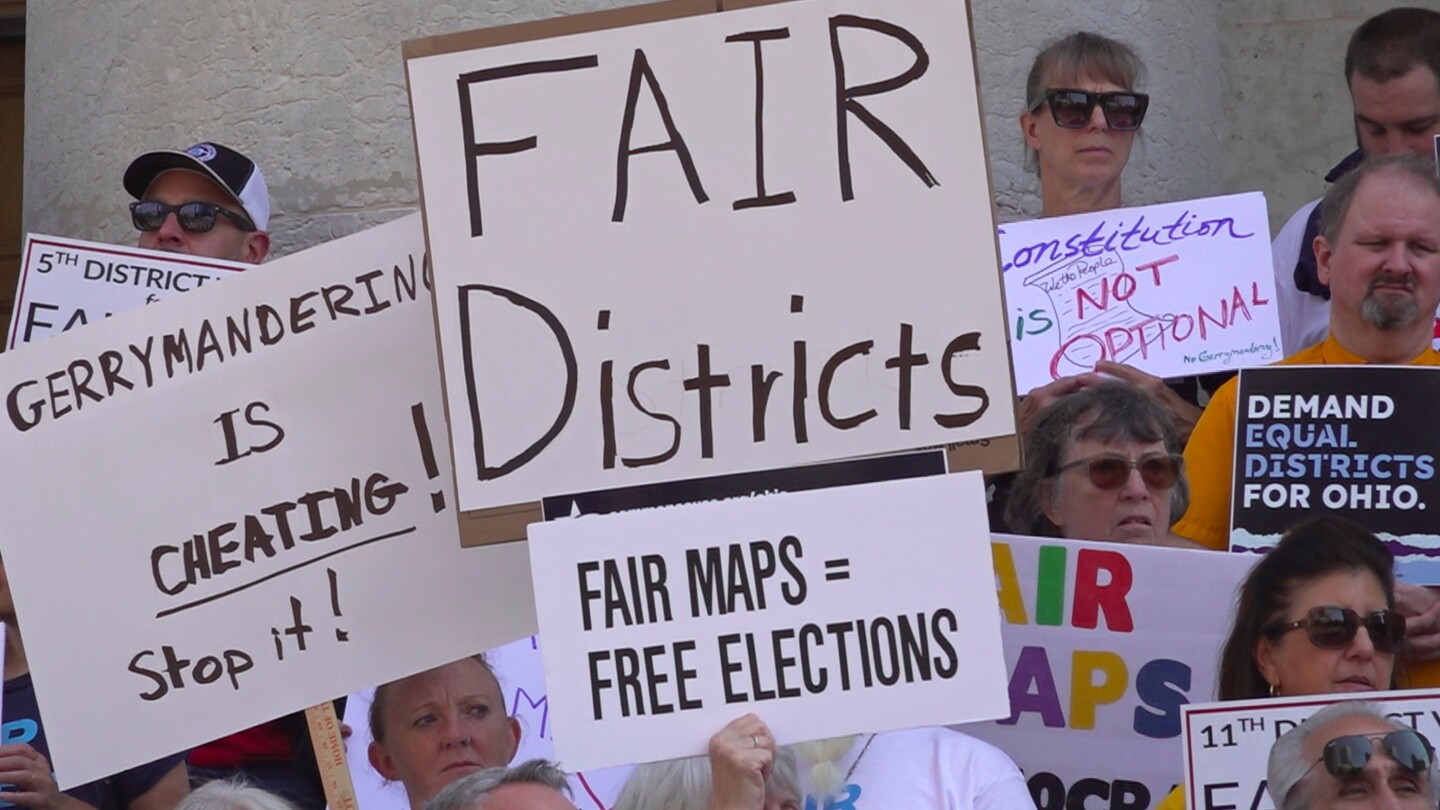
In Ohio, a bipartisan panel dominated by Republicans approved revised districts that improve Republican chances in two additional seats. This action was required by the state constitution because Republicans had previously approved maps without Democratic support.
Utah saw a judge impose revised House districts that could help Democrats win a seat, though Republicans are challenging this judicial intervention, which came after courts ruled lawmakers had circumvented voter-approved anti-gerrymandering standards.
Several other states remain in flux. Indiana’s House passed a plan that would have improved Republican chances in two districts, but it was rejected by a bipartisan vote in the state Senate. Florida’s Republican Governor Ron DeSantis has announced a special legislative session on congressional redistricting for April.
Democratic-led states are also exploring redistricting options. Virginia’s legislature has endorsed a constitutional amendment allowing mid-decade redistricting, while Maryland’s Democratic governor has created a special commission on the issue, though the Senate president has expressed reluctance to proceed.
States like New York, Colorado, and Washington have proposed constitutional amendments to permit mid-decade redistricting, but these processes would likely extend beyond the 2026 election cycle due to procedural requirements.
Legal challenges remain prevalent across these redistricting efforts. Louisiana awaits a Supreme Court decision that could trigger new map-drawing, while Wisconsin faces lawsuits asserting that current districts unconstitutionally favor Republicans.
The redistricting battle highlights the intensifying partisan struggle for control of the House, where geographic boundaries can significantly impact electoral outcomes. As candidate filing deadlines approach in many states, the final impact of these redistricting efforts on the midterm elections remains to be seen.
Fact Checker
Verify the accuracy of this article using The Disinformation Commission analysis and real-time sources.

12 Comments
The potential for partisan gerrymandering is concerning, regardless of which party is in power. Voters should have a voice in how their districts are shaped.
I agree, the redistricting process needs to be fair and non-partisan. Ongoing legal challenges will be important to watch.
This mid-cycle redistricting battle highlights the ongoing partisan tensions in American politics. It will be important to see how the courts and the public respond to these efforts.
Redistricting is a complex and often contentious issue. I hope the process can be conducted in a fair and impartial manner that serves the interests of all voters.
This mid-cycle redistricting battle highlights the ongoing partisan divide in American politics. It will be important to monitor the outcomes and ensure the process is as transparent and impartial as possible.
Redistricting is a critical issue that can significantly impact the balance of power. Voters deserve districts that are drawn fairly and objectively.
Interesting to see how redistricting is playing out across the country. It’s a complex issue with political implications on both sides. I’m curious to see how the legal challenges unfold and how the final maps shape up.
Agreed, redistricting can be a contentious process. It’s important to strive for fair and balanced districts that represent the will of the voters.
Redistricting can have significant implications for the balance of power in Congress. I hope the legal challenges and public scrutiny will lead to fair and impartial maps.
Agreed, the redistricting process needs to be carefully monitored to ensure it’s not being used for partisan gain. Transparency and public input are crucial.
It’s important to understand the nuances of how redistricting is being used by both parties. Transparency and public input should be a priority in this process.
Absolutely, redistricting should be guided by objective, non-partisan criteria to ensure fair representation for all voters.