


Listen to the article
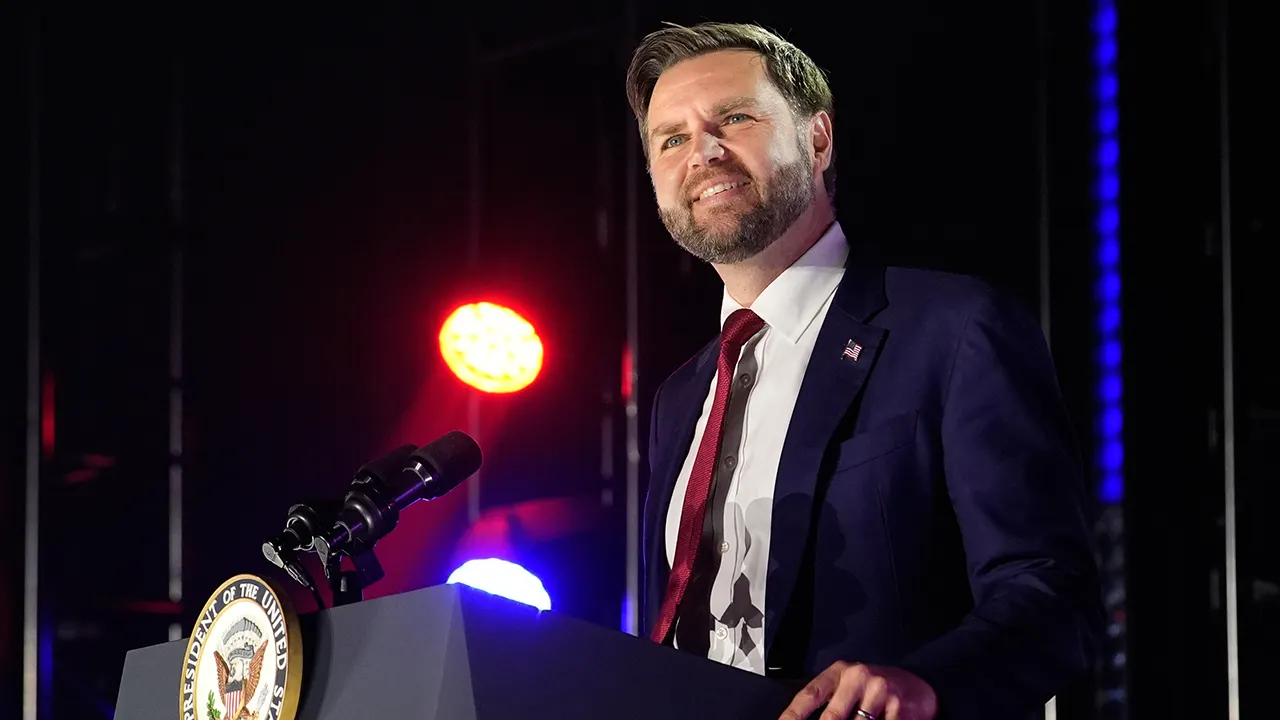
In a strategic security move, Vice President JD Vance monitored the high-stakes capture of Venezuelan leader Nicolás Maduro remotely rather than attending President Donald Trump’s celebratory press conference, a Vance spokesperson confirmed Friday.
The operation, which resulted in Maduro being taken into U.S. custody, marked a significant foreign policy development for the Trump administration. During the press briefing, Trump was flanked by Secretary of State Marco Rubio, War Secretary Pete Hegseth, and Chairman of the Joint Chiefs General Dan Caine as he detailed the mission to reporters.
According to Vance’s spokesperson, the Vice President was heavily involved in planning and execution phases but participated via secure video conference throughout the night. The absence was deliberate, driven by security protocols established by the national security team, who worried that “a late-night motorcade movement by the Vice President while the operation was getting underway may tip off the Venezuelans.”
The spokesperson further explained that Trump and Vance are currently limiting the “frequency and duration” of time spent together outside the White House due to “increased security concerns,” highlighting the administration’s heightened vigilance around top leadership movements during sensitive operations.
Vance did meet with Trump at Mar-a-Lago earlier Friday to discuss the strikes but returned to Cincinnati after the operation concluded. While not physically present at the press conference, he publicly endorsed the mission on social media platform X, writing, “Maduro is the newest person to find out that President Trump means what he says.”
In a subsequent post, Vance defended the operation’s legality, noting: “PSA for everyone saying this was ‘illegal’: Maduro has multiple indictments in the United States for narco-terrorism. You don’t get to avoid justice for drug trafficking in the United States because you live in a palace in Caracas.”
During his press conference, Trump made the extraordinary announcement that the United States will “run” Venezuela until a “safe, orderly” transition of power can occur. When questioned about whether U.S. forces would remain deployed in the South American nation, Trump did not rule out a sustained military presence, stating, “They always say boots on the ground – so we’re not afraid of boots on the ground if we have to.” He confirmed U.S. troops were already involved “at a very high level” during the capture operation.
The mission represents a dramatic shift in U.S. policy toward Venezuela, a nation possessing the world’s largest proven oil reserves but suffering from years of economic collapse and political instability under Maduro’s authoritarian rule. The Venezuelan leader has been indicted in U.S. courts on charges related to narco-terrorism, opening the legal pathway for American intervention.
Trump indicated his administration is already engaging with Venezuela’s vice president, Delcy Rodriguez, who was picked by Maduro and has now been sworn in as his successor. “She’s essentially willing to do what we think is necessary to make Venezuela great,” Trump stated, suggesting the administration has secured cooperation from the interim leadership.
The situation remains fluid regarding whether the U.S. will move to install opposition leaders Maria Corina Machado and Edmundo Urutia-Gonzalez, who have claimed victory in Venezuela’s disputed elections.
For Vance, the operation presents an interesting political evolution. Previously, the Vice President had expressed skepticism about American military interventions. In a leaked Signal chat following Houthi strikes last March, Vance told Trump Cabinet officials, “I think we are making a mistake,” noting concerns about public understanding of U.S. interests in foreign conflicts.
This operation in Venezuela represents one of the Trump administration’s most assertive foreign policy moves, potentially reshaping U.S. influence in Latin America and signaling a more interventionist approach than many had expected based on campaign rhetoric.
Fact Checker
Verify the accuracy of this article using The Disinformation Commission analysis and real-time sources.

10 Comments
This is an intriguing development in the ongoing Venezuela crisis. I wonder how the international community will respond to Maduro’s capture and potential transfer to U.S. custody. There could be some complex geopolitical implications to monitor.
Good point. Venezuela’s allies like Russia and Cuba may react strongly, so the administration will need to navigate that diplomatic landscape skillfully.
It’s reassuring to see the Vice President playing a substantive role in this high-stakes operation, even if he wasn’t physically present. Vance’s national security experience seems to be serving the administration well.
Agreed. Vance’s behind-the-scenes coordination likely contributed significantly to the success of the mission.
The Trump administration’s Venezuela policy has certainly been a point of controversy, but this latest development seems to be a positive step. I’m curious to see how it impacts the broader geopolitical dynamics in the region.
Absolutely. The fallout from Maduro’s capture could have far-reaching implications, both for the U.S. and its regional allies and adversaries.
Fascinating update on the Venezuela situation. It’s interesting to hear Vance played a key behind-the-scenes role, even if he wasn’t physically present. I wonder what other security protocols were in place to pull off this high-stakes operation successfully.
Agreed, the security considerations around the Vice President’s movements must have been quite complex. It’s good to see the administration taking robust precautions.
The capture of Maduro is certainly a significant foreign policy win for the Trump administration. I’m curious to learn more about the strategic thinking and intelligence-gathering that went into planning this mission.
Me too. The involvement of high-level officials like Rubio, Hegseth, and Caine suggests this was a carefully coordinated effort across multiple agencies.