


Listen to the article
Trump Threatens to Block Detroit-Windsor Bridge Opening in Trade Dispute with Canada
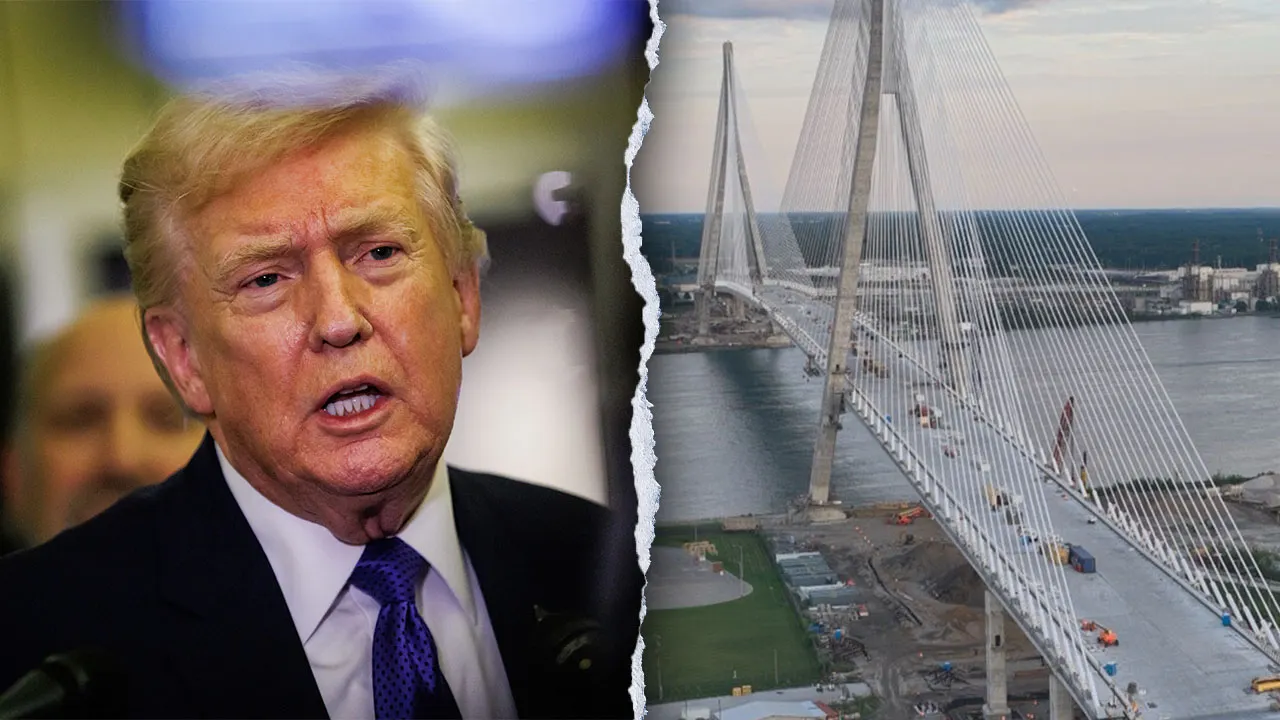
President Donald Trump threatened Monday to prevent the opening of the Gordie Howe International Bridge connecting Michigan and Canada unless Ottawa agrees to negotiate with Washington on tariffs and trade policies. The bridge, currently under construction, will link Detroit with Windsor, Ontario.
In a lengthy post on Truth Social, Trump accused Canada of taking advantage of the United States through unfair trade practices while simultaneously developing closer ties with China. “I will not allow this bridge to open until the United States is fully compensated for everything we have given them, and also, importantly, Canada treats the United States with the Fairness and Respect that we deserve,” Trump wrote.
The Gordie Howe International Bridge, named after the legendary Canadian hockey player who starred for the Detroit Red Wings, represents a significant infrastructure project between the two nations. The crossing will serve as a vital trade corridor in one of North America’s busiest commercial regions.
Trump specifically cited the exclusion of American spirits and alcoholic beverages from liquor store shelves in Ontario as an example of unfair treatment. “Ontario won’t even put U.S. spirits, beverages, and other alcoholic products on their shelves, they are absolutely prohibited from doing so,” he claimed.
The former president also criticized the bridge’s construction process, alleging it was proceeding with “virtually no U.S. content.” He blamed former President Barack Obama for “stupidly” granting Canada a waiver from the Buy American Act, which requires federal agencies to purchase materials manufactured in the United States and composed primarily of American-made components.
“We will start negotiations, IMMEDIATELY. With all that we have given them, we should own, perhaps, at least one half of this asset,” Trump added in his statement.
This dispute reflects ongoing tensions in the U.S.-Canada trade relationship, which has historically been one of the world’s largest bilateral trading partnerships. The two countries exchanged approximately $800 billion in goods and services in 2023, with millions of jobs in both nations depending on cross-border commerce.
Trump’s comments also targeted Canadian Prime Minister Mark Carney, claiming that Carney “wants to make a deal with China — which will eat Canada alive. We’ll just get the leftovers!” In an unusual assertion, Trump claimed that by strengthening ties with China, Canada would be risking its national sport, writing, “The first thing China will do is terminate ALL Ice Hockey being played in Canada, and permanently eliminate The Stanley Cup.”
This latest friction comes amid a series of contentious exchanges between Trump and Canadian leadership. Earlier this year, Trump challenged Carney at the World Economic Forum in Davos, suggesting Canada should be “grateful” for missile defense systems provided by the United States.
The Detroit-Windsor corridor handles approximately 25% of all merchandise trade between the U.S. and Canada, with the existing Ambassador Bridge carrying more than $323 million in goods daily. The Gordie Howe International Bridge, when completed, is expected to ease congestion, improve supply chain efficiency, and enhance border security.
The Canadian government has not yet issued an official response to Trump’s threat. The bridge project, which began construction in 2018, is scheduled for completion in 2025 at an estimated cost of $5.7 billion.
Fact Checker
Verify the accuracy of this article using The Disinformation Commission analysis and real-time sources.

16 Comments
Trump’s threat to prevent the US-Canada bridge from opening is a concerning development in the ongoing trade disputes between the two nations. Cross-border infrastructure projects like this are vital economic lifelines, and disrupting them could have far-reaching consequences. I hope the two governments can engage in productive, good-faith negotiations to find a mutually agreeable solution.
Unilaterally blocking the bridge’s opening would be an extreme measure that could inflict significant economic harm on both sides. Pragmatic diplomacy and a willingness to compromise seem like the wisest path forward to address the underlying trade issues in a constructive manner.
Threatening to block the new US-Canada bridge seems like an aggressive negotiating tactic that could seriously backfire. Cross-border infrastructure projects like this are vital for regional and national economies. Both sides would be better served by good-faith negotiations to resolve their trade disputes in a mutually beneficial way.
While the US may have legitimate concerns, unilaterally obstructing the bridge’s opening could severely disrupt supply chains and commercial ties. The two nations should focus on finding a pragmatic compromise that addresses the needs and interests of both countries.
Trump’s threat to block the new US-Canada bridge seems like a risky move that could harm economic ties and cooperation between the two nations. Unilateral actions rarely lead to positive outcomes in trade disputes. Perhaps diplomacy and good-faith negotiations would be a wiser path forward.
Disrupting major cross-border infrastructure projects is a drastic step that could backfire politically and economically. Both countries have a shared interest in facilitating the smooth flow of goods and people across the border.
The proposed bridge is a vital piece of North American trade infrastructure. Blocking its opening would be a highly disruptive move that could severely damage economic ties between the US and Canada. Both countries would be better served by pragmatic, good-faith negotiations to address their trade concerns.
While the US may have legitimate grievances, preventing the bridge’s completion is an extreme measure that could backfire. Cooler heads should prevail, and the two nations should work together to find a mutually beneficial resolution to their trade disputes.
This dispute over the US-Canada bridge highlights the complex and often contentious nature of cross-border trade relations. While both sides likely have valid arguments, resorting to threats and unilateral actions is rarely the best path forward. I hope the two governments can engage in constructive, good-faith negotiations to find a mutually acceptable solution.
Blocking the bridge’s opening would be an extreme measure that could inflict serious economic damage on both the US and Canada. Both countries have a shared interest in maintaining fluid cross-border transportation and trade. Hopefully they can find a pragmatic compromise that addresses the concerns of all stakeholders.
Trump’s threat to block the US-Canada bridge raises serious concerns. Cross-border infrastructure projects like this are crucial for the economies of both nations. Unilateral actions that disrupt trade and commerce are rarely productive. The two governments should focus on negotiating in good faith to address their differences.
Preventing the bridge’s opening would be a drastic step that could inflict significant economic harm on workers, businesses, and consumers on both sides of the border. Both countries have a shared interest in maintaining fluid trade and transportation links. I hope they can find a pragmatic compromise.
Interesting development in the ongoing US-Canada trade tensions. Trump seems determined to use the bridge project as leverage, though that could backfire and disrupt critical commerce. Both sides would do well to find a negotiated solution that benefits workers and consumers on both sides of the border.
Blocking the bridge’s opening would be an extreme measure that could inflict serious economic pain on both countries. Hopefully cooler heads prevail and they can reach a mutually acceptable compromise on tariffs and trade policies.
While I understand the desire to extract concessions from Canada, threatening to block the new bridge seems like an extreme and counterproductive negotiating tactic. Cross-border trade and investment are critical to the economies of both nations. I hope they can find a mutually agreeable solution.
Holding the bridge hostage could seriously disrupt supply chains and commerce. The two countries should focus on negotiating in good faith to resolve trade differences, not resort to unilateral threats that could inflict economic harm on both sides.