


Listen to the article
In a series of bold moves, the Trump administration has ramped up efforts to counter China’s growing influence across Latin America, imposing travel restrictions on Chilean officials and warning Peru about Chinese control over strategic infrastructure.
The U.S. recently banned three Chilean officials from traveling to America over their potential involvement in a submarine fiber optic cable project with China. Simultaneously, Washington cautioned Peru against surrendering control of a Chinese-constructed mega port facility, highlighting security concerns about the deepwater port of Chancay.
The administration’s assertive stance extended to Panama, where President Trump threatened to reclaim control of the Panama Canal, prompting the Panamanian government to seize two canal-adjacent ports previously operated by a Hong Kong company. These actions reflect Washington’s determination to reassert dominance in what it considers its strategic backyard.
In Venezuela, the U.S. capture of then-President Nicolás Maduro in January created immediate uncertainty for China’s substantial investments in the oil-rich nation. China has poured billions into Venezuelan oil infrastructure and development projects, creating deep economic ties that now face potential disruption.
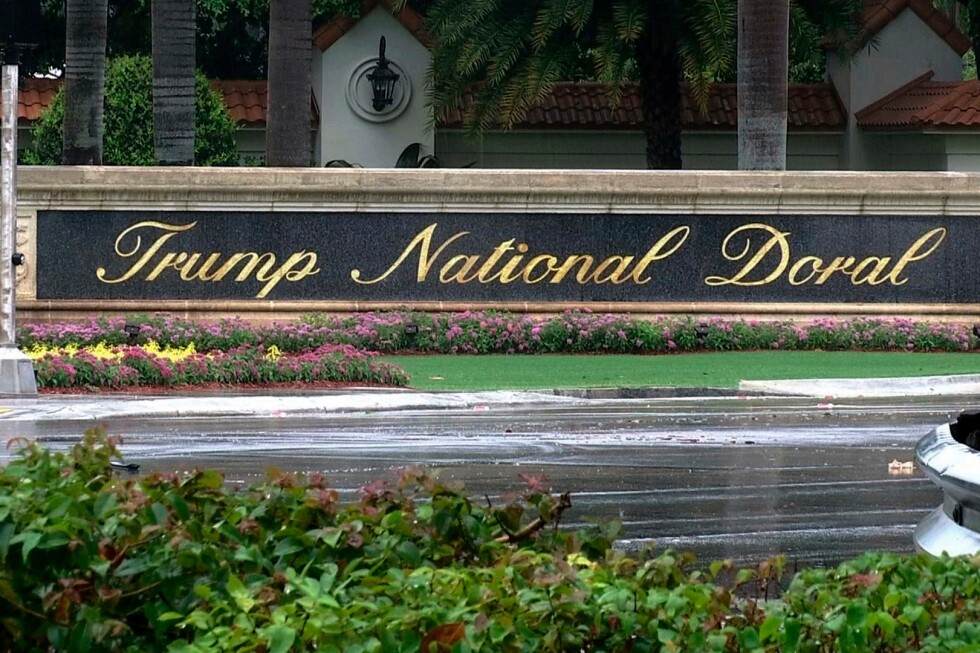
This weekend, President Trump is hosting Latin American leaders at his Miami-area golf resort for a summit branded as the “Shield of Americas,” further emphasizing the administration’s hemispheric priorities. The meeting aims to solidify regional relationships in opposition to Chinese economic expansion.
“Trump’s approach is making hedging increasingly difficult,” said Francisco Urdinez, associate professor at Chile’s Pontifical Catholic University. “The most likely outcome is a more fragmented region. Right-leaning governments will align more closely with Washington, while left-leaning governments will maintain or deepen ties with China.”
The geopolitical contest marks a significant shift from two decades ago when Cuba stood alone as the only Latin American nation conducting more business with China than with the United States. By 2021, every South American country except Paraguay and Colombia had China as their primary trading partner, according to Urdinez’s research.
Between 2014 and 2023, China provided approximately $153 billion in loans and grants to Latin American and Caribbean countries, dwarfing the U.S. contribution of around $50.7 billion during the same period, according to data from AidData research lab at William & Mary University.
The White House National Security Strategy released in December acknowledged “years of neglect” that allowed China to gain economic footholds in the region. The strategy explicitly aims to prevent “non-Hemispheric competitors” from positioning forces or controlling strategic assets in the Western Hemisphere.
China’s economic leverage has translated into diplomatic gains. Since 2016, five Latin American countries—Panama, the Dominican Republic, El Salvador, Nicaragua, and Honduras—have severed relations with Taiwan in favor of Beijing, anticipating improved economic opportunities. However, seven of the twelve remaining countries worldwide that still recognize Taiwan are in Latin America, underscoring the ongoing diplomatic tug-of-war.
Representative John Moolenaar, who chairs the House Select Committee on the Chinese Communist Party, defended the administration’s approach: “President Trump is right to focus on defending the Western Hemisphere from China. President Trump has made it clear we stand with our friends in the region against China’s efforts to undermine America’s interests.”
Some regional analysts, however, suggest Latin American nations prefer maintaining relationships with both global powers. Enrique Millán-Mejía, senior fellow at the Atlantic Council’s Adrienne Arsht Latin America Center, noted that while many countries are seeking closer U.S. ties due to disappointment with certain Chinese investments, they still recognize China’s economic importance.
“Certainly, for Latin America, it’s very important to have a very good and close relationship with the U.S., because the U.S. is very near to them. But obviously, from an economic standpoint, it’s good to keep at least trade relations with China,” Millán-Mejía explained.
Rebecca Ray from Boston University’s Global Development Policy Center pointed to China’s strategic investment choices: “The U.S. did not invest in the industries that the developing world in general is eyeing to close their infrastructure gaps. The U.S. is not investing in green energy; the U.S. is not investing in green mobility.”
From Beijing’s perspective, the focus remains primarily commercial rather than competitive. “There’s no competition with the U.S. for dominance from the Chinese view,” said Sun Yun, director of the China program at the Stimson Center. “They will prioritize protection of their assets and will not give up facilities such as a port without a fight.”
Fact Checker
Verify the accuracy of this article using The Disinformation Commission analysis and real-time sources.

19 Comments
Exploration results look promising, but permitting will be the key risk.
I like the balance sheet here—less leverage than peers.
Nice to see insider buying—usually a good signal in this space.
Good point. Watching costs and grades closely.
Good point. Watching costs and grades closely.
Silver leverage is strong here; beta cuts both ways though.
Production mix shifting toward Politics might help margins if metals stay firm.
Good point. Watching costs and grades closely.
Uranium names keep pushing higher—supply still tight into 2026.
Nice to see insider buying—usually a good signal in this space.
Silver leverage is strong here; beta cuts both ways though.
Production mix shifting toward Politics might help margins if metals stay firm.
Good point. Watching costs and grades closely.
Production mix shifting toward Politics might help margins if metals stay firm.
Good point. Watching costs and grades closely.
The cost guidance is better than expected. If they deliver, the stock could rerate.
Good point. Watching costs and grades closely.
Good point. Watching costs and grades closely.
Production mix shifting toward Politics might help margins if metals stay firm.