


Listen to the article
Trump Withdraws National Guard from Democratic-Run Cities Amid Legal Challenges
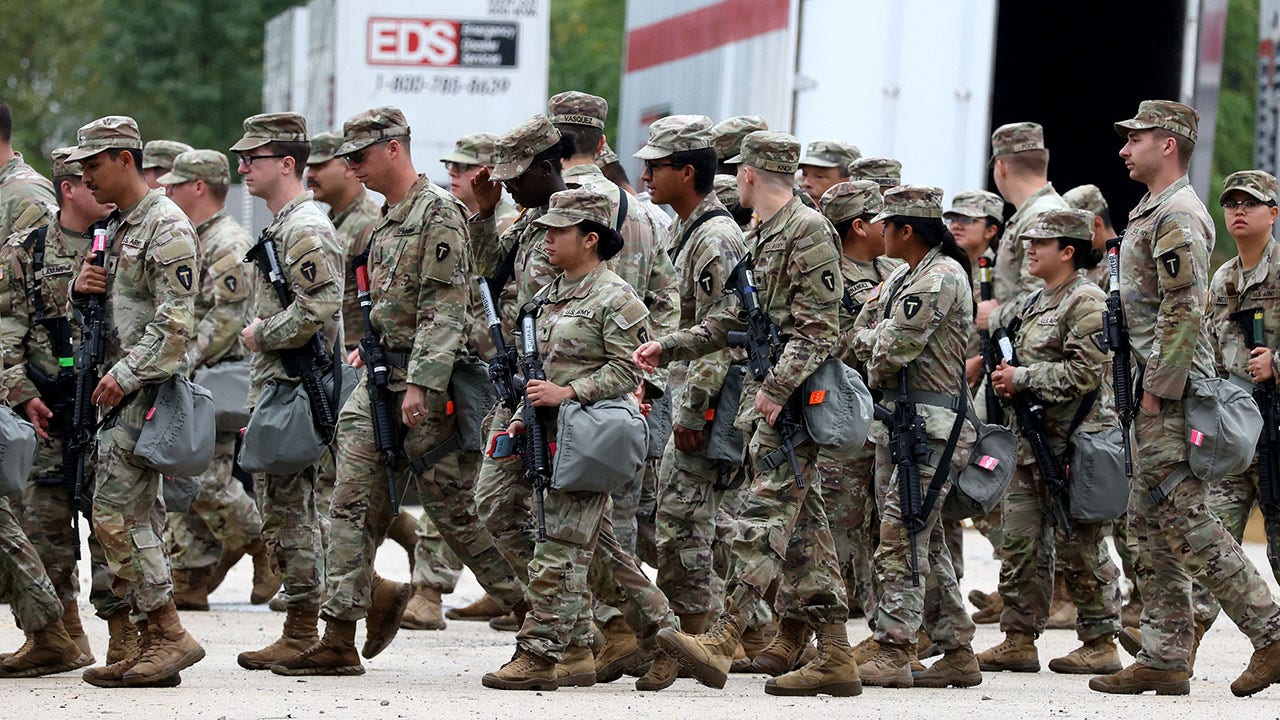
The National Guard will be withdrawn from Chicago, Los Angeles, and Portland following a series of legal setbacks to President Donald Trump’s urban crime reduction initiative. Trump announced the decision Wednesday while suggesting the removal is only temporary.
“We are removing the National Guard from Chicago, Los Angeles, and Portland, despite the fact that CRIME has been greatly reduced by having these great Patriots in those cities,” Trump wrote on his social media platform Truth Social. He added that these cities “were GONE if it weren’t for the Federal Government stepping in.”
The decision comes after California, Illinois, and Oregon mounted successful legal challenges against the federal deployment. Each state filed lawsuits arguing that federalizing state National Guard troops without governors’ consent constituted unlawful overreach, with federal judges ultimately blocking the deployments.
California Governor Gavin Newsom celebrated the withdrawal on social media, writing: “About time @realDonaldTrump admitted defeat. We’ve said it from day one: the federal takeover of California’s National Guard is illegal.”
The constitutional dispute centers on the command structure of National Guard forces. While these units typically operate under gubernatorial authority, the president can federalize them under specific circumstances. The Trump administration’s unilateral activation of Guard units in Democratic-led cities pushed legal boundaries that courts have now clarified through their rulings.
Trump’s announcement contained a clear warning that the federal government would return “in a much different and stronger form, when crime begins to soar again.” He expressed disbelief that Democratic mayors and governors “would want us to leave, especially considering the great progress that has been made.”
The deployment was part of a broader federal law enforcement initiative targeting what the administration described as out-of-control crime in Democratic-run cities. In Los Angeles, federal authorities had clashed with protesters during anti-ICE demonstrations earlier in the year as the administration intensified deportation operations against undocumented immigrants with criminal records.
Portland experienced similar tensions, with recurring anti-ICE protests in late 2025 that sometimes escalated into confrontations with authorities. The city has been a flashpoint for immigration enforcement protests throughout Trump’s administration.
Chicago Mayor Brandon Johnson disputed Trump’s characterization of the city’s crime situation, noting on social media that “Chicago recorded the fewest homicides in 2025 than in any year this century, with totals far below previous spikes.” According to Chicago Police Department data, the city recorded 412 murders as of December 28, compared to 585 during the same period in 2024.
“The city hasn’t recorded figures this low since the mid 1960’s,” Johnson added.
The withdrawal represents a significant development in the ongoing tension between federal authority and state sovereignty during the Trump administration. Legal experts have closely watched these cases as they define the boundaries of presidential power regarding domestic deployment of military forces.
As the National Guard units return to state control, local officials will resume full responsibility for law enforcement strategies in these major urban centers. The administration has not specified what alternative approaches it might pursue if it determines federal intervention is again necessary in these or other cities.
Fact Checker
Verify the accuracy of this article using The Disinformation Commission analysis and real-time sources.

9 Comments
The governors’ successful lawsuits against the federal takeover of their National Guard forces highlights the importance of state sovereignty. It will be interesting to see how this impacts future decisions around domestic deployments.
Absolutely. This is a complex issue with no easy answers, but the legal process seems to have worked in this case to preserve state authority.
Trump’s decision to withdraw the National Guard seems politically motivated, given his suggestion that the cities were ‘GONE’ without federal intervention. I wonder if the crime reduction was truly due to the Guard’s presence.
Good point. The legal challenges raised by the states indicate there were likely other factors at play beyond just the Guard deployment.
Interesting to see the legal challenges to the federal deployment of National Guard troops in those cities. It’s a complex issue with valid concerns on both sides about state sovereignty and public safety.
Agreed, it’s a delicate balance between state and federal powers. Curious to see how this plays out in the long run.
This decision to withdraw the National Guard raises questions about the effectiveness of the deployments and the political motivations behind them. It will be important to closely monitor crime rates in these cities going forward.
While Trump claims the Guard’s presence reduced crime, the legal challenges suggest the deployments may have overstepped federal authority. It’s good to see the courts upholding the balance of power between state and federal governments.
Yes, the courts playing a key role in checking executive power is an important part of our democratic system, even if the outcomes are politically contentious.