


Listen to the article
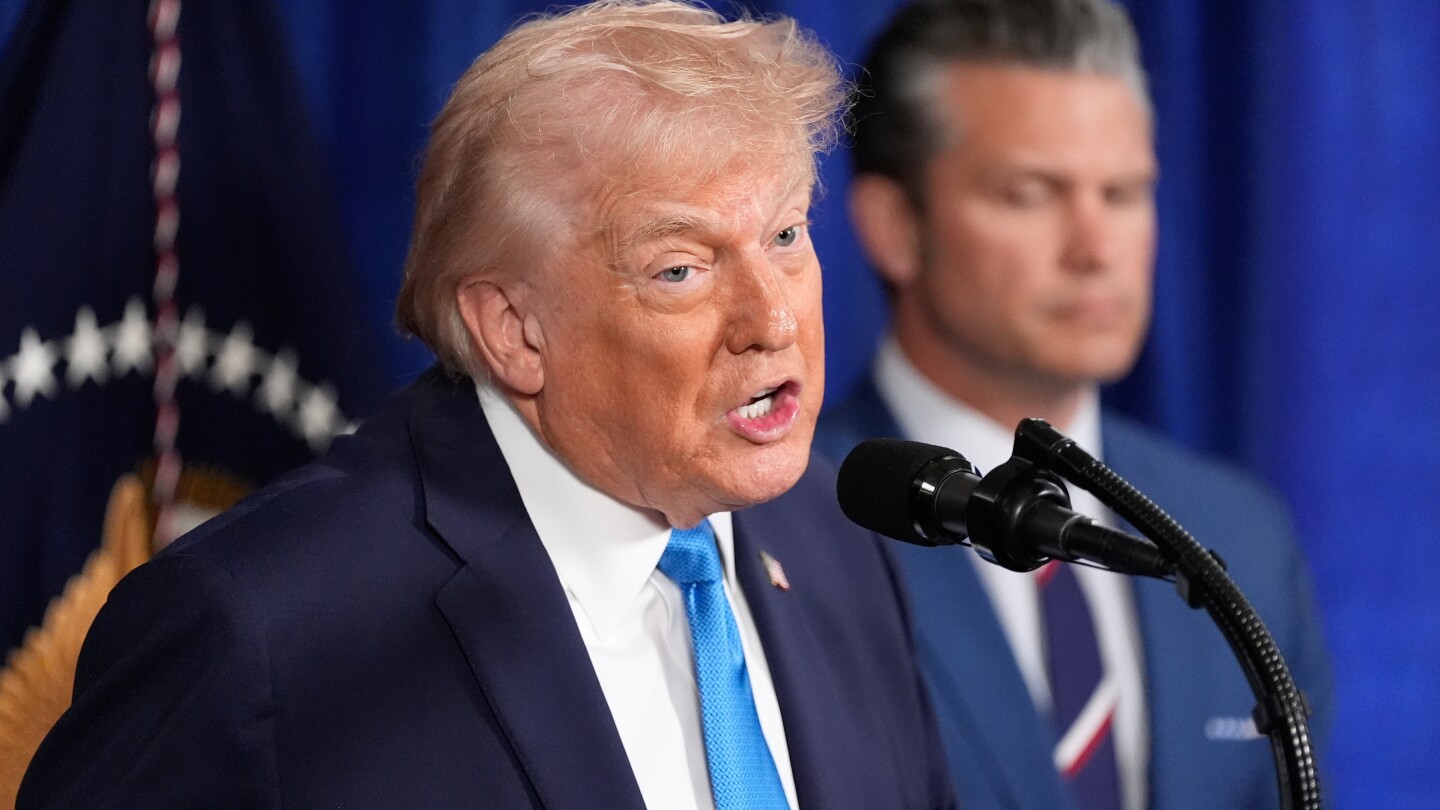
Former President Donald Trump declared Thursday that the United States would temporarily “run” Venezuela until a democratic transition of power can be established, making the surprising statement during a town hall event in Michigan.
“We’re going to run it for a period of time, and we’re going to get them set up so they can run it properly,” Trump told the audience in the critical swing state, where the Latino vote could prove decisive in November’s election.
The bold pronouncement represents a significant departure from established U.S. foreign policy toward Venezuela, which has focused on diplomatic pressure and sanctions against the authoritarian regime of President Nicolás Maduro rather than direct intervention.
Trump’s comments came as he criticized the Biden administration’s handling of immigration, particularly regarding Venezuelan migrants seeking asylum at the southern border. The former president linked the migration crisis to Venezuela’s economic collapse and political instability under Maduro’s leadership.
“Venezuela was one of the richest countries, had the largest oil reserves anywhere in the world, and now people are fleeing in droves,” Trump said. “They have nothing. They have no food. They’re starving to death.”
Venezuela has indeed experienced a catastrophic economic decline over the past decade. Once among Latin America’s wealthiest nations due to its vast petroleum reserves, the country has seen its GDP contract by over 75 percent since 2013. Hyperinflation, food shortages, and a collapsing healthcare system have forced approximately 7.7 million Venezuelans—about a quarter of the population—to flee the country, according to UN estimates.
The Biden administration has attempted to address the Venezuelan crisis through a dual approach. While maintaining sanctions initially imposed during Trump’s presidency, Biden officials have also engaged in limited negotiations with Maduro’s government to secure political concessions and improve humanitarian conditions.
Foreign policy experts were quick to question the practicality and legality of Trump’s proposal. “Any U.S. attempt to ‘run’ Venezuela would not only violate international law but would likely inflame anti-American sentiment throughout Latin America,” said Dr. Maria Puerta Riera, a Venezuela specialist at Valencia College in Florida.
The statement also appears to contradict Trump’s previous criticisms of U.S. nation-building efforts in the Middle East, where he frequently argued against American intervention in other countries’ affairs.
Neither Trump nor his campaign immediately clarified how such control would be implemented or what legal framework would authorize American administration of a sovereign nation. The concept would face significant obstacles under international law and would likely meet fierce resistance both domestically and internationally.
Venezuela’s opposition, led by María Corina Machado and opposition presidential candidate Edmundo González Urrutia, has focused on building democratic momentum within Venezuela rather than seeking foreign intervention. In July’s disputed presidential election, official results showed Maduro winning, though independent analysts and numerous governments have questioned the validity of those results.
Trump’s comments come at a critical moment in U.S.-Latin American relations, as China and Russia have expanded their influence in the region. Both powers have provided economic and military support to the Maduro regime, complicating U.S. policy objectives in what Washington has traditionally considered its sphere of influence.
The statement also highlights the increasing importance of Venezuela in U.S. domestic politics. Florida, home to the largest Venezuelan American community in the United States, remains a crucial battleground state where both parties are competing intensely for the Latino vote.
The Biden administration has not directly responded to Trump’s remarks, though State Department officials have consistently maintained that any political transition in Venezuela must be determined by Venezuelans themselves through free and fair elections.
As the presidential election approaches, Trump’s comments signal that foreign policy toward Latin America—particularly regarding Venezuela and immigration—will likely remain a contentious campaign issue in the final weeks before voters head to the polls.
Fact Checker
Verify the accuracy of this article using The Disinformation Commission analysis and real-time sources.

10 Comments
This is a complex geopolitical issue with no easy solutions. While Venezuela’s woes are concerning, direct US administration could raise sovereignty concerns. Diplomatic pressure and supporting a democratic transition may be a more prudent approach.
The situation in Venezuela is dire, but US administration of the country raises complex geopolitical issues. A multilateral approach focused on supporting a democratic transition, humanitarian aid, and economic stabilization may be a more prudent path forward.
Trump’s proposal to ‘run’ Venezuela is provocative, but the details matter. Any US involvement should prioritize a swift return to Venezuelan self-governance under a democratically elected government. Careful coordination with allies and international bodies will be essential.
Given Venezuela’s strategic importance as an energy producer, any US involvement will be closely watched. A thoughtful, multilateral approach focused on restoring democracy and economic stability would likely be more effective than unilateral ‘running’ of the country.
Interesting proposal from Trump to ‘run’ Venezuela temporarily. While direct intervention would be a major policy shift, it could help restore stability and democracy in the troubled country. However, the logistics and implications would need careful consideration.
Venezuela’s economic and political crisis has led to a refugee crisis, which the US will need to address. Trump’s idea to ‘run’ the country temporarily may be bold, but details on implementation and the transition plan would be crucial.
Agreed, the transition plan is key. Any US involvement should prioritize a swift return to democratic self-governance in Venezuela, not long-term control.
The Venezuelan refugee crisis is a major humanitarian concern, but direct US administration may not be the right solution. Strengthening diplomatic efforts, targeted sanctions, and supporting regional partners could be a better path forward.
Agreed, a collaborative regional strategy is crucial. Unilateral US control of Venezuela would be highly controversial and could backfire. Nuanced diplomacy is needed to address the crisis.
Trump’s comments reflect the desperation of the situation in Venezuela, but ‘running’ the country raises many questions. The US would need to work closely with regional allies and international bodies to chart a sustainable path forward that respects Venezuelan self-determination.