


Listen to the article
President Donald Trump has dismissed Russian claims that Ukraine targeted a residence belonging to President Vladimir Putin in a drone attack, saying U.S. national security officials have determined no such strike occurred.
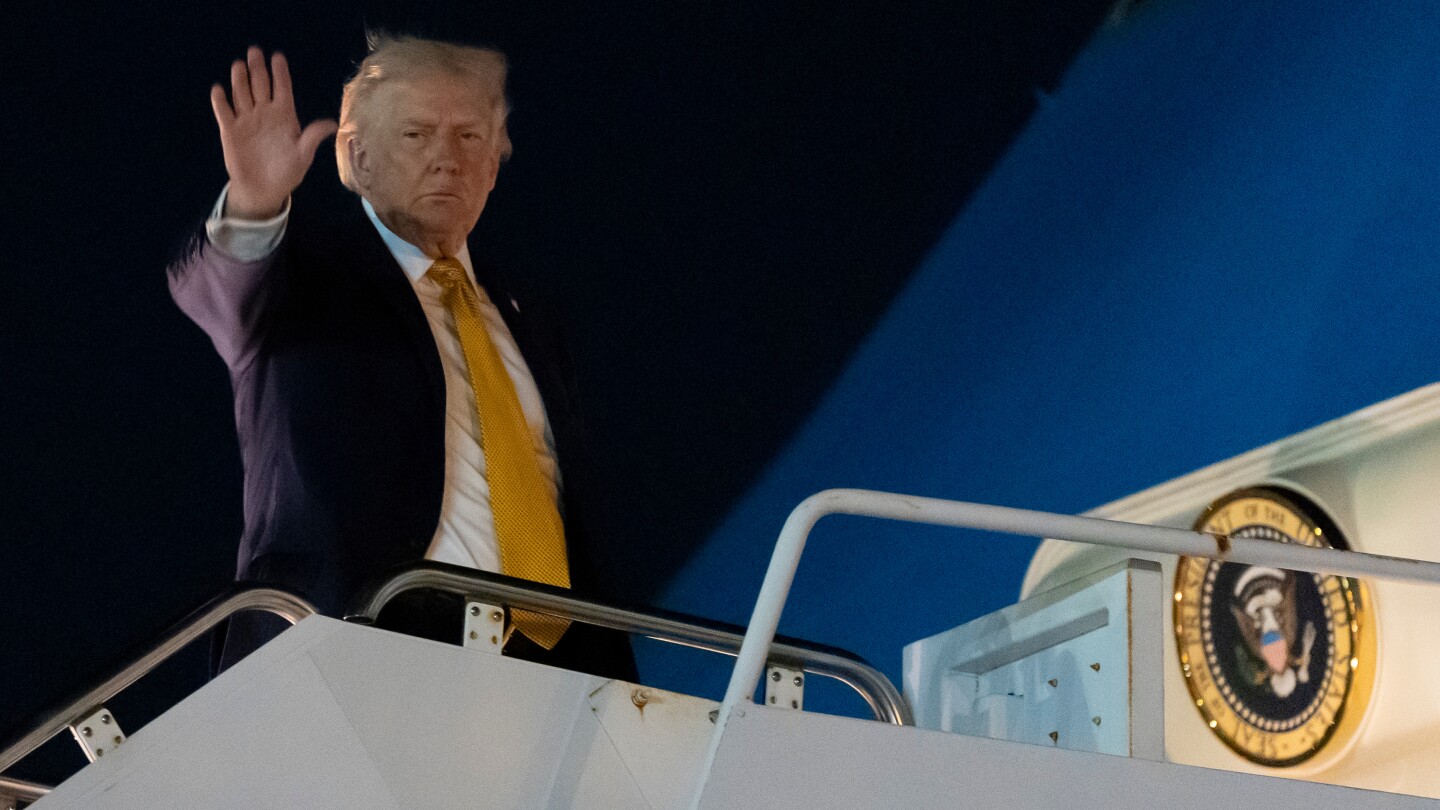
“I don’t believe that strike happened,” Trump told reporters aboard Air Force One on Sunday as he returned to Washington following a two-week stay in Florida.
The accusation emerged last week when Russian Foreign Minister Sergey Lavrov claimed Ukraine had launched multiple drones at Putin’s state residence in Russia’s northwestern Novgorod region. According to Lavrov, Russian defense systems intercepted the attack. He also criticized Ukraine for allegedly carrying out the strike during a critical period of peace negotiations.
The timing of Russia’s accusation was particularly notable, coming just one day after Ukrainian President Volodymyr Zelenskyy had traveled to Florida for discussions with Trump regarding the administration’s evolving 20-point peace plan aimed at ending the two-and-a-half-year conflict. Zelenskyy promptly denied the Russian claims.
Trump’s Sunday statement contradicts his initial reaction to the allegations. Last Monday, the president told reporters that Putin had raised the matter during a phone call between the two leaders, and Trump expressed being “very angry” about the purported attack.
By midweek, however, Trump appeared to be distancing himself from the Russian narrative. On Wednesday, he shared a New York Post editorial on his social media platform that questioned the validity of Russia’s claims. The editorial criticized Putin for choosing “lies, hatred, and death” at a moment when Trump has suggested the parties are “closer than ever before” to reaching a deal to end the war.
European officials had already dismissed Russia’s accusation as an attempt to undermine ongoing peace efforts, a position that U.S. intelligence now appears to support.
The incident highlights the complex diplomatic challenges facing Trump as he attempts to broker peace between Russia and Ukraine. During his presidential campaign, Trump boasted he could end the conflict “in one day,” but reality has proven more complicated. In recent weeks, the president has shown visible frustration with both Zelenskyy and Putin as he tries to mediate an end to the war.
Following their meeting at Mar-a-Lago last week, both Trump and Zelenskyy claimed they had made progress on a 20-point peace plan. Details of the proposal remain largely confidential, though reports suggest it involves territorial concessions and security guarantees.
Putin, however, has demonstrated little willingness to compromise on Russia’s core objectives. These include gaining full control of Ukraine’s industrial Donbas region and imposing severe limitations on Ukraine’s post-war military capabilities, including restrictions on the size of its armed forces and the types of weapons it can possess.
The conflict, which began with Russia’s full-scale invasion in February 2022, has resulted in tens of thousands of casualties and created Europe’s largest refugee crisis since World War II. It has also significantly reshaped global geopolitics, strengthening NATO while isolating Russia economically and diplomatically from much of the Western world.
As peace negotiations continue, analysts remain skeptical about the prospects for a near-term resolution given the substantial gap between Ukrainian and Russian positions on territorial integrity and security arrangements. The false claim about a drone strike on Putin’s residence illustrates how misinformation and propaganda continue to complicate diplomatic efforts to end the war.
Fact Checker
Verify the accuracy of this article using The Disinformation Commission analysis and real-time sources.

7 Comments
This development highlights the ongoing information war between Russia and Ukraine. It’s crucial that we rely on authoritative and unbiased sources when assessing these types of geopolitical claims.
Agreed. Verifying the facts is key, especially when the two sides have such divergent narratives.
Interesting that Trump is disputing Russia’s claims about the drone strike on Putin’s residence. It will be important to see if any evidence emerges to corroborate either side’s account.
This is a complex geopolitical situation, and I appreciate Trump’s cautious approach in not immediately accepting Russia’s version of events. Careful analysis of the facts is essential.
I’m curious to see how this plays out. If the U.S. has determined the strike didn’t happen, that would significantly undermine Russia’s claims. But we’ll need more information to fully assess the situation.
The timing of Russia’s accusation, coming right after Zelenskyy’s meeting with Trump, does seem suspicious. It could be an attempt to disrupt peace negotiations.
It’s good to see the U.S. taking a skeptical stance and not rushing to validate Russia’s accusations. Maintaining objectivity is crucial in navigating the information landscape around the war in Ukraine.