


Listen to the article
In a dramatic shift in U.S. foreign policy, President Donald Trump announced that American forces will temporarily govern Venezuela following the capture of dictator Nicolas Maduro during a surprise military operation in Caracas.
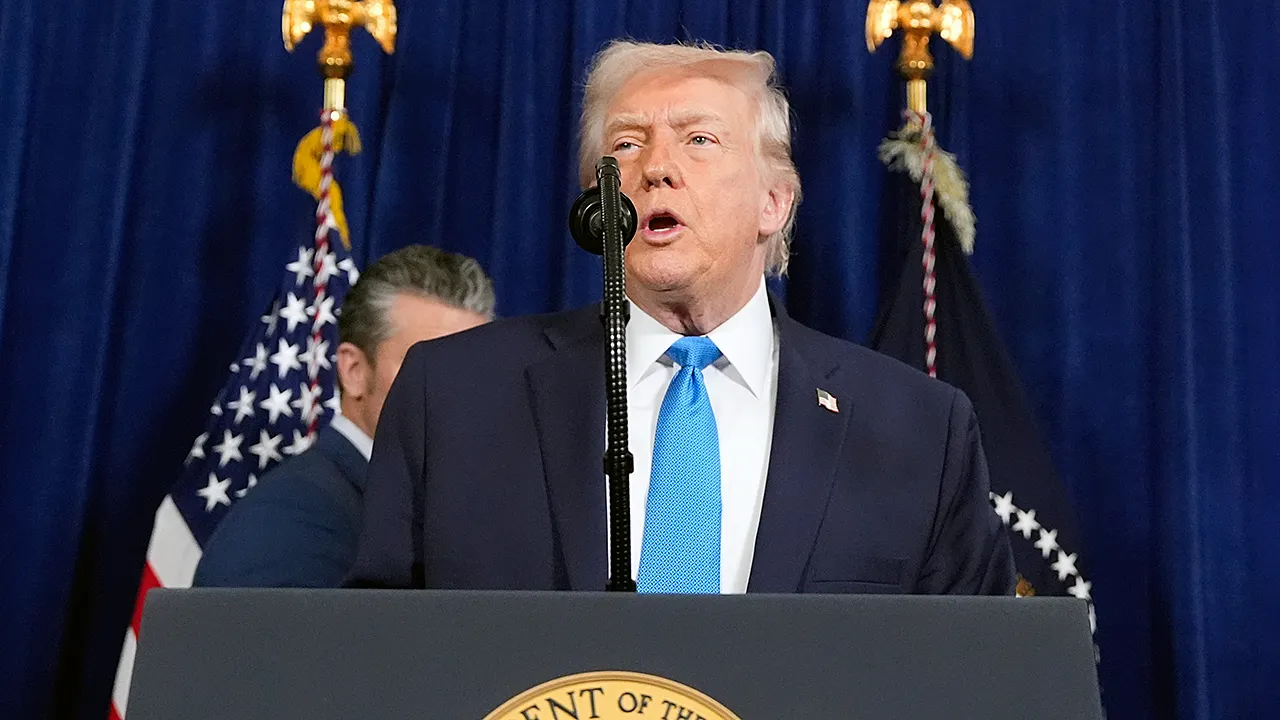
“We’re going to run the country until such time as we can do a safe, proper and judicious transition,” Trump stated during a Saturday news conference, hours after U.S. special forces bombed the Venezuelan capital and apprehended Maduro and his wife Cilia Flores. The couple has been transported to New York to face drug trafficking charges.
The U.S. military intervention, the first of its kind in Latin America since the 1989 removal of Panama’s Manuel Noriega, represents a significant escalation in American involvement in the region. Trump framed the action as necessary to prevent instability, warning that U.S. forces remain prepared to launch “a second and much larger attack” if needed.
Trump outlined an ambitious plan for American management of the oil-rich nation, emphasizing economic restoration as a key priority. “We’re going to rebuild the oil infrastructure, which will cost billions of dollars. It’ll be paid for by the oil companies directly… and we’re going to get the oil flowing the way it should be,” he said.
When questioned about maintaining a military presence in the country, Trump did not rule out a sustained deployment. “They always say boots on the ground — so we’re not afraid of boots on the ground if we have to,” he confirmed, adding that U.S. troops were already involved “at a very high level” during the operation.
The intervention comes after years of economic collapse in Venezuela, where hyperinflation has devastated the economy and triggered one of the largest refugee crises in the Western Hemisphere. More than seven million Venezuelans have fled the country since 2014, according to U.N. estimates, with many seeking asylum in the United States.
Trump suggested the operation would benefit Venezuelan refugees hoping to return home. “We’re going to ensure Venezuelans are taken care of, including those forced out of Venezuela by this thug,” he said, referring to Maduro.
The political landscape in Venezuela remains complex. Last year’s presidential election saw opposition candidate Edmundo González Urrutia and his running mate María Corina Machado claim victory, despite the Maduro government declaring itself the winner. International observers widely rejected the official results as fraudulent, but Maduro remained in power.
Following Maduro’s capture, Machado called on Venezuela’s armed forces to recognize González as the country’s “legitimate president” and commander-in-chief. She declared that “the hour of freedom has arrived” and urged Venezuelans to mobilize for a democratic transition.
Trump, however, signaled flexibility regarding Venezuela’s future leadership. When asked about backing Machado or working with the newly sworn-in vice president appointed by Maduro, Trump suggested U.S. officials were already engaging with the latter. “She’s essentially willing to do what we think is necessary to make Venezuela great,” he claimed.
The president defended his decision to intervene by framing it within his “America First” policy. “We want to surround ourselves with good neighbors. We want to surround ourselves with stability. We want to surround ourselves with energy. We have tremendous energy in that country. It’s very important that we protect it.”
Critics have pointed to the United States’ mixed record of success in regime change operations. The 1989 Panama intervention, while quickly removing Noriega, resulted in significant civilian casualties and property destruction that complicated post-invasion stabilization efforts.
When confronted with this history, Trump dismissed concerns by distinguishing his approach from previous administrations. “That’s when we had different presidents… That’s not with me. We’ve had a perfect track record of winning,” he asserted, citing operations against figures like Iranian general Qasem Soleimani and ISIS leader Abu Bakr al-Baghdadi.
As the situation continues to unfold, Venezuela’s future remains uncertain, with questions about sovereignty, governance, and regional stability hanging in the balance.
Fact Checker
Verify the accuracy of this article using The Disinformation Commission analysis and real-time sources.

7 Comments
The mining and energy infrastructure in Venezuela is certainly valuable, but I hope any U.S. involvement focuses on the wellbeing of the Venezuelan people first and foremost. Economic restoration is important, but not at the expense of their self-determination.
Capturing Maduro and his wife is a significant development, but I’m not convinced that direct U.S. control is the right path forward. Shouldn’t we be working to facilitate a democratic process that gives Venezuelans a meaningful voice in their future?
While I understand the desire for stability, this seems like a risky and heavy-handed approach. Shouldn’t the Venezuelan people have more of a say in their own future governance? I worry about the potential for abuse of power and unintended consequences.
Hmm, I’m not sure handing over control of Venezuela to the U.S. is the best solution. Wouldn’t it be better to work towards a truly peaceful, democratic transition that empowers the Venezuelan people? This feels like it could just create more instability and resentment.
This is certainly a bold and dramatic move, but I’m not sure direct U.S. control is the best solution. Shouldn’t we be working to facilitate a democratic process that gives the Venezuelan people a greater voice in determining their own future?
While I understand the desire for stability, I worry that this approach could backfire and lead to greater instability and resentment in the long run. Shouldn’t the focus be on supporting a genuine, peaceful democratic transition that empowers the Venezuelan people?
I’m curious to learn more about the specifics of this plan for American management of Venezuela. What safeguards will be in place to prevent abuse of power and ensure the Venezuelan people have a real say? The details will be critical here.