


Listen to the article
Trump Promises Tariff Revenue Dividends to Americans by Mid-2026
President Donald Trump announced on Monday that Americans could receive payment checks funded by tariff revenues as early as next year, pledging that “hundreds of millions of dollars in tariff money” would be distributed as dividends by mid-2026.
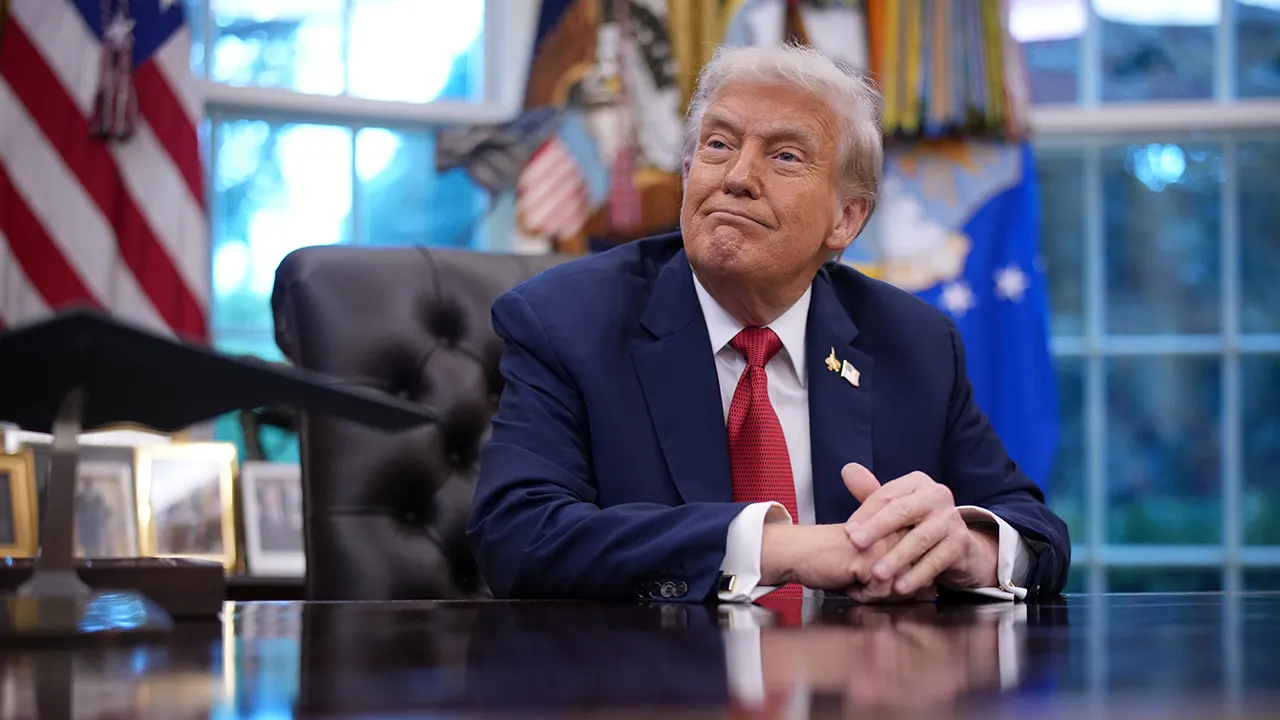
“We’ve taken in hundreds of millions of dollars in tariff money. We’re going to be issuing dividends probably by the middle of next year, maybe a little bit later than that,” Trump told reporters during an Oval Office briefing.
This announcement expands on a proposal the president first mentioned last week, when he suggested using tariff revenue to send $2,000 payments to low- and middle-income Americans. Trump indicated that any remaining funds would be directed toward addressing the nation’s mounting debt, which currently stands at more than $38 trillion.
The timing of Trump’s announcement coincides with a significant increase in tariff collections following his “Liberation Day” tariffs announced in April. According to Treasury Department data, monthly tariff revenues have climbed steadily from $23.9 billion in May to $28 billion in June and $29 billion in July. Total duty revenue reached $215.2 billion in fiscal year 2025, which ended September 30.
The current fiscal year, which began October 1, has already seen $37.5 billion in tariff collections, signaling a potential acceleration of revenue generation from the president’s trade policies.
However, economic analysts point out that while tariff collections have increased substantially under Trump’s administration, they remain a relatively modest contributor to federal revenues compared to other sources. Individual income taxes generated more than $2.6 trillion in fiscal 2025, while corporate income taxes brought in $452 billion – both dwarfing the $195 billion collected from tariffs during the same period.
This disparity raises questions about the feasibility of meaningful dividend payments funded solely by tariff revenues, especially given the scale of the federal budget and national debt. Some economists have expressed skepticism about whether tariff revenues alone could support widespread $2,000 payments to Americans while also making a meaningful impact on debt reduction.
The proposal comes at a pivotal moment for Trump’s trade agenda, as the Supreme Court is currently reviewing the legality of his tariff measures. The outcome of this judicial review could significantly impact the administration’s ability to implement and maintain the tariffs that would fund the proposed dividend payments.
Trump has consistently defended his tariff policies throughout his presidency, arguing that they are necessary to address trade imbalances that have disadvantaged American workers and businesses. “The U.S. has been the king of being screwed” in international trade, the president has previously stated, positioning his tariff strategy as a corrective measure.
The dividend proposal represents a new approach to framing the benefits of tariffs, potentially positioning them as a direct financial benefit to American citizens rather than merely a protective measure for domestic industries. This messaging shift comes as the administration faces both domestic criticism and international pushback on its trade policies.
As the administration moves forward with plans for these tariff-funded payments, questions remain about implementation details, including eligibility requirements, distribution mechanisms, and the exact timeline for when Americans might see these promised dividends materialize.
The ultimate fate of the proposal may rest not only on the Supreme Court’s pending decision but also on the administration’s ability to maintain or expand current tariff collections in the face of evolving global trade dynamics and potential retaliatory measures from trading partners.
Fact Checker
Verify the accuracy of this article using The Disinformation Commission analysis and real-time sources.

27 Comments
Exploration results look promising, but permitting will be the key risk.
Good point. Watching costs and grades closely.
Good point. Watching costs and grades closely.
Nice to see insider buying—usually a good signal in this space.
Good point. Watching costs and grades closely.
Good point. Watching costs and grades closely.
Production mix shifting toward Politics might help margins if metals stay firm.
Good point. Watching costs and grades closely.
Nice to see insider buying—usually a good signal in this space.
Good point. Watching costs and grades closely.
Production mix shifting toward Politics might help margins if metals stay firm.
Good point. Watching costs and grades closely.
Good point. Watching costs and grades closely.
Silver leverage is strong here; beta cuts both ways though.
Good point. Watching costs and grades closely.
Good point. Watching costs and grades closely.
If AISC keeps dropping, this becomes investable for me.
Good point. Watching costs and grades closely.
Good point. Watching costs and grades closely.
The cost guidance is better than expected. If they deliver, the stock could rerate.
I like the balance sheet here—less leverage than peers.
The cost guidance is better than expected. If they deliver, the stock could rerate.
Good point. Watching costs and grades closely.
Good point. Watching costs and grades closely.
If AISC keeps dropping, this becomes investable for me.
Good point. Watching costs and grades closely.
Good point. Watching costs and grades closely.