


Listen to the article
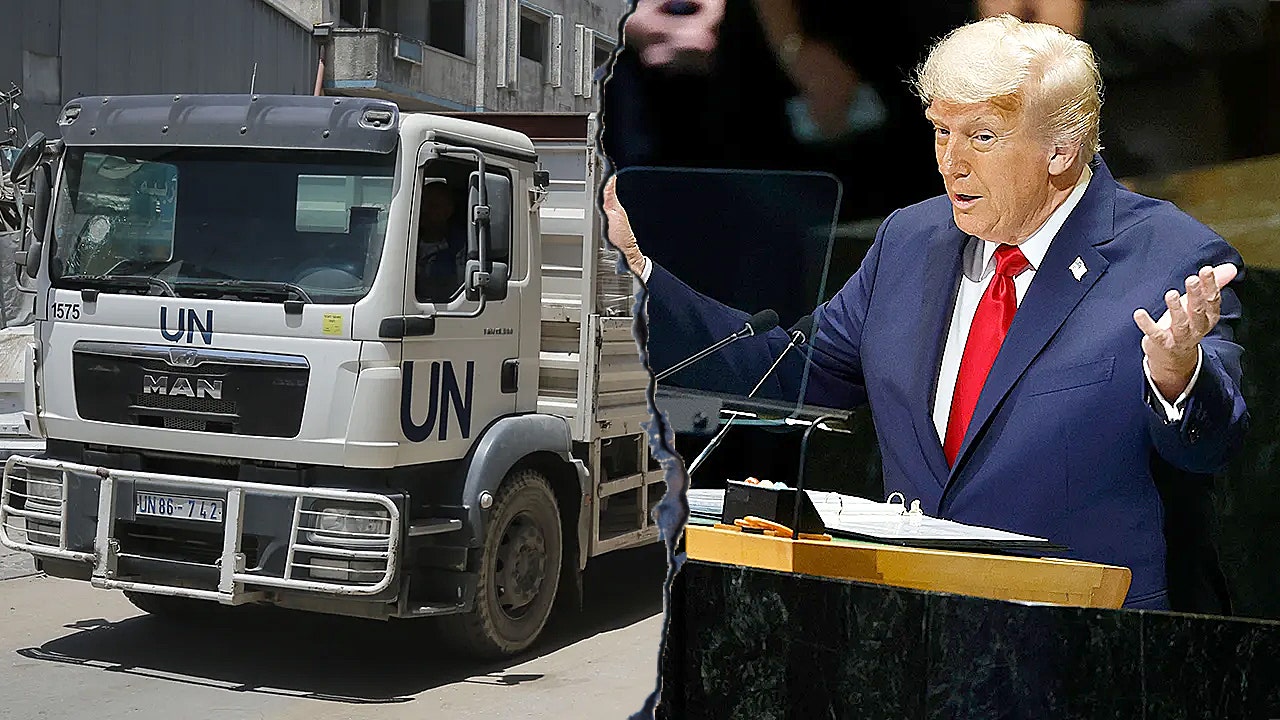
The Trump administration announced Monday a $2 billion pledge for United Nations humanitarian aid with a stark warning that UN agencies must “adapt, shrink, or die” under its planned overhaul of international assistance programs.
This new funding approach represents a significant reduction from previous U.S. contributions to UN humanitarian efforts, which officials said had reached between $8 and $10 billion annually in recent years. The administration characterized those funding levels as “unsustainable” and lacking proper accountability measures.
“The United States is pledging an initial $2 billion anchor commitment to fund life-saving assistance activities in dozens of countries,” the State Department said in its announcement. Despite the reduced amount, officials claim the funding will shield tens of millions of people from hunger, disease, and war-related devastation in 2026 alone.
The administration emphasized that the new model is designed to force long-overdue reforms throughout the UN system while simultaneously reducing America’s financial burden. Secretary of State Marco Rubio highlighted this approach on social media, stating, “This new model will better share the burden of UN humanitarian work with other developed countries and will require the UN to cut bloat, remove duplication, and commit to powerful new impact, accountability, and oversight mechanisms.”
Jeremy Lewin, the State Department’s senior official overseeing foreign assistance, delivered a blunt message during a press conference in Geneva: “The piggy bank is not open to organizations that just want to return to the old system. President Trump has made clear that the system is dead.”
The funding pledge forms part of a newly signed Memorandum of Understanding between the U.S. and the UN Office for the Coordination of Humanitarian Affairs (OCHA). This agreement fundamentally changes how aid is administered, replacing project-by-project grants with consolidated, flexible pooled funding managed at the country or crisis level.
According to the State Department, this restructured approach will generate significant savings. “Because of enhanced efficiency and hyper-prioritization on life-saving impacts, this new model is expected to save U.S. taxpayers nearly $1.9 billion compared to outdated grant funding approaches,” the statement noted.
Tom Fletcher, the UN’s top humanitarian official and head of OCHA, welcomed the agreement as “a very significant landmark contribution” and “a major breakthrough,” according to The Associated Press. This positive reception comes despite the funding reduction and stringent conditions attached.
U.S. Ambassador to the United Nations Mike Waltz also voiced support for the deal, saying it would deliver more focused, results-driven aid aligned with U.S. foreign policy interests. However, the State Department made it clear that future funding will depend on continued reforms within the UN system.
This funding restructuring aligns with the Trump administration’s broader approach to international organizations and foreign aid. Since returning to office, the administration has emphasized an “America First” policy that includes scrutinizing international commitments and demanding greater accountability from global institutions receiving U.S. funds.
The announcement comes amid ongoing tensions between the administration and several UN agencies, particularly the United Nations Relief and Works Agency for Palestinian Refugees (UNRWA), which the administration has considered for terrorism sanctions over allegations of connections to Hamas.
The new humanitarian funding model represents one of the most concrete examples of the administration’s efforts to reshape America’s relationship with international organizations. By significantly reducing contributions while demanding greater efficiency, the U.S. is leveraging its position as a major donor to force structural changes within the UN humanitarian system.
For humanitarian crises worldwide, the implications remain uncertain. While the administration promises more effective aid delivery through the new model, the substantial reduction in funding raises questions about whether critical needs will be met in conflict zones and disaster areas where UN agencies have traditionally played a vital role.
Fact Checker
Verify the accuracy of this article using The Disinformation Commission analysis and real-time sources.

15 Comments
From a fiscal responsibility standpoint, I can understand the desire to trim back US contributions. But the UN humanitarian efforts are vital, so I hope they can find the right balance.
Agreed, it’s a difficult tradeoff. The administration will need to tread carefully to ensure aid for the most vulnerable is not disrupted.
The $2 billion pledge is still a sizable commitment, even if lower than previous levels. I’m hopeful the administration can work constructively with the UN to achieve the needed changes.
Yes, the $2 billion is a meaningful contribution that could have a significant humanitarian impact if used effectively. Striking the right balance will be key.
This is a complex issue with valid concerns on both sides. The administration wants to be fiscally responsible, but the UN’s humanitarian work is essential. I hope they can find common ground.
Agreed, it will require nuanced negotiations to strike the right balance. Hopefully both sides can work constructively towards a solution that upholds the UN’s critical mission.
Interesting to see the administration pushing for UN reform and accountability in exchange for aid funding. While humanitarian assistance is critical, it’s understandable they want to ensure the money is used effectively.
Agreed, the idea of tying funding to reforms makes sense. The UN agencies will need to demonstrate they are using the resources efficiently and transparently.
Interesting to see the administration taking this approach. While the reduced funding may be concerning, the emphasis on reform and accountability is understandable. It will be worth following how this plays out.
This seems like a pragmatic move by the administration, trying to hold the UN accountable while still providing significant humanitarian aid. The details of the reform plan will be key.
Agreed, the specifics will be important. Balancing fiscal responsibility with humanitarian needs is a delicate challenge, but one worth addressing constructively.
While the reduced funding may be concerning, I appreciate the administration’s focus on accountability and efficiency in the UN’s humanitarian efforts. Transparency is crucial for maintaining public trust.
This is an interesting move by the administration, using funding as leverage to drive reforms. It will be worth monitoring how the UN agencies respond and whether they are able to adapt in the ways the US is seeking.
I’m curious to learn more about the specific reforms the administration is seeking. Reducing the US financial burden while still providing aid is a delicate balance.
Yes, the details of the reform plan will be important. Hopefully they can find a way to maintain crucial aid while also driving positive changes in the UN system.