


Listen to the article
Trump Pardons Two Jan. 6-Related Cases, Including Woman Who Threatened FBI Agents
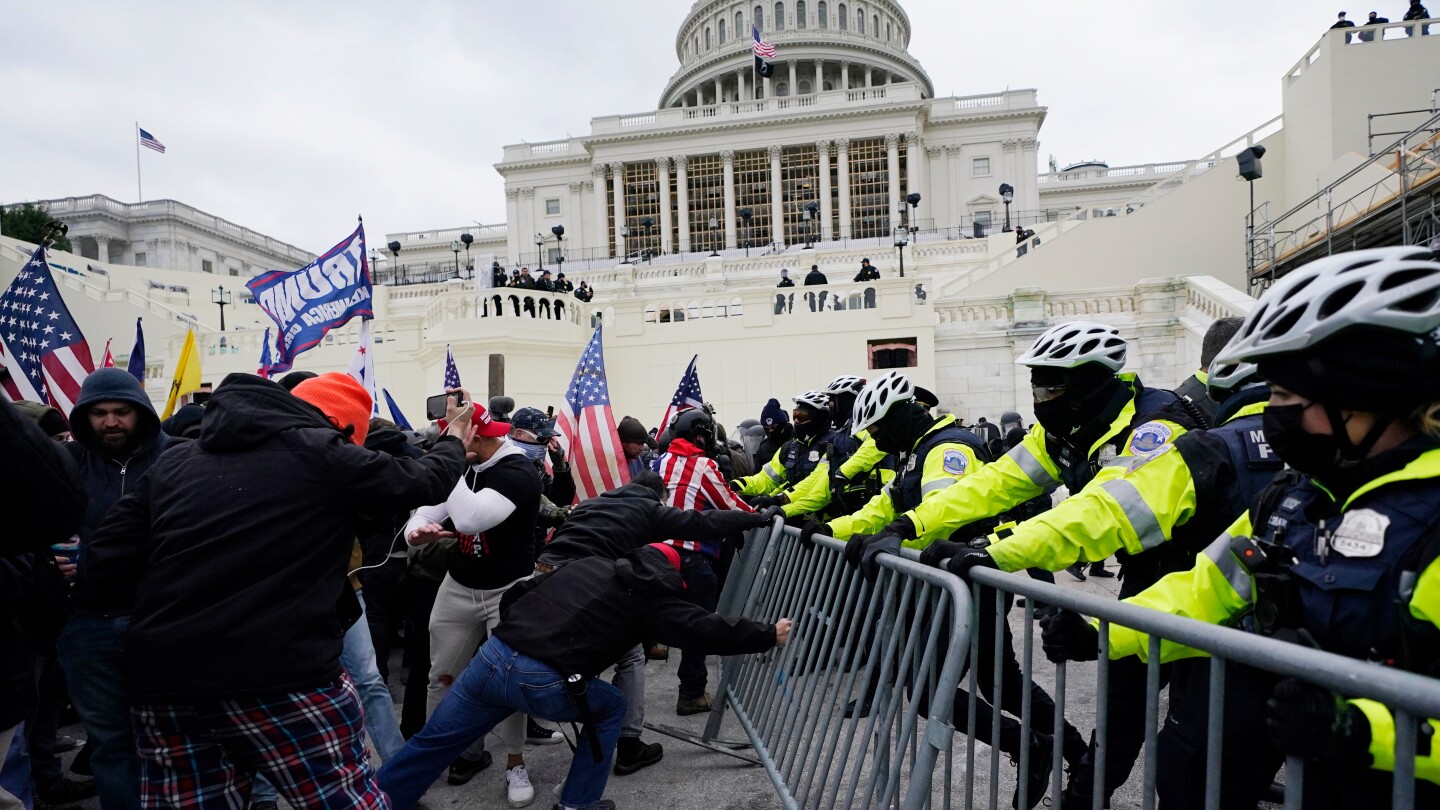
President Donald Trump has issued pardons in two cases connected to the January 6, 2021 Capitol riot investigation, continuing his use of executive clemency powers to assist supporters caught in the federal probe that followed the events at the U.S. Capitol.
The first pardon went to Suzanne Ellen Kaye, who was convicted of threatening FBI agents investigating whether she had been present at the Capitol during the riot. After agents contacted her about a tip they had received, Kaye posted a video on social media referencing her Second Amendment rights and threatening to shoot FBI agents if they came to her home.
Kaye, who completed an 18-month prison sentence last year, maintained during her trial that she did not own guns and never intended to threaten federal agents. She also told authorities she had not been at the Capitol on January 6 and faced no charges related to the actual riot.
A White House official, speaking on condition of anonymity, stated that Kaye suffers from “stress-induced seizures” and experienced one when the jury delivered its guilty verdict. The administration characterized her case as “clearly a case of disfavored First Amendment political speech being prosecuted and an excessive sentence.”
The second pardon was granted to Daniel Edwin Wilson of Louisville, Kentucky. Wilson came under federal scrutiny for his role in the Capitol riot, which led authorities to discover six firearms and approximately 4,800 rounds of ammunition in his home. As a previously convicted felon, Wilson was prohibited from possessing firearms.
Wilson had been sentenced to five years in prison after pleading guilty to conspiring to impede police officers and illegal firearm possession. He was released Friday evening following the presidential pardon.
“We are grateful that President Trump has recognized the injustice in my client’s case and granted him this pardon,” said George Pallas, Wilson’s attorney. “Mr. Wilson can now reunite with his family and begin rebuilding his life.”
The White House justified Wilson’s pardon by stating that “because the search of Mr. Wilson’s home was due to the events of January 6, and they should have never been there in the first place, President Trump is pardoning Mr. Wilson for the firearm issues.”
Wilson’s case had become entangled in legal debates over the scope of Trump’s earlier blanket pardons for January 6 participants, which he issued upon returning to the White House. The Justice Department initially argued that Trump’s pardons for Capitol riot defendants didn’t extend to Wilson’s separate gun crimes, but later reversed this position, claiming it had received “further clarity on the intent of the Presidential Pardon.”
This shift drew criticism from U.S. District Judge Dabney Friedrich, a Trump appointee, who called it “extraordinary” that prosecutors would argue presidential pardons could extend to illegal “contraband” discovered during January 6-related searches.
Federal prosecutors had characterized Wilson as having planned for the Capitol riot for weeks, arriving in Washington with the explicit goal of stopping the transfer of presidential power. Court documents revealed communications between Wilson and members of extremist groups including the Oath Keepers and Three Percenters.
In one message from November 9, 2020, Wilson wrote: “I’m willing to do whatever. Done made up my mind. I understand the tip of the spear will not be easy. I’m willing to sacrifice myself if necessary. Whether it means prison or death.”
At his sentencing hearing, Wilson expressed regret for entering the Capitol but maintained he “got involved with good intentions.”
These pardons represent the latest examples of Trump’s willingness to use presidential clemency powers to assist supporters caught up in the Justice Department’s extensive January 6 investigation, which has resulted in charges against more than 1,500 defendants since the Capitol riot.
Fact Checker
Verify the accuracy of this article using The Disinformation Commission analysis and real-time sources.

18 Comments
This is a complex issue and I think reasonable people can disagree. Ultimately, I hope the focus remains on upholding the rule of law and ensuring justice is served, regardless of political affiliations.
Well said. Maintaining the impartiality of the justice system should be the top priority here, not partisan considerations.
This is a highly charged political issue, and I think it’s important to try to analyze it as objectively as possible. Reasonable people can disagree on the merits of the pardon, but I hope the focus remains on upholding the integrity of the justice system.
Well said. Maintaining a balanced, non-partisan perspective is crucial when it comes to issues like this that are so deeply polarizing.
Regardless of one’s political leanings, this case highlights the complexities and challenges of prosecuting crimes related to the Capitol riot. The line between protected speech and criminal threats is often blurry, and mental health considerations add another layer of nuance.
That’s a fair point. These types of cases require very careful consideration of all the circumstances and evidence.
While I understand the administration’s rationale for the pardon, I’m concerned about the broader implications. Issuing pardons in cases connected to the Capitol attack could be seen as undermining the integrity of the judicial process and the investigations.
I share your concern. Pardons in these types of cases set a troubling precedent and risk further eroding public trust in institutions.
This pardon is sure to stir up controversy. While Trump supporters may see it as standing up for a wronged individual, critics will likely view it as more evidence of his disregard for the rule of law. It will be interesting to see how this plays out politically.
I agree, this is a highly divisive issue. Reasonable people can disagree on whether the pardon was justified or an abuse of executive power.
I’m curious to hear more about the specific details and circumstances that led to this pardon decision. Were there extenuating factors the administration felt warranted clemency? I think it’s important to understand the full context before drawing conclusions.
That’s a fair point. The administration should provide a clear, transparent rationale for the pardon to allow the public to properly evaluate it.
While I may not agree with the pardon, I respect the president’s authority to grant clemency. However, I hope this decision does not set a precedent of using that power to shield individuals connected to the Capitol riot from accountability.
I share your concern. Pardons in these cases should be rare and only granted with the utmost care and justification.
I’m interested to see how this pardon will be received by the public and how it may impact ongoing investigations related to the Capitol riot. These types of decisions can have far-reaching consequences, both legal and political.
Agreed. The ramifications of this pardon will likely be closely scrutinized in the days and weeks ahead. It’s a significant action that deserves careful analysis.
While I respect the president’s authority to grant pardons, I’m concerned about the broader implications of this decision. Pardons in cases connected to the Capitol attack could be seen as undermining the rule of law and the integrity of the judicial process.
That’s a valid concern. The use of the pardon power in these types of cases should be approached with the utmost caution and consideration of the long-term consequences.