


Listen to the article
The Trump administration has granted Iowa significant new autonomy over federal education funding, marking what officials describe as the first in an expected wave of similar approvals for conservative states seeking greater control over educational spending.
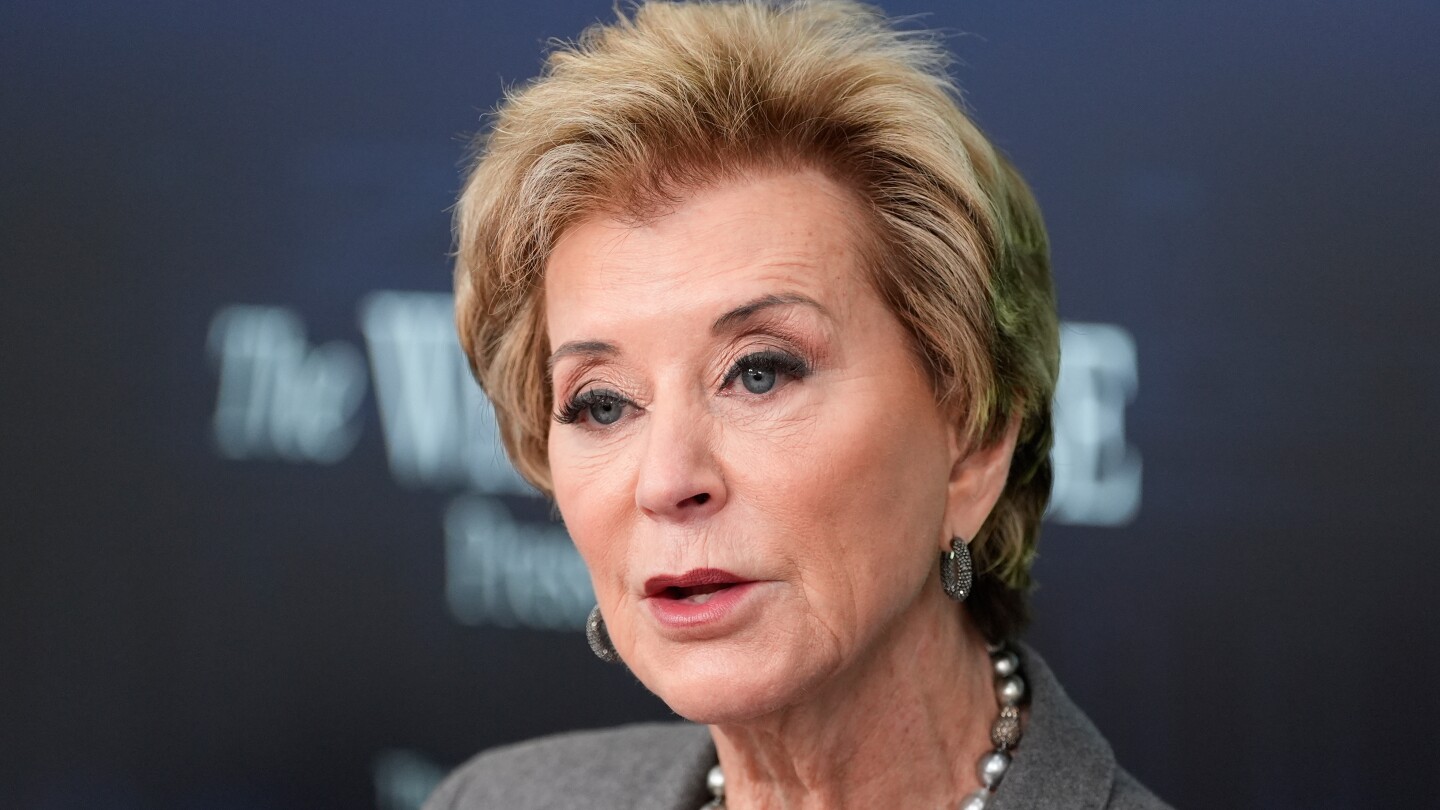
Education Secretary Linda McMahon formally approved Iowa’s flexibility waiver on Wednesday during an event in the state. The decision represents a concrete step in the administration’s broader agenda to reduce federal oversight of education and “return education to the states.”
“We are eliminating that additional compliance for the states, and that’s just going to be incredibly helpful,” McMahon told The Associated Press. “It’s not going to have to go through the Department of Education, and it’s going to flow directly more to the states.”
Iowa was the first state to request this exemption after McMahon invited states to apply for such flexibility last year. Indiana and Kansas have submitted similar applications, while leaders in other states have expressed interest in pursuing comparable arrangements.
Under Iowa’s newly approved plan, federal money from four distinct programs will be consolidated into a single funding pool with fewer restrictions on allocation. The affected programs focus on teacher training, English language learners, after-school activities, and academic enrichment initiatives. The waiver, which extends through September 2028, will merge approximately $9.5 million in federal education funds.
Iowa officials estimate the arrangement will save about $8 million in administrative costs previously dedicated to regulatory compliance. State education authorities will now have greater discretion in determining spending priorities, though they must still demonstrate adherence to the fundamental objectives of the original federal programs.
The approved waiver is substantially narrower than Iowa’s initial March proposal, which sought to combine ten funding sources into a single block grant affecting both state education agencies and local school districts. That earlier plan requested flexibility for significant programs including Title I, which provides more than $100 million to Iowa schools serving large populations of low-income students. The final approved version leaves Title I funding intact.
Block grants have long been advocated by conservatives who argue that federal education funding typically comes with excessive restrictions. The funding model allows states to direct resources according to their own priorities rather than following detailed federal guidelines.
Critics, however, warn that block grants could enable states to divert resources away from vulnerable student populations that federal education programs were specifically designed to support. Democratic lawmakers expressed their concerns in a May letter to McMahon, arguing that approving block grant requests would fail “the very students these provisions aim to support.”
Education Department officials emphasized that Iowa’s revised plan operates within existing legal parameters. Separately, McMahon has asked Congress to pass a budget that would consolidate much of federal education funding into a single block grant. Her proposal would eliminate the four spending programs being merged in Iowa’s waiver.
In her formal approval statement, McMahon characterized Iowa’s plan as a “first-in-the-nation proposal to return education to the States by providing common-sense flexibility, within the letter of and while maintaining the spirit of Federal law.”
The waivers represent one component of the Republican administration’s broader strategy to scale back the Education Department’s influence. While states have historically applied for waivers to gain flexibility for academic initiatives, the current approach represents an unprecedented use of the exemption mechanism to deliberately reduce federal authority.
McMahon has also employed interagency agreements—typically used for minor tasks—to transfer substantial departmental responsibilities to other federal agencies. President Trump has pledged to eliminate the Education Department entirely, though that action would require congressional approval. In the meantime, McMahon has reduced departmental staff by half and transferred major grant programs to other agencies.
These actions have faced consistent legal challenges from opponents, but the Supreme Court ruled in July that the administration’s efforts to scale back the department could continue.
Fact Checker
Verify the accuracy of this article using The Disinformation Commission analysis and real-time sources.

9 Comments
While this policy shift may appeal to conservative states, I wonder how it will impact lower-income and disadvantaged students who rely on consistent federal education funding and oversight.
That’s a valid concern. Loosening federal strings could lead to more unequal education outcomes if states don’t maintain robust funding and standards.
This seems in line with the Trump administration’s broader agenda to shift more power to the states on education policy. It will be worth watching to see if this leads to significant changes on the ground.
I’m curious to see if this flexibility results in more innovative approaches or if it simply leads to more uneven education quality across the country.
Interesting move to give Iowa more flexibility over federal education funding. I wonder how this will play out in practice and if other conservative states will follow suit.
Reducing federal oversight could allow states to tailor education spending to local needs, but it also raises concerns about equity and accountability.
As someone interested in mining and energy, I’m not sure how this federal education funding story is directly relevant. But I can see how changes in state education policies could have downstream impacts on the talent pipeline for technical fields.
That’s a good point. The quality and accessibility of STEM education at the state level could certainly influence the future workforce for industries like mining and energy.
As an investor focused on mining and commodities, I’m less directly interested in this education policy story. But I can see how it could potentially impact the future labor pool for technical roles in our industry.