


Listen to the article
President Trump’s 2025 Tariff Promises: What Has and Hasn’t Materialized
As 2025 draws to a close, President Donald Trump’s second administration has implemented numerous tariffs that have fundamentally altered U.S. economic policy. However, many of his most ambitious and controversial trade threats remain unfulfilled, leaving businesses and trading partners in a state of uncertainty.
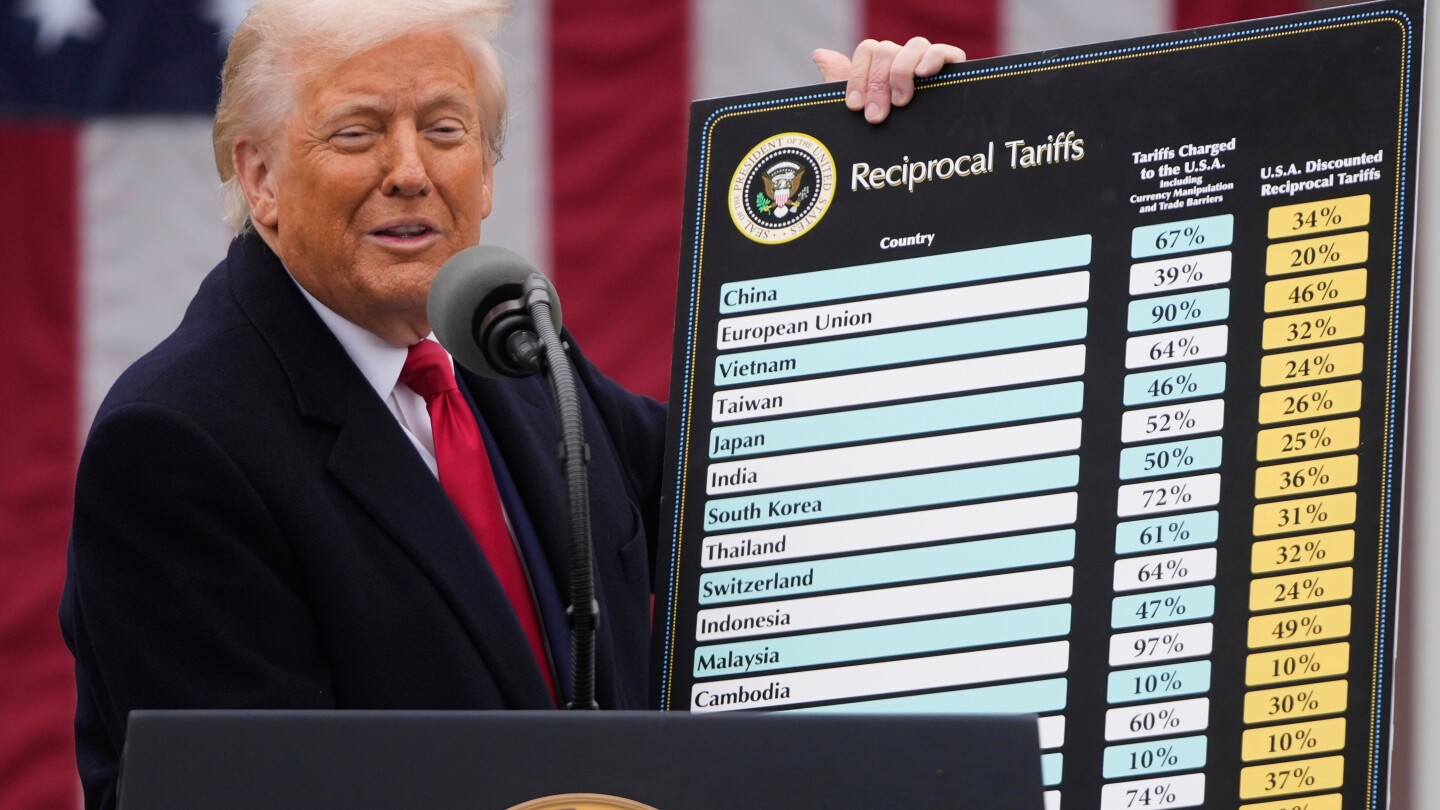
Throughout the year, Trump wielded tariff threats as negotiating leverage against foreign countries, using the prospect of sky-high import taxes to pressure trading partners into new agreements or to respond to perceived economic slights. While some of these threats have transformed into concrete policies, others have lingered in limbo, neither formally abandoned nor implemented.
The External Revenue Service, prominently featured in Trump’s January inauguration speech, remains one of his most significant unfulfilled promises. “We will begin charging those that make money off of us with Trade, and they will start paying, FINALLY, their fair share,” Trump declared in January, announcing that January 20, 2025, would mark “the birth date of the External Revenue Service.”
Despite administration officials repeatedly confirming plans for the new entity through Trump’s first months back in office, the External Revenue Service has not been established by year’s end. The proposed agency was intended to collect “all tariffs, duties, and revenues” from foreign sources, which Trump promised would bring “massive amounts of money pouring into our Treasury.”
European alcohol imports were another target of Trump’s tariff threats. In March, responding to the European Union’s planned 50% tariff on American whiskey, Trump threatened to place a 200% tariff on “all WINES, CHAMPAGNES, & ALCOHOLIC PRODUCTS COMING OUT OF FRANCE AND OTHER E.U. REPRESENTED COUNTRIES.” This dramatic escalation never materialized, partly because the EU postponed its whiskey tariff until at least February. Instead, a more modest EU-U.S. trade deal set a 15% rate on most European imports, though spirits were notably excluded from the agreement.
The entertainment industry faced its own tariff uncertainty after Trump twice promised a 100% tariff on foreign-produced films. “Our movie making business has been stolen from the United States of America, by other Countries, just like stealing ‘candy from a baby,'” Trump wrote in September. Despite these strong statements, no such tariff has been implemented, and the White House acknowledged that no final decision had been made. Questions remain about how such a tax would be practically applied to films produced overseas.
Perhaps most concerning to the healthcare industry were Trump’s repeated threats targeting pharmaceutical imports. In July, Trump warned of tariffs as high as 200% on imported drugs, later specifying in September that a 100% tariff would begin on October 1 for “any branded or patented Pharmaceutical Product, unless a Company IS BUILDING their Pharmaceutical Manufacturing Plant in America.” That October deadline passed without implementation, though Trump has suggested a phased approach might begin with smaller tariffs that could eventually reach 250%. Meanwhile, specific countries like the UK have secured exemptions through bilateral agreements, and the administration has announced deals with individual pharmaceutical companies promising lower drug prices.
The semiconductor industry has also been bracing for potential disruption after Trump announced plans for a 100% tariff on imported computer chips in August. “If you’re building in the United States of America, there’s no charge,” he said, signaling that the policy aimed to encourage domestic production. However, as with many of his tariff threats, details on timing and scope remain scarce, and no comprehensive chip tariff has taken effect.
One of Trump’s most politically ambitious tariff-related promises – a $2,000 “tariff dividend” for most Americans – also remains in limbo. “A dividend of at least $2000 a person (not including high income people!) will be paid to everyone,” Trump posted in November. However, budget experts have questioned the financial viability of such payments, and administration officials have sent mixed signals about implementation. Treasury Secretary Scott Bessent suggested the rebate might take the form of tax cuts rather than direct checks, while National Economic Council Director Kevin Hassett indicated that Congressional approval would be needed.
As the year ends, Trump’s mixture of implemented and threatened tariffs has created a complex trade landscape that continues to evolve. While some trading partners have adjusted their policies in response to Trump’s pressure, others appear to be waiting to see which threats will materialize and which might remain negotiating tactics without follow-through.
Fact Checker
Verify the accuracy of this article using The Disinformation Commission analysis and real-time sources.

8 Comments
The article highlights the unpredictability of Trump’s approach to trade policy. While he imposed some significant tariffs, the uncertainty created by his unfulfilled threats likely had a destabilizing impact on businesses and international relations. It will be interesting to see if future administrations pursue a more measured and consistent trade strategy.
Agreed. The lack of follow-through on many of Trump’s tariff threats contributed to an unstable business environment. Predictable, coherent trade policies are crucial for economic growth and confidence.
Interesting to see how many of Trump’s bold tariff threats never materialized. While he imposed some impactful trade policies, his more extreme proposals like the ‘External Revenue Service’ seem to have fizzled out. Guess we’ll have to see if any new administration picks up similar ideas.
I agree, a lot of the headline-grabbing tariff talk from Trump’s first term didn’t actually come to fruition. Businesses and trading partners were left in limbo for a while, unsure of what policies to expect.
The article highlights the uncertainty created by Trump’s unpredictable approach to trade policy. While some tariffs were implemented, the failure to follow through on other threats likely complicated economic planning. It will be interesting to see if future administrations take a more measured and consistent approach.
Absolutely. The lack of follow-through on many of Trump’s bold tariff claims contributed to an unstable business environment. Clear, coherent trade policies are crucial for economic growth and confidence.
It’s fascinating to see how political rhetoric doesn’t always translate into tangible policy. While Trump leveraged tariff threats as negotiating tools, the failure to implement some of his more extreme proposals suggests there were challenges in turning those threats into reality. Curious to see how trade dynamics evolve under new leadership.
This is a good overview of how Trump’s tariff rhetoric didn’t always match the actual policies implemented. While he took some notable trade actions, the failure to follow through on more extreme proposals like the ‘External Revenue Service’ suggests there were challenges in translating his rhetoric into reality. It will be interesting to see how future administrations approach trade policy.