


Listen to the article
President Donald Trump opened the door to potential dialogue with Venezuelan President Nicolás Maduro on Monday while simultaneously refusing to rule out military action against the South American nation, creating uncertainty around U.S. policy toward Venezuela.
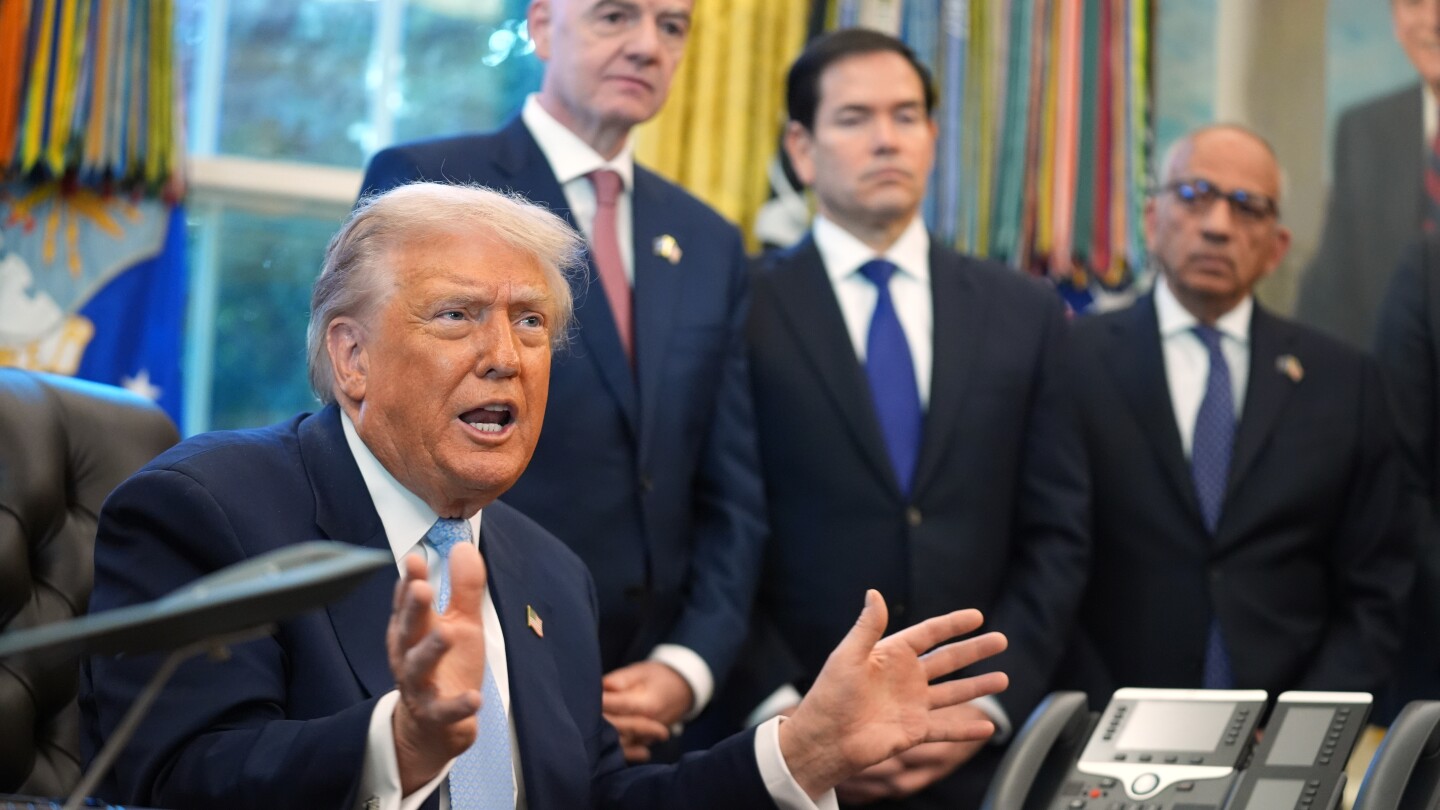
“I don’t rule out that. I don’t rule out anything,” Trump told reporters in the Oval Office, referring to possible military intervention. The comments came a day after he suggested he “probably would talk to” Maduro. Trump emphasized that Maduro “has not been good to the United States,” accusing him of facilitating drug trafficking and migration into the U.S.
Hours after Trump’s remarks, Maduro responded during his weekly television program, expressing openness to diplomatic engagement. “Free countries and governments should only understand each other through diplomacy,” Maduro said, later adding in English: “Talk, yes. Peace, yes. War, no. Never, never, war.”
The exchange comes amid escalating U.S. military presence in the region. The USS Gerald R. Ford aircraft carrier and accompanying warships arrived in the Caribbean over the weekend, coinciding with recent U.S. strikes against vessels allegedly transporting drugs. While the administration describes these operations as anti-narcotics efforts, many analysts and Venezuela’s political opposition view them as pressure tactics against Maduro’s government.
Further complicating the situation, the U.S. has announced plans to designate a cartel allegedly led by Maduro and other high-level Venezuelan officials as a terrorist organization, representing another significant escalation in pressure.
The timing of these statements follows Venezuela’s controversial July 2024 presidential election, in which Maduro claimed victory despite credible evidence suggesting he lost by a significant margin. According to opposition claims, Maduro lost by a 2-to-1 margin to opposition leader María Corina Machado, who was awarded the Nobel Peace Prize for her pro-democracy efforts.
Geoff Ramsey, a Venezuela policy expert at the Atlantic Council, suggests that Trump’s administration is attempting to negotiate from a position of strength. “They really want to negotiate from a place of strength, and I think the White House is laying out an ultimatum for Maduro,” Ramsey said. “Either he engages in credible talks about a transition, or the U.S. will have no choice but to escalate.”
Previous negotiations between Maduro’s government, the U.S., and Venezuela’s political opposition have yielded limited results. While talks in the lead-up to the 2024 election produced agreements intended to ensure democratic processes, Maduro repeatedly tested their limits. During these negotiations, the U.S. made concessions including allowing Chevron Corp. to resume operations in Venezuela, providing a financial lifeline to Maduro’s government.
Trump’s comments extended beyond Venezuela to include potential actions against other Latin American countries. When asked about drug trafficking from Mexico, Trump stated he would be open to strikes, saying “whatever we have to do to stop drugs.” He also mentioned targeting Colombia’s “cocaine factories,” though clarified he wasn’t announcing any specific plans.
In Caracas, citizens expressed mixed reactions to the possibility of renewed dialogue between the U.S. and Maduro’s government.
“If the dialogue actually happens, I hope the government will actually follow through this time,” said Gustavo García, a 38-year-old shopkeeper. “We have to be serious. They’ve gotten us used to them talking, but they don’t honor the agreements. You don’t mess with Trump.”
Others emphasized the importance of avoiding conflict. “Talking is always better,” said Mery Martínez, a 41-year-old mother. “Anything that helps prevent a tragedy is good. Venezuelans don’t deserve this. A war benefits no one.”
As tensions continue to simmer, Ramsey suggests that Trump’s ultimate goal may be flexible. “He is looking for a win,” Ramsey noted, adding that this might include “greater control over Venezuela’s natural resources, including oil, as well as greater cooperation with the president’s migration and security goals.”
The situation remains fluid as both leaders signal openness to dialogue while maintaining their respective positions of strength, leaving Venezuelans and international observers uncertain about what may come next in the fraught relationship between the two nations.
Fact Checker
Verify the accuracy of this article using The Disinformation Commission analysis and real-time sources.

18 Comments
Venezuela’s ongoing crisis is deeply concerning. While military action should be an absolute last resort, the US is right to keep that possibility in mind given Maduro’s intransigence. Productive talks could be a path to a peaceful solution.
Agreed. The US must be ready to respond firmly if the Venezuelan government continues to obstruct progress. But diplomacy should be the priority, with the goal of restoring stability and prosperity for the Venezuelan people.
The decision to leave military action on the table while exploring talks is a tricky balance. Venezuela’s economic and humanitarian crises require a nuanced response that prioritizes stability and the wellbeing of the Venezuelan people.
Maintaining flexibility is prudent, but the US must be cautious about provoking further unrest. A measured diplomatic approach seems the wisest path forward.
This is a complex and sensitive situation. While the US should always seek diplomatic solutions, the Maduro regime’s intransigence may necessitate a firmer response if talks fail to produce meaningful progress. Careful management and clear communication will be crucial.
Agreed. The US must be prepared to act decisively if Venezuela’s crisis continues to deteriorate, but diplomacy should remain the priority. A peaceful, negotiated settlement that addresses the country’s pressing issues would be the ideal outcome.
Leaving military action on the table while pursuing dialogue is a prudent approach. The situation in Venezuela is highly complex, and the US must be prepared to act decisively if diplomatic efforts fail. However, a negotiated settlement should remain the priority.
It’s good to see the US keeping all options on the table regarding Venezuela. The situation there is dire, and the Maduro regime has proven itself unwilling to meaningfully address the country’s challenges. Carefully applied pressure may be necessary.
Dialogue is always preferable, but Venezuela’s leadership has shown little interest in resolving the crisis through peaceful means. The US must be prepared to act if diplomacy fails.
This is a delicate situation. While military action should always be the last resort, Venezuela’s leadership has been highly problematic. I hope constructive dialogue can lead to a peaceful resolution that addresses the country’s pressing issues.
Agreed. Diplomacy should always be the preferred approach, but the US may need to consider stronger measures if the Venezuelan government continues to act in bad faith.
Keeping military action on the table while pursuing talks is a sensible approach. The situation in Venezuela is highly volatile, and the US must maintain credible deterrence while exhausting diplomatic options. A negotiated settlement should remain the ultimate goal.
The US faces a difficult balancing act in Venezuela. While military intervention should be a last resort, the Maduro regime’s intransigence may necessitate a firmer response if diplomacy fails. Careful management of this complex situation is critical.
Absolutely. The US must be prepared to act decisively if diplomatic efforts prove fruitless. However, open lines of communication should remain a priority to find a peaceful resolution that addresses Venezuela’s pressing challenges.
Keeping military action as an option is understandable given Venezuela’s dire situation. However, the US should make every effort to resolve this crisis through peaceful means first. Constructive dialogue, coupled with targeted pressure, may be the best path forward.
This is a delicate balancing act. The US must maintain credible deterrence, but prioritize diplomatic solutions. Venezuela’s worsening crisis demands a measured response that addresses the country’s pressing issues while avoiding further destabilization.
Agreed. The US should exhaust all diplomatic avenues before considering military intervention. However, the threat of force may be necessary to bring the Maduro regime to the negotiating table in good faith.
The US is right to keep military action as a potential option while exploring diplomatic avenues. Venezuela’s worsening crisis requires a nuanced and adaptable response. Constructive dialogue should be the priority, but the threat of stronger measures may be necessary if talks fail to produce results.