


Listen to the article
Senate Hearing on Immigration Enforcement Tactics Grows Tense After Fatal Shooting
Immigration officials faced intense scrutiny Thursday during a Senate hearing focused on the Trump administration’s deportation policies, with Senator Rand Paul leading a pointed critique of federal officers’ actions in a recent fatal shooting.
The Republican senator from Kentucky showed a video of Alex Pretti’s shooting death to immigration chiefs, pausing frequently to analyze the footage and question the tactics used by Customs and Border Protection (CBP) officers. Paul argued that Pretti, an ICU nurse who was killed during protests in Minneapolis on January 24, posed no threat to officers.
“He is retreating at every moment,” Paul said while examining footage showing Pretti being pepper-sprayed. “He’s trying to get away and he’s being sprayed in the face.”
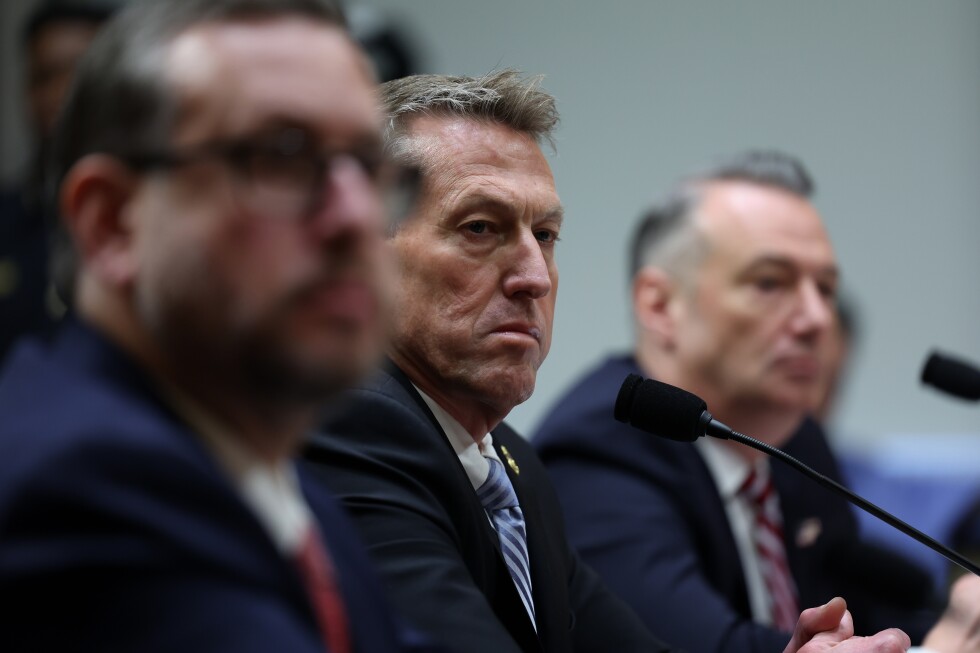
The hearing brought together key figures responsible for implementing President Donald Trump’s immigration agenda: Todd Lyons, acting director of Immigration and Customs Enforcement (ICE); Rodney Scott, head of CBP; and Joseph Edlow, who runs U.S. Citizenship and Immigration Services. These officials had testified before a House committee earlier in the week.
Paul’s criticism represented a rare break from Republican ranks in his direct challenge to federal law enforcement tactics. “It’s clearly evident that the public trust has been lost,” Paul stated in his opening remarks. “To restore trust in ICE and Border Patrol they must admit their mistakes, be honest and forthright with their rules of engagement and pledge to reform.”
The hearing came amid heightened tensions following the deaths of two American citizens—Pretti and Renee Good—during immigration enforcement protests in Minnesota. These incidents have sparked national outrage and prompted the administration to scale back operations in the state. Tom Homan, Trump’s border czar, announced Thursday that the Minnesota operation, which had involved up to 3,000 ICE and CBP officers, would be winding down.
CBP’s Scott defended his officers’ actions, disputing Paul’s characterization. “What I’m seeing is a subject that’s also not complying. He’s not following any guidance. He’s fighting back nonstop,” Scott countered.
Democrats joined Paul in criticizing the agencies’ use of force. Senator Richard Blumenthal pressed Lyons on ICE’s controversial use of administrative warrants—documents signed by ICE officers rather than independent judges—to forcibly enter homes for arrests. Blumenthal compared these warrants to “permission slips,” arguing they don’t overcome constitutional protections against illegal searches.
Lyons defended the practice, citing Minnesota case law that he claimed allows officers to enter homes using administrative warrants when pursuing fugitives. His assertion comes after an Associated Press report last month highlighted ICE’s expanding use of these warrants in enforcement operations, despite historical precedent suggesting they don’t override Fourth Amendment protections.
While Paul broke ranks with his Republican colleagues, most GOP senators directed their toughest questioning not at immigration officials but at Minnesota authorities who appeared on an earlier panel. When addressing federal officers, Republicans focused on the challenges facing immigration agents.
Wisconsin Senator Ron Johnson expressed sympathy for law enforcement, asking Lyons to describe the “violence, the threats, the doxing against ICE officers” rather than questioning their tactics. “That’s where I’ve got a great deal of sympathy for people trying to enforce law,” Johnson said.
Lyons sought to counter claims that his agency lacks accountability, noting that since Trump took office, ICE has opened 37 investigations into excessive force. Of those, he reported 18 were closed, 19 remain pending, and one was referred for “further action.”
The contentious hearing underscores the growing debate over immigration enforcement tactics as the Trump administration continues its aggressive deportation agenda. With public trust at stake and mounting criticism from both sides of the political spectrum, immigration agencies face increasing pressure to justify their methods and address concerns about excessive force.
Fact Checker
Verify the accuracy of this article using The Disinformation Commission analysis and real-time sources.

18 Comments
As someone who follows the mining and energy sectors, I’m curious to see how this political conflict may impact related industries and policies. Immigration reform has broad economic implications that warrant careful consideration by all stakeholders.
That’s an insightful point. The mining and energy industries are closely tied to labor and regulatory issues, so changes to immigration laws and enforcement could have significant ripple effects that deserve close scrutiny.
While the details of this specific incident are disturbing, I think it’s important to avoid rushing to judgment. Immigration enforcement is a challenging and often contentious area of policy. We need a balanced, fact-based approach to ensure the safety and rights of all involved.
I agree, maintaining objectivity and nuance is crucial when dealing with such sensitive issues. Knee-jerk reactions often obscure the complexity required for meaningful reform.
The tense exchanges during this Senate hearing underscore the deep divides on immigration policy. As someone who follows the mining and energy sectors, I hope the officials involved can move past partisan rhetoric and work towards pragmatic solutions that balance economic interests with respect for civil liberties.
That’s an excellent point. The mining and energy industries have a significant stake in the immigration debate, so finding a balanced approach that addresses both security and economic concerns will be critical.
This is a tragic and complex situation. While immigration enforcement is a sensitive issue, we should strive for transparency and accountability around any use of force by authorities. I hope this hearing leads to constructive dialogue and policy reforms that respect human rights.
I agree, these are difficult challenges without easy solutions. Balancing security concerns and individual rights requires nuance and good faith from all sides.
This hearing highlights the need for greater transparency and accountability around the use of force by immigration authorities. As someone who follows the mining and energy sectors, I hope this leads to constructive dialogue and policy changes that protect both public safety and civil liberties.
Well said. Balancing security concerns with respect for human rights is an ongoing challenge, but one that requires open, evidence-based discussions rather than political grandstanding.
It’s troubling to see this level of confrontation during a Senate hearing on immigration enforcement. Regardless of one’s political views, the loss of life is deeply regrettable. Hopefully, this can spur meaningful reforms to ensure such incidents are avoided in the future.
Well said. Productive dialogue and a focus on solutions rather than partisan grandstanding will be key to making progress on this complex issue.
As someone who follows mining and commodity news, I’m curious how this political conflict may impact related industries and policies. Immigration reform has broad economic implications that warrant careful consideration.
That’s a good point. The mining and energy sectors could be affected by changes to immigration laws and enforcement, both in terms of labor supply and regulatory environments. It will be important to monitor these potential ripple effects.
The tense exchanges during this Senate hearing are concerning, but not entirely surprising given the highly polarized nature of the immigration debate. I hope the officials involved can move past partisan rhetoric and work towards common-sense solutions that address the complex realities on the ground.
Agreed. Constructive dialogue and a willingness to compromise will be essential if any meaningful progress is to be made on this divisive issue.
This hearing highlights the ongoing tensions around immigration enforcement and the need for a balanced, fact-based approach. While the loss of life is tragic, it’s important to avoid knee-jerk reactions and instead focus on constructive dialogue that addresses the complex realities on the ground.
Well said. Maintaining objectivity and nuance is crucial when dealing with sensitive issues like this. Simplistic solutions often do more harm than good.