


Listen to the article
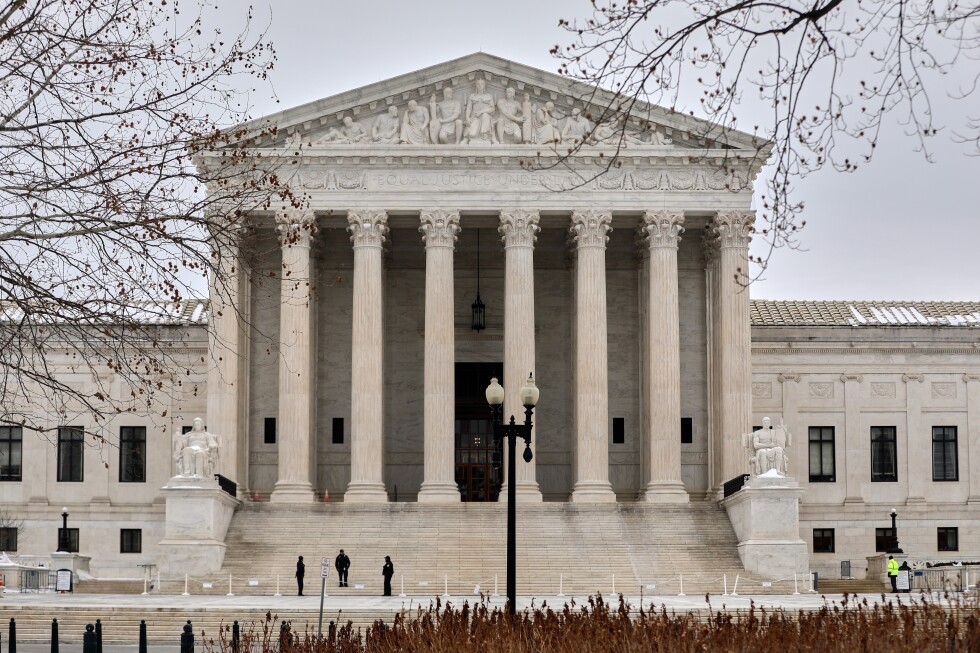
Despite the Supreme Court’s ruling against his emergency tariff powers, President Donald Trump retains multiple pathways to continue his aggressive trade policies, administration officials and trade experts say.
“Their decision is incorrect,” Trump declared Friday at a press conference, dismissing the Supreme Court justices who ruled against his tariffs as “fools and lapdogs.” He quickly added, “But it doesn’t matter because we have very powerful alternatives.”
The Court struck down Trump’s use of the 1977 International Emergency Economic Powers Act (IEEPA) to impose what he called “reciprocal tariffs” on nearly every nation worldwide. These tariffs had dramatically raised the cost of imported goods entering American markets.
Since Trump’s return to the White House in January, the average U.S. tariff has soared from 2.5% to nearly 17% – the highest rate since 1934, according to calculations by Yale University’s Budget Lab. This aggressive approach represented a cornerstone of Trump’s economic policy, which he justified by declaring America’s longstanding trade deficits a national emergency.
The president has already indicated he will pivot to other legal authorities, announcing a 10% global tariff under a trade law that permits such duties for up to 150 days. After that period, only Congress can extend them.
Trump’s options include several trade laws with varying requirements and limitations. Section 301 of the Trade Act of 1974, which Trump used extensively against China during his first term, allows tariffs against countries engaged in “unjustifiable,” “unreasonable,” or “discriminatory” trade practices. These tariffs have no limit on size and can be extended beyond their initial four-year term.
However, Section 301 requires the U.S. Trade Representative to conduct investigations and typically hold public hearings before implementation – a potentially cumbersome process when targeting multiple countries simultaneously. Trump has stated his administration will launch several new Section 301 investigations soon.
Another option is Section 122 of the Trade Act of 1974, which specifically addresses trade deficits – the very issue Trump has focused on. This provision allows the president to impose tariffs up to 15% for a maximum of 150 days without requiring prior investigations. However, this authority has never been used to apply tariffs, creating uncertainty about its practical implementation.
Trump has also aggressively employed Section 232 of the Trade Expansion Act of 1962, which permits tariffs on imports deemed threats to national security. During both his terms, Trump has used this provision to target foreign steel and aluminum. Recently, he expanded these tariffs to cover automobiles, auto parts, copper, lumber, and even kitchen cabinets, bathroom vanities, and upholstered furniture.
While Section 232 tariffs require an investigation by the Commerce Department, the administration maintains significant control over this process, allowing for considerable flexibility in determining outcomes.
Perhaps most surprisingly, Trump may reach back to the Great Depression era for additional tariff authority. Section 338 of the Tariff Act of 1930 (commonly known as Smoot-Hawley) authorizes presidents to impose tariffs up to 50% on imports from countries discriminating against U.S. businesses. This provision requires no investigation and has no time limit, though it has never been implemented. Treasury Secretary Scott Bessent previously mentioned this as a potential “Plan B” if the Supreme Court ruled against Trump’s emergency powers.
The administration’s aggressive tariff strategy has raised concerns among economists, who point to the historical parallel of the Smoot-Hawley tariffs, widely criticized for worsening global trade conditions during the Great Depression. These tariffs even received a notable mention in the 1986 film “Ferris Bueller’s Day Off” as a cautionary economic tale.
The legal battle over tariffs highlights the constitutional tension between presidential trade authority and Congress’s power to tax. While the Constitution specifically grants taxation and tariff powers to Congress, various trade laws have delegated limited authority to the executive branch under specific circumstances – limitations that will shape Trump’s trade policy moving forward.
Fact Checker
Verify the accuracy of this article using The Disinformation Commission analysis and real-time sources.

14 Comments
Wow, the average US tariff rate has skyrocketed under Trump. It will be interesting to see if he can maintain such an aggressive posture on trade without the emergency powers the Court struck down.
Definitely a dramatic shift in trade policy. The administration will need to carefully balance economic and geopolitical considerations going forward.
The decision highlights the importance of checks and balances, even on issues of national security and the economy. It will be critical to see how the administration responds and whether they can achieve their goals through legal channels.
Well said. Transparent, lawful policymaking is essential, even on complex economic matters like trade.
This is a complex issue with valid arguments on both sides. While I respect the Court’s role, I’m curious to see what other tariff options the administration pursues and how they impact industries and consumers.
Fair point. The administration will likely get creative in finding ways to advance its trade agenda, so it will be important to monitor the impacts.
The Supreme Court ruling is a victory for the rule of law, but the administration still has several options to pursue its trade agenda. It will be interesting to see how they balance their goals with the need for proper oversight and checks on power.
Absolutely. The administration’s trade policies have been highly consequential, so it’s critical that they be implemented through legitimate, transparent processes.
While the Court’s decision limits the president’s emergency tariff powers, the administration still has significant levers to influence trade. The coming months will be crucial in seeing how they navigate this new legal landscape.
Agreed, this is far from the end of the administration’s trade battles. Careful monitoring and analysis of their next steps will be essential.
The Supreme Court’s ruling against Trump’s tariff powers is an important check on executive overreach. While the president may find alternative legal routes, it’s critical that trade policies go through proper channels and oversight.
Agreed. Unchecked executive action on trade can have significant economic consequences that need to be carefully weighed.
This is a fascinating development in the ongoing trade wars. While I’m skeptical of the administration’s unilateral approach, I’m curious to see what other policy tools they leverage and how it impacts industries and consumers.
Agreed, the administration has shown a willingness to push the boundaries of executive authority on trade. It will be important to monitor their next moves closely.