


Listen to the article
Senate Republicans Resist Trump’s Call to End Filibuster Amid Shutdown
Senate Republicans are drawing a firm line against President Donald Trump’s intensifying demands to eliminate the Senate filibuster, despite his insistence that the move is necessary to end the current government shutdown. The pushback represents a rare instance of Congressional Republicans opposing Trump’s agenda during his second term.
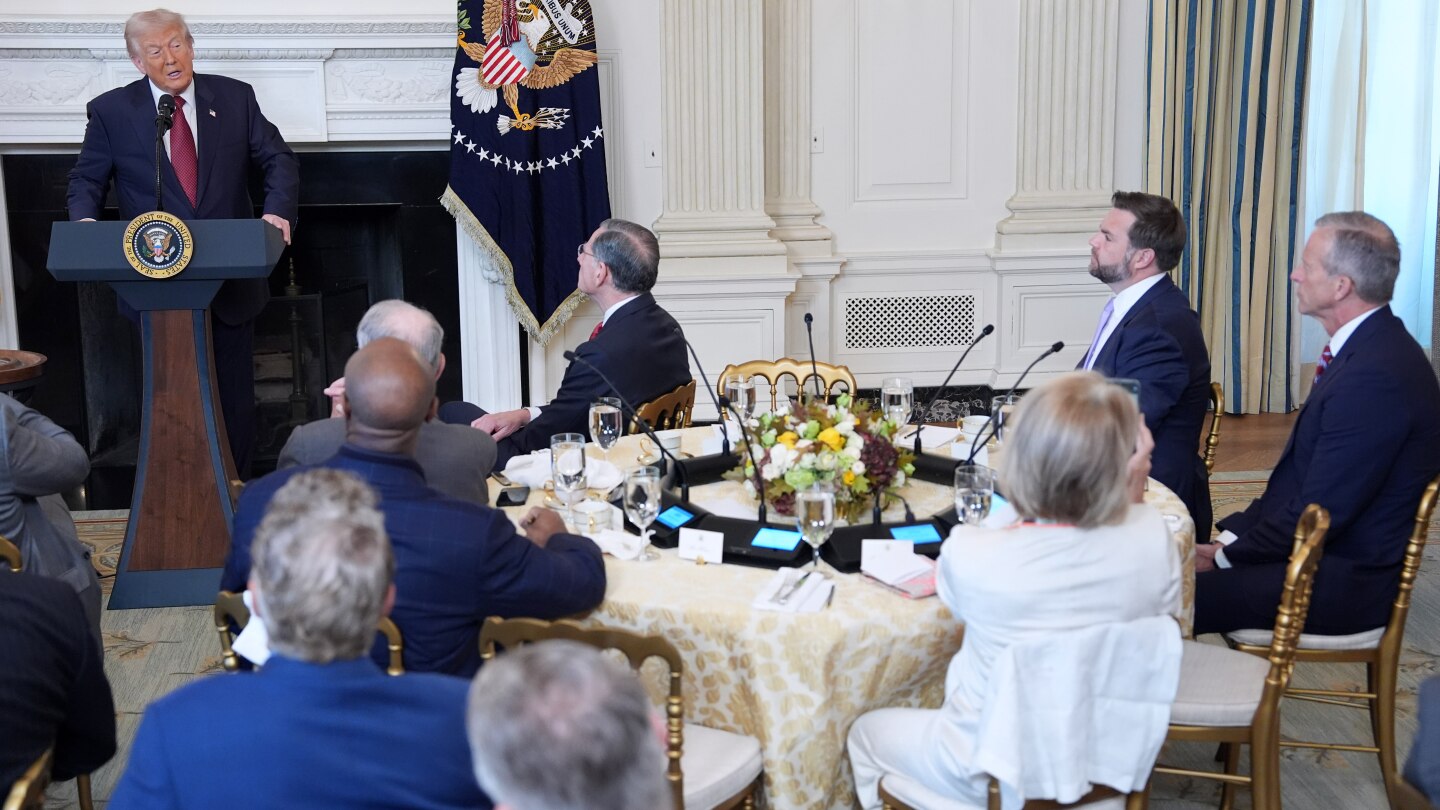
During a breakfast meeting with Senate Republicans on Wednesday and in a subsequent video message, Trump renewed his calls to scrap the longstanding rule requiring 60 votes to pass most legislation. He urged Republican senators to “fight” and warned they would “rue the day” if they failed to eliminate the filibuster.
“Republicans, you will rue the day that you didn’t terminate the filibuster,” Trump declared in his video message, suggesting the rule is preventing progress on ending the ongoing government shutdown. Democrats have leveraged the filibuster in current negotiations, demanding an extension of expiring health care subsidies as part of any government funding agreement.
Senate Majority Leader John Thune immediately rejected the idea upon returning to Capitol Hill. “I know where the math is on this issue in the Senate and it’s not happening,” Thune told reporters, reiterating his longtime position that the filibuster “makes the Senate the Senate.”
The resistance underscores how Senate institutionalists are prioritizing the chamber’s long-term functioning over Trump’s immediate demands. Many Republicans view the filibuster as a crucial guardrail that has protected their interests when Democrats held power.
“The filibuster forces us to find common ground in the Senate,” explained Senator John Curtis (R-Utah), who described himself as a “firm no” on changing the rules. Senator Lisa Murkowski of Alaska similarly indicated that Trump’s breakfast pitch failed to sway her position.
Even House Speaker Mike Johnson has aligned with Senate leadership on this issue, noting that Republicans have traditionally resisted eliminating the filibuster because it protects against “the worst impulses of the far-left Democrat Party.”
The current Senate math makes rule changes virtually impossible. With Republicans holding a 53-47 majority, numerous GOP senators would need to reverse their long-held positions to reach the threshold needed to change Senate rules. Senator Thom Tillis (R-North Carolina) emphasized this point, stating he could say “with metaphysical certainty this Congress is not going to nuke the filibuster, period, full stop.”
Despite widespread opposition within his party, Trump appears willing to risk straining relationships with congressional allies over the issue. “Do you ever have people that are wrong but you can’t convince them?” Trump said in a Fox News interview Wednesday. “I’d be close to losing it, but probably not.”
A small but growing contingent of Republican senators has embraced Trump’s position. Senator Tommy Tuberville of Alabama, a close Trump ally, bluntly stated after the breakfast meeting, “If we need to bust it, let’s bust it.” Wisconsin Senator Ron Johnson revealed he’s changed his stance, saying Republicans can’t just sit back and be “schmucks” by letting Democrats potentially eliminate it first if they regain power.
The dispute over the filibuster represents part of a broader tension between Trump and Senate Republicans regarding institutional norms. Trump has also pushed to eliminate “blue slips,” which allow minority-party senators input on judicial nominees from their home states, and previously suggested making recess appointments to bypass the confirmation process. Both proposals have been met with resistance from Senate leadership.
While both parties have eroded filibuster protections for nominations over the past 15 years—Democrats lowered the threshold for most nominations during Obama’s presidency, and Republicans did the same for Supreme Court nominees during Trump’s first term—the legislative filibuster has remained untouched.
As the government shutdown continues and pressure mounts, this rare point of disagreement between Trump and Senate Republicans highlights the tension between immediate political goals and the Senate’s institutional traditions that transcend any single presidency.
Fact Checker
Verify the accuracy of this article using The Disinformation Commission analysis and real-time sources.

8 Comments
Interesting to see Republicans push back on Trump’s call to end the filibuster. The rule has long been a Senate tradition, and eliminating it could have major implications down the line.
I agree, the filibuster serves an important role in the legislative process. Removing it could lead to a more partisan, winner-take-all dynamic in the Senate.
Trump seems very eager to get rid of the filibuster, but Senate Republicans are rightly concerned about the long-term consequences. It’s a complex issue without easy answers.
Exactly, the filibuster is a double-edged sword. While it can slow progress, it also helps protect the rights of the minority party. Proceeding cautiously is wise.
The filibuster debate highlights the tensions between the president and Congress, even within the same party. It will be interesting to see how this plays out in the coming weeks.
Trump is right that the filibuster can be an obstacle to getting things done, but Senate Republicans are also justified in their concerns. It’s a nuanced issue without a clear-cut solution.
Agreed, the filibuster is a double-edged sword. Eliminating it could empower the party in power, but also lead to more gridlock down the line.
I’m not surprised to see Republican senators push back against Trump’s call to end the filibuster. It’s a long-standing tradition, and changing it could have significant unintended consequences.