


Listen to the article
Oman Facilitates Critical U.S.-Iran Nuclear Talks as Regional Tensions Mount
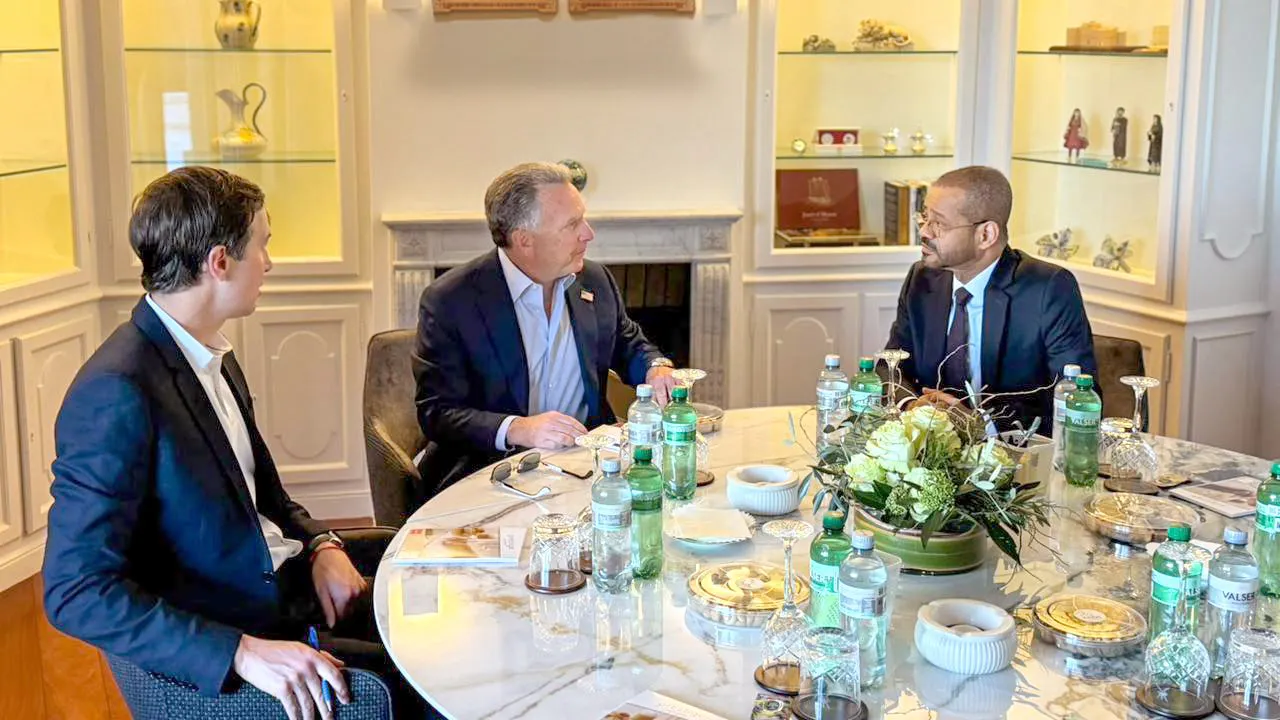
Oman’s Foreign Minister Sayyid Badr bin Hamad Al Busaidi met Thursday with key U.S. negotiators in Geneva, as diplomatic efforts intensify toward reaching a new agreement on Iran’s nuclear program amid heightened regional tensions.
The high-stakes discussions included President Donald Trump’s special envoy Steve Witkoff and former presidential advisor Jared Kushner. According to Omani officials, the talks centered on Tehran’s proposals and perspectives, alongside questions from the American team regarding crucial aspects of Iran’s nuclear capabilities and the guarantees required for a potential agreement.
“His Excellency the Minister of Foreign Affairs clarified that the efforts are continuing intensively and in a constructive spirit, under the negotiators’ unprecedented openness to new and creative ideas and solutions,” the Omani Foreign Ministry stated in an official communication, emphasizing ongoing work toward “reaching a fair agreement with sustainable guarantees.”
This diplomatic push comes against a backdrop of significant U.S. military repositioning throughout the Middle East. The USS Abraham Lincoln aircraft carrier and multiple guided-missile destroyers have been deployed to the Arabian Sea, with additional destroyers stationed in the Mediterranean and Red Sea. Several combat ships are also positioned in the Persian Gulf near Iran’s southern coastline, representing one of the largest American naval buildups in the region in recent years.
The strategic importance of these negotiations extends beyond nuclear concerns. U.S. Secretary of State Marco Rubio, addressing reporters on Wednesday, acknowledged the Trump administration’s preference for a diplomatic solution while characterizing Iran as a “grave threat” to regional stability and American interests.
Rubio highlighted that while the Geneva talks would primarily focus on nuclear matters, Iran’s unwillingness to discuss its expanding ballistic missile arsenal presents a significant obstacle to comprehensive peace.
“Iran possesses a very large number of ballistic missiles, particularly short-range ballistic missiles that threaten the United States and our bases in the region and our partners in the region, and all of our bases in the UAE, in Qatar, in Bahrain,” Rubio explained. “I want everybody to understand that, and beyond just the nuclear program, they possess these conventional weapons that are solely designed to attack America and attack Americans, if they so choose to do so. These things have to be addressed.”
The negotiations occur at a critical juncture for Middle Eastern security. Oman has long played a vital role as a diplomatic intermediary between Iran and Western nations, having facilitated crucial back-channel communications during previous nuclear negotiations. The sultanate maintains cordial relations with both Tehran and Washington, positioning it as an ideal neutral facilitator.
Market analysts note that oil prices have responded with volatility to the developments, as any military confrontation involving Iran could potentially disrupt shipping through the Strait of Hormuz, through which approximately 20% of global oil supplies pass daily.
For the Trump administration, securing a more comprehensive agreement than the 2015 Joint Comprehensive Plan of Action (JCPOA), which Trump withdrew from during his first term, represents a significant foreign policy priority. Key demands likely include stronger verification mechanisms, longer sunset provisions on uranium enrichment limits, and restrictions on Iran’s ballistic missile program.
Iranian officials have previously signaled openness to new negotiations but have insisted on immediate sanctions relief as a precondition. The current talks mark a potential shift in this position, though significant gaps remain between the parties.
Regional allies, particularly Israel, Saudi Arabia, and the United Arab Emirates, are closely monitoring the discussions, having consistently advocated for stronger measures against Iran’s nuclear ambitions and regional proxy activities.
As negotiations continue, both diplomatic and military preparations underscore the gravity of the situation and the high stakes involved for regional security and global energy markets.
Fact Checker
Verify the accuracy of this article using The Disinformation Commission analysis and real-time sources.

14 Comments
The involvement of Trump’s former aides like Witkoff and Kushner adds an intriguing political dynamic to these talks. Hopefully they can put aside partisan interests and focus on pragmatic solutions.
Oman’s role as a facilitator is interesting. Their emphasis on ‘constructive spirit’ and ‘fair agreement’ suggests they may be playing a stabilizing part in the negotiations.
The participation of Trump-linked figures like Witkoff and Kushner adds an interesting political dimension. Hoping they can put aside partisan agendas and focus on pragmatic solutions.
With heightened military activity in the region, the stakes are high for these negotiations to succeed. Constructive dialogue and compromise will be essential to reach a sustainable agreement.
Kushner and Witkoff’s involvement adds an intriguing political element. Hopefully they can set aside partisan agendas and focus on practical solutions that address core concerns on both sides.
The military posturing in the region underscores the fragility of the situation. Constructive diplomacy will be essential to ease tensions and find a sustainable path forward.
Interesting to see high-level diplomatic efforts to engage with Iran on the nuclear issue. Curious to hear more details on the ‘creative ideas and solutions’ being discussed to reach a sustainable agreement.
Regional tensions in the Middle East make these negotiations particularly delicate. Cautiously optimistic that constructive dialogue can lead to progress, but much work still to be done.
Given the complex history and high tensions, reaching a new nuclear agreement with Iran will be no easy feat. But the reported ‘unprecedented openness’ to creative ideas is encouraging.
Oman’s role as an intermediary could be crucial. Their experience navigating regional dynamics may help bridge gaps and uncover pragmatic compromises.
These high-stakes Iran negotiations come at a pivotal moment. The willingness to explore ‘new and creative ideas’ is promising, but the path to a durable agreement remains uncertain.
Oman’s facilitation role could be crucial. Their regional influence and experience in diplomacy may help broker compromises that satisfy all parties involved.
With the US military repositioning in the region, the stakes are high for these talks to succeed. Iran’s nuclear program and regional influence remain major concerns that need to be addressed.
Curious to see if the parties can find a way to balance Iran’s security needs with international concerns over its nuclear ambitions. Multilateral diplomacy will be key to any lasting solution.