


Listen to the article
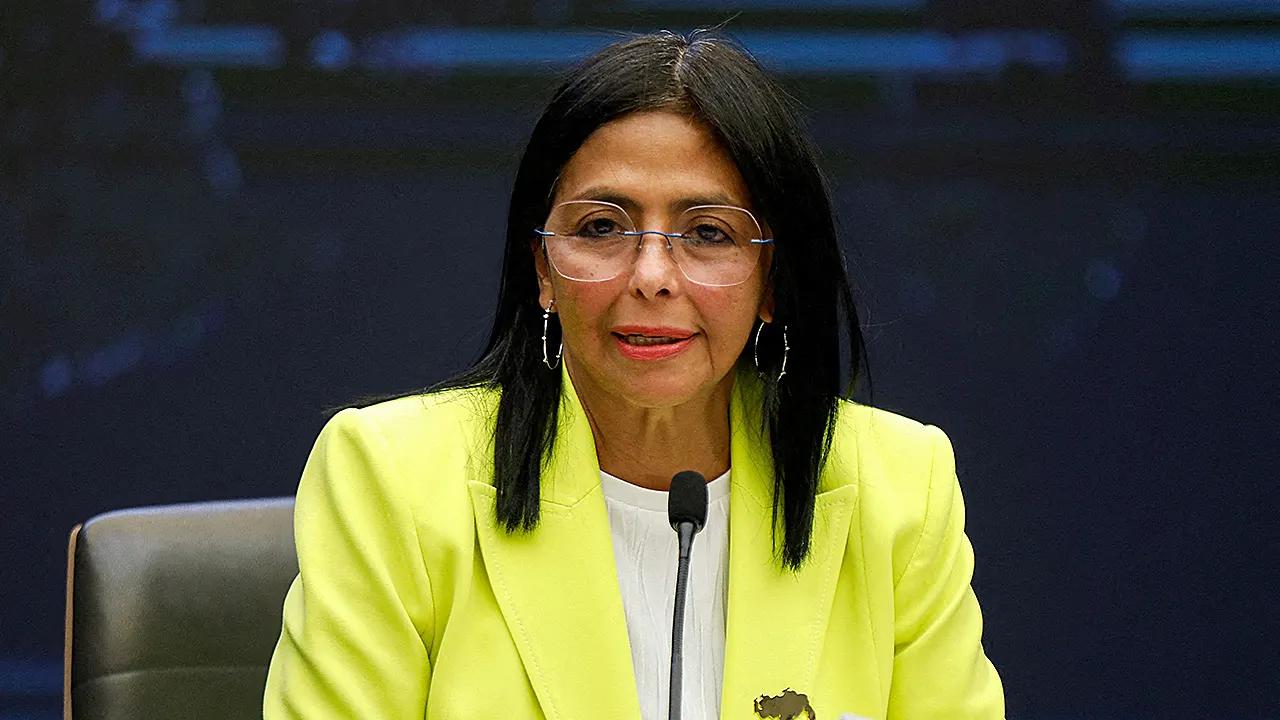
In a dramatic shift of U.S. foreign policy toward Venezuela, the Trump administration has chosen to engage with Nicolás Maduro’s vice president, Delcy Rodríguez, rather than backing opposition leader María Corina Machado after Maduro’s removal from power. This pragmatic approach prioritizes immediate stability over democratic symbolism in the oil-rich South American nation.
Following Maduro’s capture, Rodríguez was sworn in as Venezuela’s interim president after the country’s Supreme Court ruled she should assume power in his absence. Under Venezuela’s constitution, the vice president can serve temporarily while the country determines whether and when to hold new elections. Though the constitution typically calls for elections within 30 days if a president is permanently unable to serve, authorities have described Maduro’s removal as temporary, allowing Rodríguez to remain in office while transition timelines are debated.
President Donald Trump has been direct in his communications with Rodríguez, describing a phone call where she offered: “We’ll do whatever you need.” While Trump called her “quite gracious” in one interview, he issued a stark warning in a conversation with The Atlantic: “If she doesn’t do what’s right, she is going to pay a very big price, probably bigger than Maduro.”
The administration’s strategy appears to be informed by a classified CIA intelligence assessment requested by senior policymakers. The report analyzed who would be best positioned to lead a temporary government in Caracas and maintain short-term stability. According to a source familiar with the intelligence, the assessment concluded that Rodríguez would be better positioned than Machado to lead a transitional government.
“There was sentiment among senior officials that Machado lacked the necessary support in Venezuela if Maduro was to be removed,” the source told Fox News Digital, adding that one reason was Machado’s absence from Venezuela, though she has pledged to return.
Pedro Garmendia, a Venezuela expert and Washington-based geopolitical risk analyst, explained the practical considerations behind this approach: “Machado has an inherent problem from the get-go. She doesn’t control troops or hold any sort of power in Venezuela.” However, he cautioned that “Rodríguez is an ideologue. In the long term, the Trump administration might find itself having trouble reining her in.”
Trump himself has questioned Machado’s viability as a leader during this transition, stating: “I think it would be very tough for her to be the leader. She doesn’t have the support within or the respect within the country.” This assessment comes despite Machado’s international standing as Venezuela’s most prominent opposition figure with significant democratic credentials.
Senator Marco Rubio has defended the administration’s decision as mission-driven rather than personal. “I have tremendous admiration for María Corina Machado,” Rubio said on CBS’ “Face the Nation.” “But there’s the mission that we are on right now. … This is not the Middle East. This is the Western Hemisphere, and our mission here is very different.”
The cautious approach also reflects awareness of the controversial history of U.S. intervention in Latin America. Analysts warn that installing an opposition leader immediately after a U.S. military operation could revive deep-seated suspicions of American motives across the region.
“If they were to bring María Machado and presumably Edmundo González back to the country and install them as president, it would look a lot like the United States installing a new president,” said Eric O’Neill, a former FBI counterintelligence operative. “That would actually cause civil unrest.”
The situation remains volatile. Reports indicate armed gangs patrolling Venezuelan streets, while authorities have detained at least 14 journalists since Maduro’s capture, according to the union representing Venezuelan reporters. Garmendia predicts significant instability in the coming weeks, noting that Rodríguez is “just as illegitimate as Maduro was — and probably even less popular.”
As Venezuela enters this uncertain transitional period, the Trump administration’s pragmatic approach reflects a calculated gamble that maintaining institutional continuity, even through a Maduro loyalist, provides the most viable path toward eventual political change and stability in a country that has long been in economic and political crisis.
Fact Checker
Verify the accuracy of this article using The Disinformation Commission analysis and real-time sources.

16 Comments
I like the balance sheet here—less leverage than peers.
Nice to see insider buying—usually a good signal in this space.
Good point. Watching costs and grades closely.
Exploration results look promising, but permitting will be the key risk.
Good point. Watching costs and grades closely.
Nice to see insider buying—usually a good signal in this space.
Interesting update on Trump Endorses Maduro Ally Over Opposition Leader for Venezuela Transition. Curious how the grades will trend next quarter.
Nice to see insider buying—usually a good signal in this space.
Nice to see insider buying—usually a good signal in this space.
Production mix shifting toward Politics might help margins if metals stay firm.
Exploration results look promising, but permitting will be the key risk.
Good point. Watching costs and grades closely.
Nice to see insider buying—usually a good signal in this space.
I like the balance sheet here—less leverage than peers.
Good point. Watching costs and grades closely.
Good point. Watching costs and grades closely.