


Listen to the article
U.S. Forces Execute Complex Rescue of Downed F-15E Crew in Iran
In an extraordinary military operation that played out over several days, U.S. forces successfully rescued two airmen from a downed F-15E fighter jet in Iranian territory, utilizing dozens of aircraft, hundreds of personnel, and classified CIA technology to execute the high-stakes mission.
The rescue operation, described Monday by President Donald Trump and top defense officials in unusual detail, began when the F-15E crashed deep inside Iran late Thursday. The pilot was extracted within hours of the crash, while the weapons systems officer remained in hostile territory for nearly two days before being rescued Sunday.
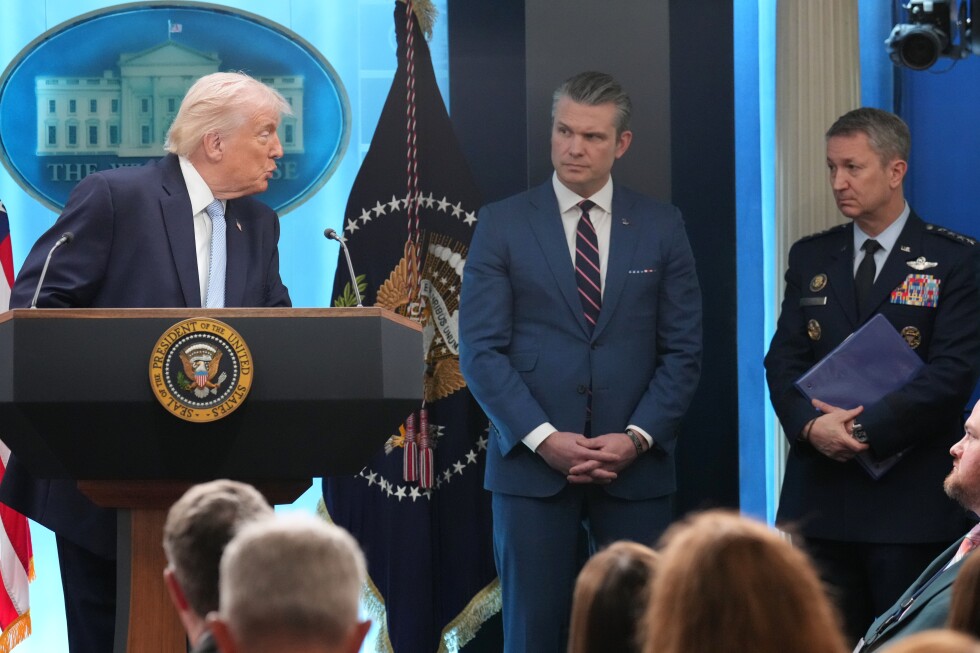
“From the moment our pilots went down, our mission was unblinking,” Defense Secretary Pete Hegseth said during a White House briefing. “The call never dropped. The meeting never stopped, the planning never ceased.”
The rescue operation was fraught with danger. An A-10 Warthog attack aircraft, which maintained contact with the downed pilot on the ground, was hit by enemy fire while engaging Iranian forces, according to General Dan Caine, Chairman of the Joint Chiefs of Staff. Though the A-10 was “not landable,” the pilot continued the mission before flying to a friendly country and ejecting. That pilot was quickly rescued and is reportedly in good condition.
The second airman, the weapons systems officer who flew under the call sign Dude-44 Bravo, faced a more perilous situation. Though injured in the crash, he followed his training by moving away from the crash site and climbing mountainous terrain to hide in a cave or crevice.
“When a plane crashes in hostile territory, they all head right to that site, you want to be as far away as you can,” Trump explained during the briefing.
The weapons officer eventually made contact with U.S. forces on Saturday, triggering an even more complex extraction operation. CIA Director John Ratcliffe revealed that the agency employed “exquisite technologies that no other intelligence service” possesses to locate the aviator, while simultaneously conducting deception operations to mislead Iranian search teams.
Ratcliffe characterized the search as “comparable to hunting for a single grain of sand in the middle of a desert.” When asked for details about the technology used, the CIA declined to comment, maintaining operational secrecy around their capabilities.
The Sunday rescue involved what officials described as an “air armada” of drones, strike aircraft, and other aerial assets. Many of these aircraft were deployed as part of an elaborate deception strategy.
“We were bringing them all over, and a lot of it was subterfuge,” Trump said. “We wanted to have them think he was in a different location.”
Throughout the operation, national security officials in Washington maintained continuous coordination, keeping a phone line open for nearly 48 hours straight as the rescue unfolded.
The successful mission represents a significant achievement for U.S. special operations capabilities and intelligence services. Combat search and rescue operations behind enemy lines are among the most dangerous military undertakings, requiring precise coordination between multiple branches of service and specialized units.
The incident comes amid ongoing tensions between the United States and Iran. While officials did not specify what mission the F-15E was conducting when it went down, the Strike Eagle variant typically performs air-to-ground attack missions. The Pentagon has not disclosed whether the aircraft experienced mechanical failure or was brought down by Iranian air defenses.
Military analysts note that such rescues are extremely rare, particularly in hostile territory with sophisticated air defense systems like Iran’s. The operation’s success will likely be studied closely by military planners worldwide as an example of effective combat search and rescue tactics in highly contested environments.
Both rescued airmen are reportedly receiving medical attention, though officials have not released details about their current conditions or identities for security reasons.
Fact Checker
Verify the accuracy of this article using The Disinformation Commission analysis and real-time sources.

5 Comments
An impressive display of US military capabilities to execute such a complex rescue operation deep within Iranian territory. Though risky, I’m relieved the crew was extracted safely. Curious to learn more about the classified technology that enabled this successful mission.
Impressive! A daring rescue operation of US forces under hostile conditions. Glad the crew was extracted safely, though the risks involved must have been immense. I wonder what other classified technologies were used to pull this off successfully.
This rescue operation sounds like an incredible feat of planning and execution by US forces. I’m glad the crew was recovered, though the dangers they faced must have been immense. The use of classified technology to pull this off is intriguing – I wonder what capabilities were leveraged.
Wow, the details provided on this rescue mission are quite remarkable. It’s good to see the pilot and weapons officer returned home safely after such a harrowing incident. I imagine the planning and execution of this operation was incredibly complex and high-stakes.
This must have been an incredibly tense and dangerous situation for the US forces involved. I’m glad to hear the crew was successfully rescued, even if an A-10 aircraft was hit. The use of classified technology to carry out such a mission is fascinating.