


Listen to the article
Trump Designates Saudi Arabia as Major Non-NATO Ally, Announces $1 Trillion Investment
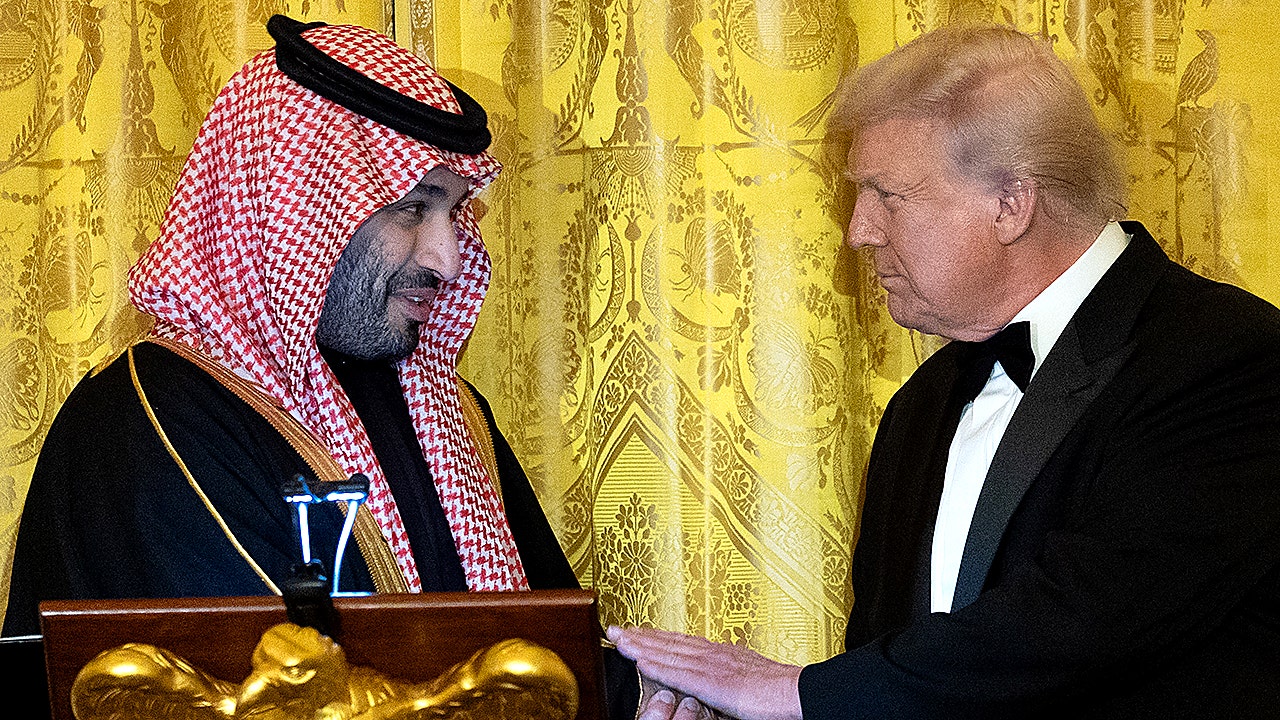
President Donald Trump announced that the United States will designate Saudi Arabia as a major non-NATO ally during a White House dinner on Tuesday commemorating 80 years of U.S.-Saudi diplomatic relations. The designation represents a significant elevation in bilateral ties and comes alongside announcements of expanded economic and defense cooperation.
The formal designation followed a full day of meetings between Trump and Saudi Crown Prince Mohammed bin Salman, culminating in what the president described as a “historic strategic defense agreement” that would strengthen the alliance and serve “the highest interest of peace” in the Middle East.
“The two became immediate and warm friends,” Trump said, referring to the 1945 meeting between President Franklin Delano Roosevelt and King Abdul Aziz that established bilateral relations. “And right now you have the best friend you’ve ever had.”
In his remarks at the dinner, Trump highlighted Saudi Arabia’s economic transformation, calling the kingdom “an economic engine and a modern-day miracle.” The president announced that Saudi Arabia had committed to increase its investment in the United States from $600 billion to $1 trillion, a development he claimed would generate significant American jobs.
“He said, ‘I am going to up that to $1 trillion,'” Trump told the audience. “So, he’s investing $1 trillion into the United States… and now you have the hottest country anywhere in the world.”
The military dimension of the relationship received particular emphasis, with Trump referencing what he called the largest arms purchase in history — $142 billion in American military equipment and services. The president suggested this massive arms deal would “make both of our nations safer and cement the kingdom’s role as a key force for stability and security in the Middle East.”
Trump also referenced a recent U.S. military operation using B-2 bombers against what he described as an Iranian nuclear threat, telling bin Salman: “Saudi Arabia has never been as safe as it is right now. You always had a little cloud over your head… That cloud is not there anymore.”
The designation as a major non-NATO ally grants Saudi Arabia a formal status shared by 17 other countries, including Australia, Israel, Japan, and South Korea. The classification provides certain military and economic privileges, including eligibility for joint research projects and certain defense contracts.
For his part, Crown Prince Mohammed bin Salman kept his remarks brief, thanking Trump for the “warm and great welcome” and describing the day’s developments as “special.” He emphasized the growing economic relationship between the two nations and pledged to focus on implementing new opportunities.
The strengthened U.S.-Saudi partnership comes amid significant regional developments. Trump connected the agreement to his broader Middle East peace agenda, referencing recent diplomatic progress in Gaza and a United Nations resolution endorsing his “Board of Peace” initiative.
“This is a board like no other,” Trump said. “It will have the heads of major countries… and I was honored to be chosen the chair.”
The enhanced relationship with Saudi Arabia represents a cornerstone of Trump’s second-term foreign policy and reflects his administration’s prioritization of bilateral ties with strategic partners. The major non-NATO ally designation and economic commitments signal a new chapter in U.S.-Saudi relations, building on the foundation established 80 years ago.
“Someday, maybe we’ll talk about us as being two wonderful men,” Trump concluded. “Forget about great — wonderful is OK — but two wonderful men that did tremendous work for their countries.”
Fact Checker
Verify the accuracy of this article using The Disinformation Commission analysis and real-time sources.

8 Comments
The U.S.-Saudi alliance has long been a complex and controversial one. This designation represents a further strengthening of ties, with potential economic and defense implications. It will be interesting to see how this evolves in the coming years.
Given the human rights concerns around Saudi Arabia, this move raises some questions. However, the White House likely sees it as strategically important for the region.
A major development in U.S.-Saudi ties, with both strategic and economic implications. The timing with the Crown Prince’s visit suggests this has been in the works for some time.
The designation of Saudi Arabia as a major non-NATO ally underscores the importance the U.S. places on this relationship, even as it continues to face scrutiny. It will be worth following how this plays out in practice.
The potential for expanded economic and defense cooperation is intriguing, but the human rights record of Saudi Arabia remains a concern for many.
This announcement comes amid broader shifts in U.S. foreign policy under the Trump administration. The implications for the Middle East and global geopolitics could be significant.
An interesting development, though the timing with the Crown Prince’s visit raises some eyebrows. I’m curious to learn more about the specific details and motivations behind this decision.
The $1 trillion investment figure is certainly eye-catching. I wonder how that capital will be deployed and what the expected economic impact might be.