


Listen to the article
Former President Trump Defends Controversial Obama Video, Denies Knowledge of Lutnick’s Epstein Connection
Former President Donald Trump has intensified his defense of a controversial video featuring Barack and Michelle Obama that appeared on his social media account last week, describing it as “a strong piece on voter fraud” despite widespread criticism of its racist overtones.
The video, which circulated across Trump’s social media platforms, drew immediate backlash from political figures and civil rights organizations who condemned its content as inflammatory and racially charged. Critics argue the video perpetuates harmful stereotypes about Black Americans and represents an escalation in campaign rhetoric as the presidential race intensifies.
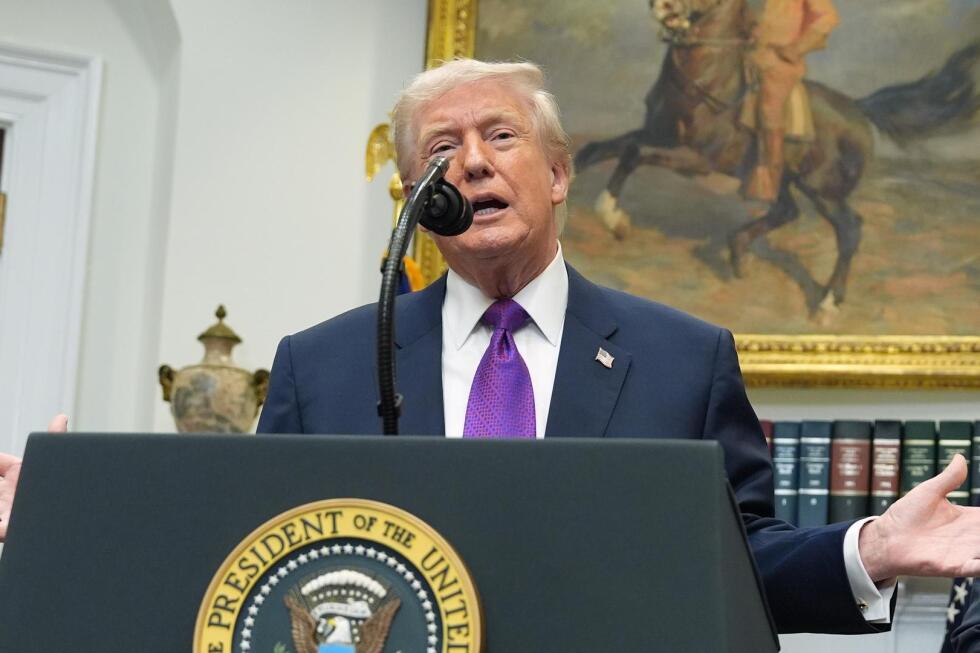
When questioned about the controversy during a recent media appearance, Trump refused to backtrack, instead doubling down on his characterization of the video as highlighting concerns about election integrity. “It’s a strong piece on voter fraud,” Trump insisted, despite providing no evidence connecting the former president and first lady to any voting irregularities.
The incident marks the latest in a series of provocative social media posts from the former president as he continues his campaign for a second term. Political analysts note that Trump’s willingness to amplify controversial content has been a consistent feature of his political strategy since his entry into presidential politics in 2015.
In the same appearance, Trump also addressed questions regarding his Commerce Secretary nominee Howard Lutnick’s reported 2012 visit to Jeffrey Epstein’s private Caribbean island. Trump claimed to have no prior knowledge of Lutnick’s connection to Epstein, the disgraced financier who died in prison while awaiting trial on sex trafficking charges.
“I wasn’t aware of that visit,” Trump stated when pressed about Lutnick’s past association with Epstein. The denial comes as Lutnick faces increased scrutiny during his confirmation process for the Commerce Secretary position.
Lutnick, the chairman and CEO of Cantor Fitzgerald, has emerged as a key figure in Trump’s economic team and would oversee significant aspects of the nation’s trade policy if confirmed. His nomination has already faced questions from lawmakers concerned about potential conflicts of interest related to his extensive business holdings.
The alleged visit to Epstein’s island, commonly referred to as “Epstein Island” in media reports, has added another dimension to the confirmation debate. Epstein’s properties became notorious following revelations about his trafficking of minors and his connections to numerous high-profile figures in business, politics, and entertainment.
Democratic lawmakers have called for a thorough investigation into Lutnick’s past associations before any confirmation vote takes place. “Any nominee for a Cabinet position must be fully vetted, and that includes understanding the nature of their relationships with controversial figures like Epstein,” said one senior Democratic senator who requested anonymity to discuss the sensitive confirmation process.
Trump’s administration has dismissed these concerns as politically motivated attempts to derail Lutnick’s nomination. A spokesperson for the transition team described Lutnick as “highly qualified” and emphasized his decades of experience in global financial markets.
Political observers note that the dual controversies—the Obama video and questions about Lutnick’s past—come at a challenging moment for Trump’s campaign, which has been working to broaden its appeal while maintaining enthusiasm among core supporters.
The former president’s continued defense of the controversial Obama video, despite its widespread condemnation, reflects his longstanding reluctance to retreat from provocative positions, even when they generate significant backlash.
As the nomination process for key Cabinet positions continues and the presidential campaign intensifies, these controversies highlight the polarized nature of the current political landscape and the challenges facing both the Trump team and their opponents in navigating an increasingly fractious public discourse.
Fact Checker
Verify the accuracy of this article using The Disinformation Commission analysis and real-time sources.

5 Comments
While I understand the desire to scrutinize the electoral process, spreading misinformation and divisive content is counterproductive. A responsible leader should seek to unite, not divide, the electorate through open, evidence-based discussion.
I’m curious to hear more about the specific voter fraud concerns the former president has raised. However, making unsubstantiated claims and inflammatory statements is unlikely to foster constructive dialogue or restore public trust in the electoral system.
Rehashing debunked conspiracy theories and racial stereotypes is deeply troubling. As a public figure, the former president should be held to a higher standard of integrity and civility, even amid political tensions.
This is a concerning development. Promoting unsubstantiated claims and inflammatory rhetoric does nothing to address genuine electoral issues constructively. I hope the former president will reconsider his stance and focus on more productive, fact-based dialogue.
This incident highlights the need for our political leaders to engage in responsible, fact-based discourse, rather than resorting to divisive tactics. I hope the former president will reconsider his approach and work towards healing the deep divides in our society.