


Listen to the article
Trump Administration Expands Counterterrorism Strategy to Include Cartels and Domestic Extremists
The Trump administration unveiled a sweeping new counterterrorism strategy Wednesday that significantly broadens the scope of national security policy beyond traditional jihadist threats to include drug cartels and domestic extremist groups. The 16-page document signals a major shift in how the United States defines and combats terrorism both at home and abroad.
The strategy identifies three primary threat categories: “narcoterrorists and transnational gangs,” “legacy Islamist terrorists,” and “violent left-wing extremists, including anarchists and anti-fascists.” This marks a substantial departure from post-9/11 frameworks that primarily focused on groups like ISIS and al Qaeda.
White House counterterrorism chief Sebastian Gorka emphasized the administration’s focus on politically motivated violence within the United States. “Whether you are right wing inspired or left wing inspired, the point at which you advocate for violence or use violence yourself, for political purposes, means you are actually undertaking terrorism,” Gorka said.
The strategy outlines a three-part approach: identifying terrorist actors before they strike, cutting off funding and recruitment networks, and dismantling established terrorist organizations. This framework allows for more expansive use of intelligence, financial tools and military resources across multiple threat categories.
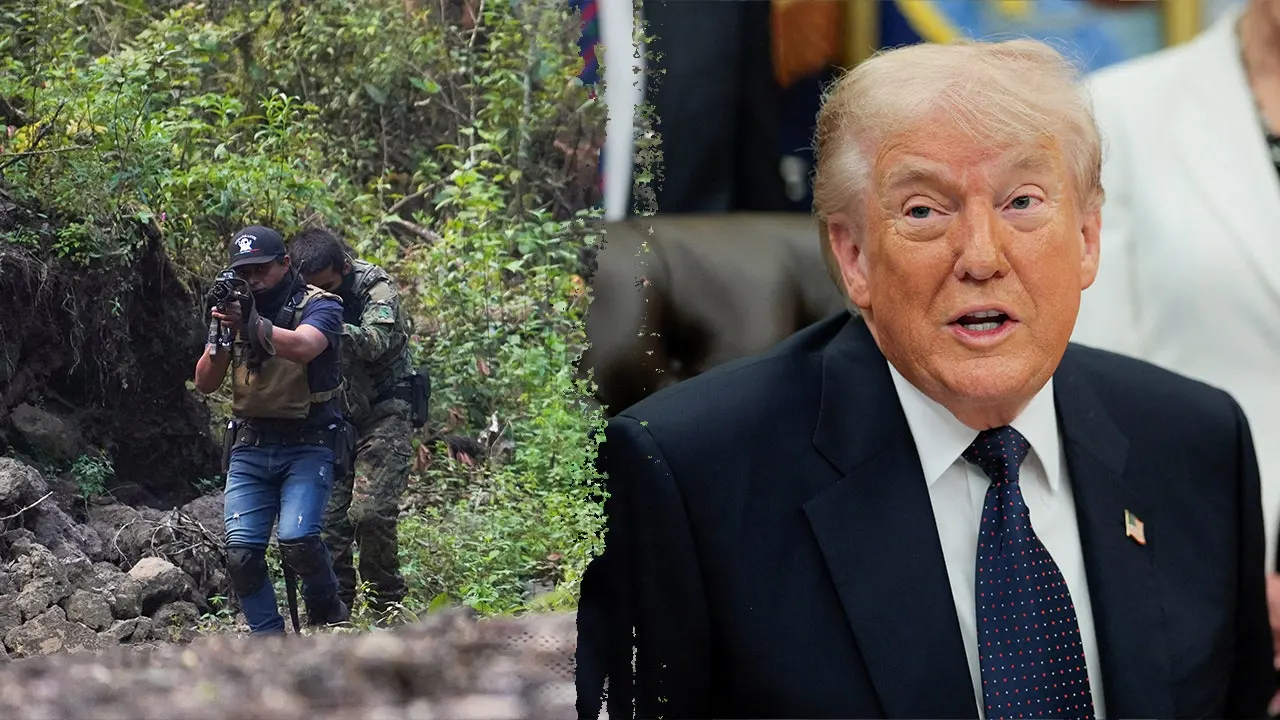
By elevating drug cartels to a central national security threat alongside jihadist groups, the strategy blurs traditional distinctions between criminal organizations and terrorist actors. This shift follows the administration’s earlier designation of major Mexican cartels as foreign terrorist organizations and recent military operations targeting suspected smuggling operations in the Caribbean and eastern Pacific.
Gorka framed cartel violence as an existential threat to American security, noting that “more Americans were murdered by illicit drugs smuggled across the border by cartels in one year than in 70 years of combat fatalities of U.S. servicemen and women.” He added a stark warning: “If we know where you are, if you killed Americans, if you’re plotting to kill Americans, within 72 hours, we can kill you, we can arrest you or we can kill you.”
The strategy also takes specific aim at domestic extremist violence, particularly from what officials describe as left-wing ideological movements. Gorka cited recent high-profile attacks, including the killing of conservative activist Charlie Kirk, as examples of what he characterized as rising extremist violence. The administration plans to map and disrupt “violent left-wing extremists” using existing law enforcement authorities.
In the international arena, Iran is identified as the “greatest threat to the United States emanating from the Middle East,” highlighting both Tehran’s military capabilities and its backing of proxy groups like Hezbollah. “Nine out of ten times, you scratch the surface of that threat, and three nanometers later, you find Iran,” Gorka stated. The strategy calls for continued military, intelligence and covert operations against Iran and its proxies “until the regime in Tehran is no longer a threat to the United States.”
The document also criticizes the intelligence community, arguing it has been “mired in old ways of looking at threats” and at times “weaponized” for political purposes—language that underscores the administration’s determination to reshape counterterrorism priorities and execution.
By emphasizing more aggressive use of military, financial, and intelligence tools, alongside increased pressure on allies to take greater responsibility in combating shared threats, the strategy points to a more integrated counterterrorism approach moving forward—one that will significantly expand how counterterrorism tools are deployed domestically and internationally.
Fact Checker
Verify the accuracy of this article using The Disinformation Commission analysis and real-time sources.

18 Comments
Expanding the counterterrorism framework to address evolving threats like transnational criminal networks and ideologically-driven domestic extremists makes sense. But the focus on ‘politically motivated violence’ raises significant concerns around potential abuse and civil liberties protections.
Agreed, this is a delicate balance that will require very careful implementation and robust oversight to ensure the strategy is not misused for political purposes. Maintaining impartiality and respect for democratic freedoms should be paramount.
The shift in US counterterrorism strategy to encompass cartels and domestic extremists, in addition to traditional jihadist threats, appears to be a prudent adaptation to current realities. However, the emphasis on ‘politically motivated violence’ warrants close scrutiny.
Absolutely, the political dimension of this strategy is where the greatest risk of overreach lies. Maintaining a clear, objective, and impartial definition of terrorism will be crucial to upholding civil liberties.
Expanding the counterterrorism lens to include transnational criminal networks and ideological domestic groups seems prudent given current realities. But the potential for abuse around ‘politically motivated violence’ will require robust oversight.
Absolutely, this is a delicate issue that demands careful consideration. Maintaining a clear, impartial definition of terrorism that doesn’t infringe on legitimate political dissent will be crucial.
Adapting the counterterrorism framework to address emerging threats like cartels and domestic extremists is a prudent move. However, the emphasis on ‘politically motivated violence’ is concerning and could potentially be abused.
Precisely, the risk of this strategy being used to suppress legitimate political dissent is real. Robust oversight and clear, impartial definitions will be essential to strike the right balance.
Timely update to the counterterrorism framework, as the threat landscape has clearly evolved beyond just foreign jihadist groups. Tackling transnational criminal networks and ideologically-driven domestic extremists makes sense.
Definitely a necessary shift, though the focus on ‘politically motivated violence’ raises some red flags around potential abuse. Oversight and civil liberties protections will be crucial.
This new counterterrorism strategy reflects an evolving threat landscape that goes beyond just foreign jihadist groups. Tackling cartels and domestic extremists is necessary, but the focus on ‘politically motivated violence’ raises concerns about civil liberties.
Agree, the broadened scope seems warranted, but the political dimension requires close scrutiny to ensure the strategy is implemented judiciously and without overreach.
Good to see the administration recognizing the need to adapt counterterrorism efforts to emerging threats like cartels and domestic extremists. However, the emphasis on ‘politically motivated violence’ is concerning and warrants close scrutiny.
Agreed, the risk of overreach on domestic issues is real. Striking the right balance between security and civil liberties will be critical as this new strategy is implemented.
Broadening the counterterrorism strategy to include transnational criminal networks and ideologically-driven domestic groups seems like a necessary update given the evolving threat landscape. But the focus on ‘politically motivated violence’ raises red flags.
Agreed, the potential for abuse around this aspect of the strategy is concerning. Ensuring the protection of civil liberties and democratic freedoms should be a top priority as it’s implemented.
Interesting shift in US counterterrorism strategy to include cartels and domestic extremist groups. Broadening the scope seems prudent given evolving threats, though the focus on politically-motivated violence raises questions around civil liberties.
Agreed, it’s a delicate balance between security and protecting rights. Curious to see how the administration plans to implement this new strategy effectively without overreach.