


Listen to the article
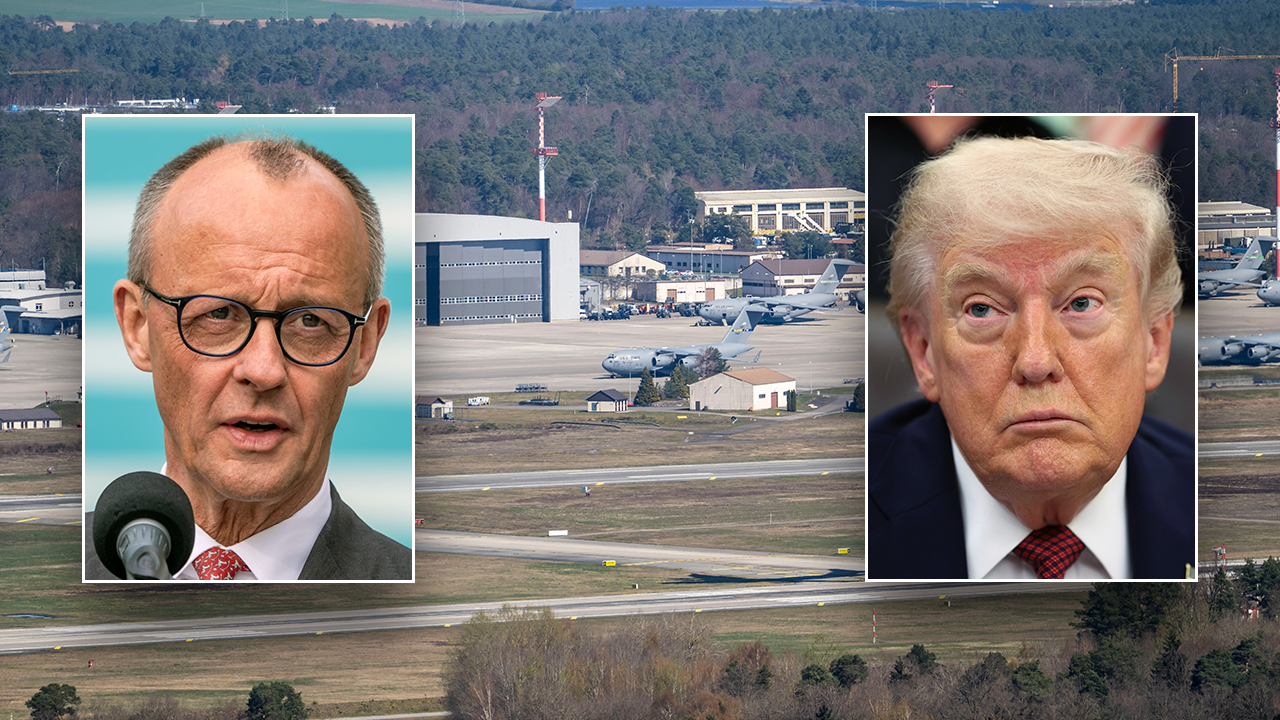
President Trump announced Wednesday that the United States is considering a reduction in American troops stationed in Germany, marking a significant escalation in his increasingly tense relationship with German Chancellor Friedrich Merz. This potential military drawdown comes just days after a public dispute between the two leaders over Iran’s nuclear capabilities.
“The U.S. is studying and reviewing the possible reduction of Troops in Germany,” Trump stated in a Truth Social post. He indicated that a decision would be made “over the next short period of time,” though specific numbers or timelines were not provided.
The announcement follows a heated exchange in which Trump criticized Merz, claiming the German leader “doesn’t know what he’s talking about” regarding Iran’s nuclear program. “The Chancellor of Germany, Friedrich Merz, thinks it’s OK for Iran to have a Nuclear Weapon,” Trump wrote Tuesday on Truth Social. “If Iran had a Nuclear Weapon, the whole World would be held hostage.”
Trump’s comments appear to be in response to Merz’s speech in Marsberg on Monday, where the German Chancellor suggested the United States was being “humiliated by the Iranian leadership” and expressed hope that the ongoing conflict would end “as quickly as possible.”
As of December 2025, more than 36,000 active U.S. service members were stationed in Germany, representing the largest American military presence in any European country, according to the Defense Manpower Data Center. The potential reduction would significantly impact this long-established military partnership that has been a cornerstone of transatlantic security cooperation since World War II.
This latest dispute highlights the increasingly strained relationship between the two NATO allies. During both of Trump’s terms as president, he and German leadership have clashed on multiple fronts, including trade policies, defense spending, and strategic approaches to international conflicts.
Earlier this month, Merz publicly stated that he did not believe NATO should be involved in the war with Iran, despite Trump’s calls for allies to help secure the strategically vital Strait of Hormuz, a critical maritime chokepoint for global oil transportation.
The timing of Trump’s announcement is particularly significant as it comes amid heightened tensions with Iran. The president recently vowed to hit Iran “very hard” after U.S. forces reportedly destroyed nearly “90 percent” of Iranian missiles in recent military operations. Trump has claimed he is “doing something with Iran right now, that other Nations, or Presidents, should have done long ago.”
Security analysts have expressed concern that reducing the American military footprint in Germany could undermine NATO’s eastern flank at a time of increased global instability. The U.S. bases in Germany serve not only as a deterrent against potential aggression but also as crucial logistics hubs for American operations throughout Europe, the Middle East, and Africa.
German officials have not yet publicly responded to Trump’s announcement. The potential troop reduction would likely trigger intensive diplomatic efforts from European allies concerned about America’s commitment to collective security in the region.
The dispute reflects broader tensions within the NATO alliance over burden-sharing, strategic priorities, and approaches to addressing international crises. Any significant reduction in U.S. forces would almost certainly prompt Germany and other European nations to reassess their own defense capabilities and spending priorities.
While the scale and timeline of any potential drawdown remain unclear, the announcement itself signals a potentially significant shift in U.S.-German relations and America’s military posture in Europe.
Fact Checker
Verify the accuracy of this article using The Disinformation Commission analysis and real-time sources.

7 Comments
This potential troop withdrawal from Germany is a concerning development. The US-Germany relationship is critical for maintaining stability in Europe and countering global threats. I hope the two leaders can find a diplomatic resolution to their differences on Iran.
The US-Germany dispute over Iran is worrying. While the leaders may have differences, open communication and compromise are essential to preserving their longstanding alliance. Withdrawing troops would be a drastic step that could further strain relations.
While the US-Germany tensions over Iran are concerning, I hope the two nations can find a way to work through their differences constructively. Withdrawing troops would be a drastic step that could have far-reaching consequences for European security.
Reducing US troops in Germany could have significant geopolitical implications. It’s important the administration carefully weighs the strategic considerations and consults with NATO allies before making any major changes. Unilateral actions could undermine transatlantic security cooperation.
The potential troop reduction in Germany is a bold move by the US, but it risks undermining critical alliances. I’m curious to hear more details on the administration’s strategic rationale and how it plans to address the concerns of European partners.
This dispute highlights the complex geopolitical dynamics at play. While the leaders may have differences, it’s crucial they find ways to de-escalate tensions and maintain strong US-Germany cooperation, which is essential for European and global security.
Tensions between the US and Germany are not new, but a troop withdrawal would be a dramatic escalation. I hope cooler heads prevail and the two nations find a way to work through their disagreements diplomatically for the sake of regional and global stability.