


Listen to the article
Virginia Redistricting Battle Intensifies as Voters Head to Polls
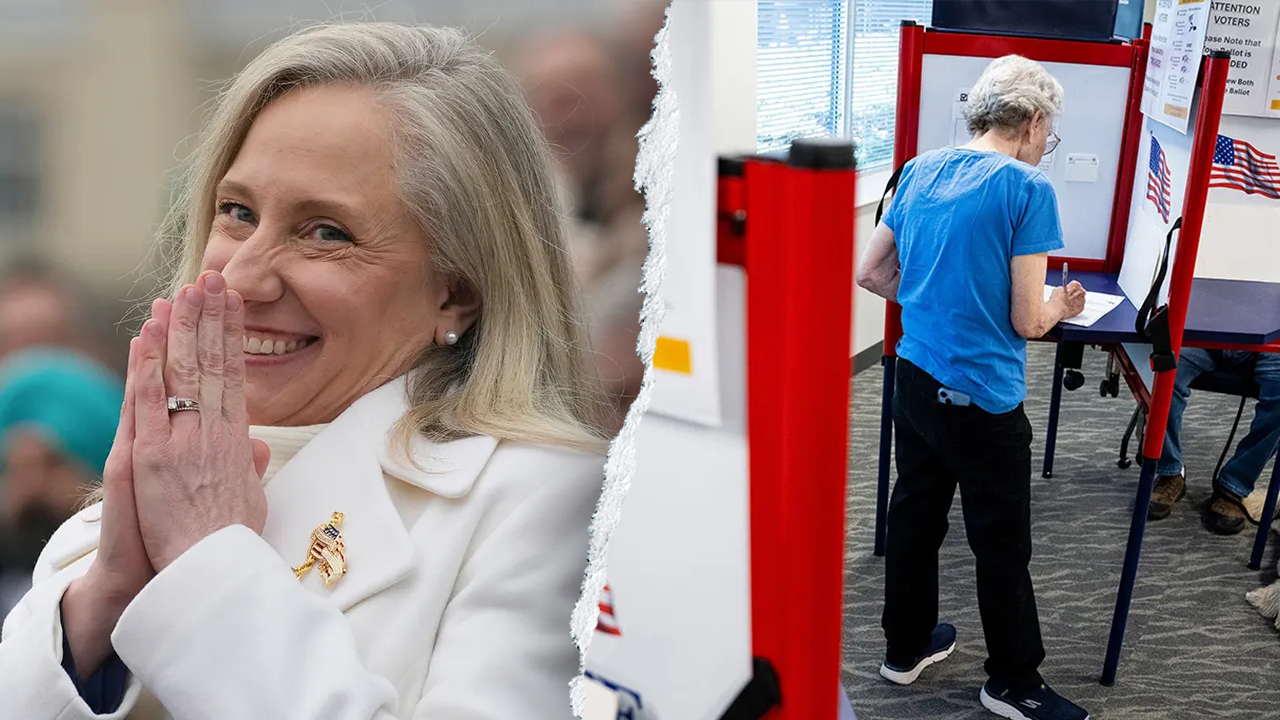
Virginia voters are deciding the fate of a contentious redistricting plan Tuesday that could dramatically reshape the state’s political landscape and potentially deliver Democrats up to four additional House seats—a significant shift with Republicans currently holding a razor-thin majority in Congress.
President Donald Trump weighed in forcefully on Monday night during a telerally with House Speaker Mike Johnson, urging Virginians to reject what he called “a blatant partisan power grab that nobody’s really ever seen anything like.” Trump directly called on voters to oppose Democratic Governor Abigail Spanberger’s initiative.
“If it passes, Virginia Democrats will eliminate four out of five congressional seats, so you’re going to get just wiped out in terms of representation in Washington,” Trump told participants.
The proposed redistricting map would significantly alter Virginia’s current political representation. Currently, Democrats hold six of the state’s 11 House seats, but the new map could create a dramatic 10-1 advantage for Democrats in a state that narrowly supported Kamala Harris in the recent presidential election.
Virginia’s voter registration statistics reveal a much more balanced electorate than the proposed map would suggest. According to the Independent Voter Project, the state has approximately 51.24% Democratic voters, 30.56% Republican voters, and 18.2% independent voters among its nearly 6 million registered voters.
House Speaker Johnson echoed Trump’s concerns, stating, “We have to stand up for fair maps and we have to vote no.” He emphasized the importance of returning all five vulnerable Republican representatives—Rob Wittman, Jen Kiggans, John McGuire, Ben Cline, and Morgan Griffith—to Congress in November.
The redistricting plan would leave only Griffith’s 9th Congressional District with a Republican advantage but would force him into a difficult primary against fellow Republican Ben Cline. Kiggans’ seat would remain competitive but with an increased Democratic edge.
Cline expressed concern about the long-term implications of the redistricting effort. “They definitely want to turn us into New England,” he said on the Ruthless Podcast last week. “Massachusetts used to have Republican members of Congress, a much more balanced delegation. Now it’s 9-0. But Republicans vote, what, 40% of the population there.”
He added that the Democrats’ strategy extends beyond immediate electoral gains: “Their goal is the long game. It is the short game of the next election, but it’s also the long game of trying to turn rural Virginia into either a non-impact on politics or convert. You either assimilate or you’re destroyed.”
The ballot question itself has drawn criticism for its wording, asking voters if the state constitution should be amended “to allow the General Assembly to temporarily adopt new congressional districts to restore fairness in the upcoming elections.” Critics argue this language misleadingly suggests the current map is unfair, despite being democratically approved.
Rep. Griffith has indicated he plans to legally challenge the structure of Tuesday’s special election ballot question on multiple grounds, including “compactness, other arguments about the process, and the question on the ballot.”
Former Virginia Attorney General Jason Miyares, a Republican, denounced the measure on “Fox & Friends” Tuesday morning. “It’s a measure to silence and disenfranchise the voices of millions of Virginians,” he said, noting that even The Washington Post had called the “yes” campaign “brazenly dishonest.”
Miyares highlighted what he considers a broken promise by Governor Spanberger, who he claims pledged in August 2025 not to gerrymander Virginia but then signed the redistricting bill as one of her first acts in office. “It’s been called the most gerrymandered map in the entire country,” Miyares asserted, warning that 56 counties in Virginia would “effectively not have a voice in Congress” if the measure passes.
The Virginia redistricting battle comes amid similar fights nationwide, as both parties maneuver for advantage ahead of crucial midterm elections that will determine control of Congress. Critics of the Virginia plan point out that it would create an unusual mid-decade redistricting rather than waiting until after the 2030 census, when such changes would normally occur.
Fact Checker
Verify the accuracy of this article using The Disinformation Commission analysis and real-time sources.

17 Comments
Regardless of partisan affiliation, it’s crucial that the redistricting process is fair and transparent. Voters should demand accountability from their elected officials on this important issue.
Redistricting is a complex and often contentious process. Virginia voters should seek out reliable, non-partisan information to make an informed decision that serves the best interests of their state.
The battle over Virginia’s redistricting plan highlights the broader challenges of gerrymandering and ensuring fair political representation. Voters have an important decision to make.
Well said. Redistricting reforms to limit partisan gerrymandering should be a priority for all voters, regardless of party.
The Trump administration’s involvement in this state-level issue is concerning. Voters should be wary of partisan rhetoric and focus on the substance of the redistricting proposal.
Agreed. Voters should look beyond the political posturing and evaluate the merits of the plan itself.
While I respect Trump’s right to voice his opinion, voters should not be swayed by partisan attacks. The redistricting proposal deserves a fair and objective evaluation by the electorate.
Redistricting is always a sensitive topic with valid concerns on all sides. Voters should seek out objective information and analysis to make an informed decision that serves the best interests of the state.
Redistricting can have significant implications for political representation. I hope Virginia voters will weigh the merits of the proposal carefully and make their voices heard at the polls.
Agree, this is a complex issue that deserves thoughtful consideration by the electorate.
This is a contentious issue with strong partisan emotions on both sides. I encourage voters to carefully examine the facts and potential impacts of the redistricting proposal before making their decision.
Redistricting can have far-reaching consequences for political representation. Virginia voters should carefully weigh the evidence and potential impacts before casting their ballots.
Absolutely. Maintaining fair and impartial electoral districts is crucial for the health of our democracy.
Voters should be wary of inflammatory rhetoric and focus on the substance of the redistricting plan. It’s important to understand the potential effects, both positive and negative, before casting a ballot.
This is a complex issue with valid concerns from both sides. I encourage Virginia voters to research the details of the redistricting plan and make their own informed decision at the polls.
Voters should seek out objective, non-partisan analysis of the redistricting proposal to understand its potential impacts on representation and political power dynamics in Virginia.
This is a high-stakes issue that deserves serious, fact-based consideration by Virginia voters. I encourage everyone to research the details and potential consequences before making their choice.