


Listen to the article
Federal officials announced on Monday a $10 billion allocation to states for rural health care as part of the Rural Health Transformation Program, a five-year initiative designed to counteract the Trump administration’s substantial budget cuts to rural hospitals.
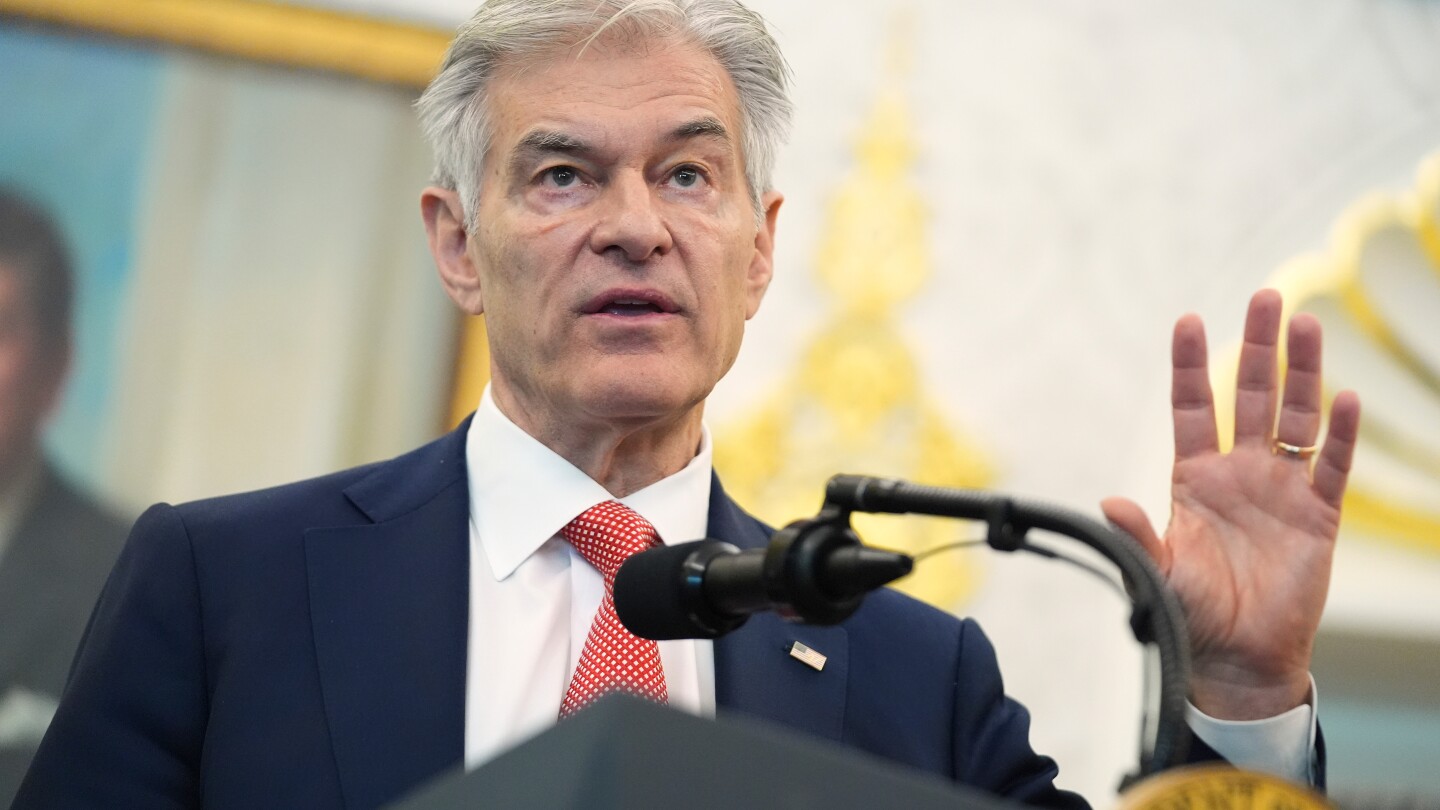
The program, which will distribute $50 billion over five years, has received applications from all states, though funding will not be divided equally. Dr. Mehmet Oz, administrator of the Centers for Medicare and Medicaid Services (CMS), explained that the average award for 2026 will be approximately $200 million per state.
“This fund was crafted as part of the One Big Beautiful Bill, signed only six months ago now into law, in order to push states to be creative,” Oz stated during a press call with reporters.
The funding structure allocates 50% of the money equally among all states, while the remaining 50% is distributed based on a CMS-developed formula that considers factors such as rural population size, the financial health of state medical facilities, and overall health outcomes for residents.
Significantly, $12 billion of the five-year funding is tied to states implementing health policies prioritized by the Trump administration’s “Make America Healthy Again” initiative. These policies include requiring nutrition education for healthcare providers, having schools participate in the Presidential Fitness Test, or restricting the use of Supplemental Nutrition Assistance Program (SNAP) benefits for what the administration terms “junk foods.”
Several Republican-governed states have already adopted restrictions on SNAP purchases, including Arkansas, Iowa, Louisiana, Nebraska, Oklahoma, and Texas, which now prohibit buying items like candy and soda with these benefits.
The program includes a provision allowing the administration to “claw back” funds if state leaders fail to implement promised policies. Oz characterized these potential clawbacks not as punishments but as leverage for governors to advance certain policies.
“I’ve already heard governors express that sentiment that this is not a threat, that this is actually an empowering element of the One Big Beautiful Bill,” he said.
Carrie Cochran-McClain, chief policy officer with the National Rural Health Association, noted that numerous Democratic-led states have refused to implement restrictions on SNAP benefits despite potentially receiving less funding as a result.
Health policy experts have expressed concern that the program, while substantial, falls far short of offsetting the broader cuts to rural healthcare. The federal spending law includes a $1.2 trillion reduction from the federal budget over the next decade, primarily from Medicaid, with millions expected to lose their Medicaid benefits as a result.
Analysis from The Cecil G. Sheps Center for Health Services Research at the University of North Carolina at Chapel Hill suggests rural hospitals could face losses of approximately $137 billion over the next decade due to the budget cuts. The same analysis indicates that as many as 300 rural hospitals risk closure because of the Republican spending package.
“When you put that up against the $50 billion for the Rural Health Transformation Fund, you know — that math does not add up,” Cochran-McClain observed.
Additional concerns have been raised about how states will allocate their funds. Some state applications include proposals that may not directly support struggling rural hospitals, such as one state’s plan to provide healthier, locally sourced school lunch options in rural areas.
The program emphasizes innovation, but rural healthcare providers face immediate financial challenges that make innovation difficult to prioritize.
“We talk to rural providers every day that say, ‘I would really love to do x, y, z, but I’m concerned about meeting payroll at the end of the month,'” Cochran-McClain explained. “So when you’re in that kind of crisis mode, it is, I would argue, almost impossible to do true innovation.”
The Rural Health Transformation Program represents a significant investment in rural healthcare, but experts continue to question whether it will be sufficient to address the larger financial challenges facing rural medical facilities across the country, particularly in the context of broader Medicaid reductions.
Fact Checker
Verify the accuracy of this article using The Disinformation Commission analysis and real-time sources.

16 Comments
I like the balance sheet here—less leverage than peers.
The cost guidance is better than expected. If they deliver, the stock could rerate.
Good point. Watching costs and grades closely.
Good point. Watching costs and grades closely.
If AISC keeps dropping, this becomes investable for me.
Good point. Watching costs and grades closely.
Good point. Watching costs and grades closely.
Silver leverage is strong here; beta cuts both ways though.
Good point. Watching costs and grades closely.
Good point. Watching costs and grades closely.
Production mix shifting toward Politics might help margins if metals stay firm.
Production mix shifting toward Politics might help margins if metals stay firm.
I like the balance sheet here—less leverage than peers.
Good point. Watching costs and grades closely.
Good point. Watching costs and grades closely.
Exploration results look promising, but permitting will be the key risk.