


Listen to the article
The Trump administration announced a major overhaul of federal nutrition guidelines on Wednesday, upending decades of dietary recommendations by promoting red meat and saturated fats while targeting ultra-processed foods as harmful to public health.
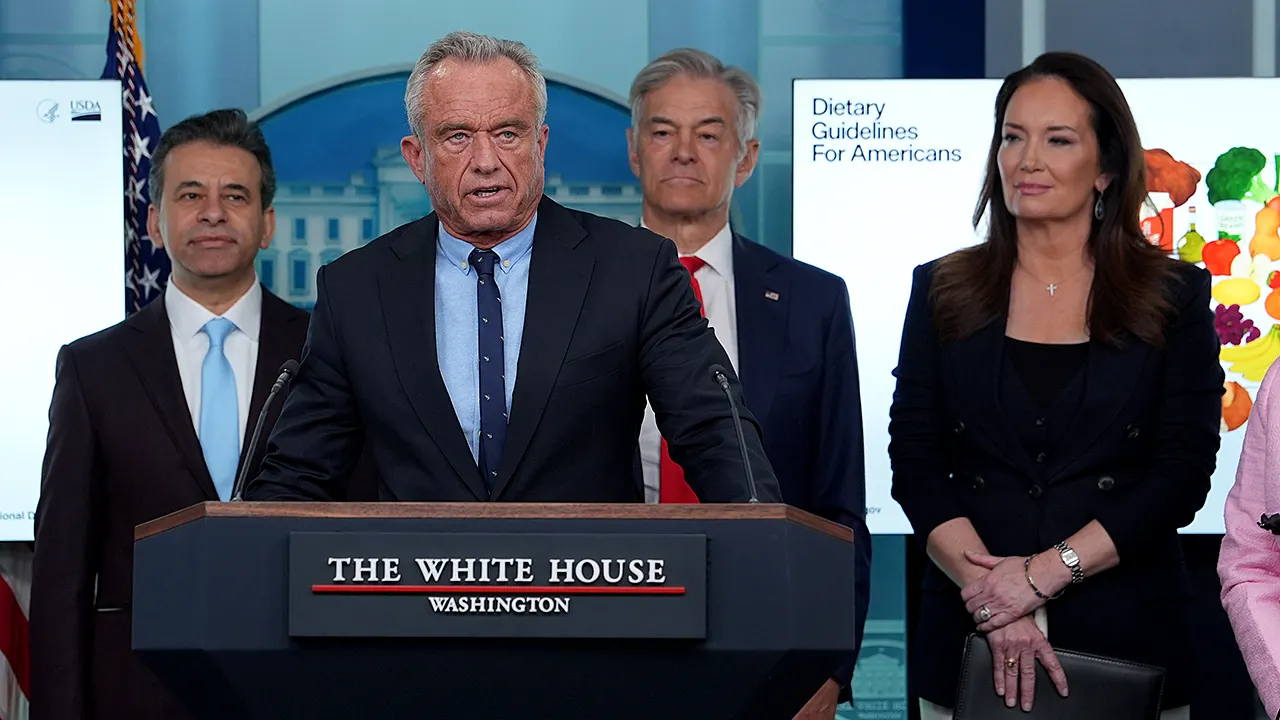
White House Press Secretary Karoline Leavitt unveiled the new approach during a briefing, describing it as a science-based correction to previous guidelines that she characterized as influenced by special interests rather than hard data.
“Faulty dietary guidelines of the past stack the deck against healthy eating and food options for everyday American families, which has fueled the chronic disease epidemic and jacked up the health care costs of households across the country,” Leavitt said. The new recommendations will influence meals served in public schools, military food services, and government food assistance programs nationwide.
The Department of Health and Human Services (HHS) introduced a dramatically redesigned food pyramid that inverts the traditional nutritional hierarchy. The new pyramid places meat, fats, fruits and vegetables at the wide top portion, while relegating whole grains to a narrower section at the bottom—a stark reversal from decades of nutrition guidance that emphasized grains as dietary staples.
HHS Secretary Robert F. Kennedy Jr., who has made nutrition policy a cornerstone of his “Make America Healthy Again” (MAHA) initiative, was direct in his assessment: “The new guidelines recognize that whole, nutrient-dense food is the most effective path to better health and lower health care costs. Protein and healthy fats are essential, and were wrongly discouraged in prior dietary guidelines. We are ending the war on saturated fats.”
The policy shift represents one of the most significant revisions to federal nutrition advice since the original food pyramid debuted in 1992. For nearly three decades, official guidelines discouraged consumption of saturated fats found in red meat, butter, and full-fat dairy products, linking them to heart disease and other chronic conditions.
Kennedy devoted particular attention to refined carbohydrates, food additives, and added sugars as harmful dietary elements. He specifically highlighted sugar-sweetened beverages as contributors to poor health outcomes. His central message to Americans was straightforward: “Eat real food.”
The HHS secretary framed the nutrition policy shift not only as a public health necessity but also as a matter of national security. “If a foreign adversary sought to destroy the health of our children, cripple our economy, to weaken our national security, there would be no better strategy than to addict us to ultra-processed foods,” Kennedy said.
The timing of the announcement is notable, coming shortly after the previous administration’s Dietary Guidelines Advisory Committee released its own report. That document, published in the final days of President Joe Biden’s term, faced criticism for failing to provide clear direction regarding ultra-processed foods, which have increasingly been linked to numerous health problems by independent research.
These changes reflect growing scientific debate about nutritional orthodoxy that has dominated American health policy since the 1970s. Some nutrition researchers have questioned long-standing advice to limit saturated fat consumption, while emerging evidence has highlighted potential harms of highly processed foods regardless of their nutrient profiles.
The administration emphasized that following these new guidelines could yield significant economic benefits for families. “When these guidelines are followed, Americans will be saving themselves thousands of dollars,” Leavitt noted. “If we want to cut health care costs in our country, we must become a healthier country… A healthier America will lead to a more affordable America.”
The new nutrition policy was presented with FDA Commissioner Dr. Marty Makary, Centers for Medicare & Medicaid Services Administrator Dr. Mehmet Oz, and Agriculture Secretary Brooke Rollins participating in the briefing, signaling a coordinated approach across multiple agencies responsible for health and food policy.
Implementation details and timeline for the new guidelines were not immediately specified, but they appear poised to influence federal food programs, school lunches, and nutrition education for years to come.
Fact Checker
Verify the accuracy of this article using The Disinformation Commission analysis and real-time sources.

20 Comments
As a health-conscious consumer, I’m skeptical of the relaxed stance on red meat. I hope the scientific rationale for this change is thoroughly explained and justified.
It will be important for the administration to address any potential concerns from the public health community regarding the potential risks associated with increased red meat consumption.
As someone working in the mining and commodities sector, I’m curious to see if these new guidelines could impact demand for certain raw materials like grains, livestock, or plant-based proteins.
It would be worth analyzing any potential shifts in consumer preferences and government policies that could affect the supply and pricing dynamics of various commodities.
The focus on ultra-processed foods is an interesting angle. I wonder what specific criteria or thresholds will be used to define and identify these types of products.
Clear and transparent definitions will be crucial for the successful implementation and evaluation of these new nutrition guidelines.
These new guidelines seem to represent a significant departure from previous federal nutrition recommendations. I wonder how they will be received by the broader public.
It will be interesting to see how the media and the general public respond to these changes in the coming months and years.
This seems like a significant shift in federal nutrition policy. I wonder how the food industry and health advocacy groups will respond to these new recommendations.
It will be worth following how these guidelines are implemented across government nutrition programs and whether they spur any legislative or regulatory changes.
As a health-conscious consumer, I have some concerns about the relaxed stance on red meat. I hope the administration thoroughly addresses any potential risks to public health.
It will be important for the administration to engage with the medical and public health communities to ensure these guidelines are well-supported by the latest scientific evidence.
The focus on ultra-processed foods is an interesting and potentially important shift. I hope the administration provides clear definitions and evidence-based rationale for these changes.
Transparent communication and stakeholder engagement will be crucial for the successful implementation and public acceptance of these new nutrition guidelines.
These new nutrition guidelines represent a significant shift in federal policy. I’m curious to see how they will be received by the food industry, health advocates, and the general public.
It will be worth following the implementation of these changes and any resulting impacts on consumer behavior, market dynamics, and public health outcomes.
Interesting to see the new guidelines focus on ultra-processed foods while relaxing the stance on red meat. I’m curious to learn more about the data and science behind these changes.
It will be important to closely examine the evidence used to support these guideline revisions and understand any potential impacts on public health.
As someone interested in the mining and commodities sectors, I’m curious how these new guidelines could potentially impact demand for certain agricultural products and related materials.
It would be insightful to analyze how shifts in consumer preferences and government policies could influence the supply and pricing dynamics of different raw materials.